
Diversity and Inclusion (DEIA)
Blind Veteran Finds Freedom With Guide Dog

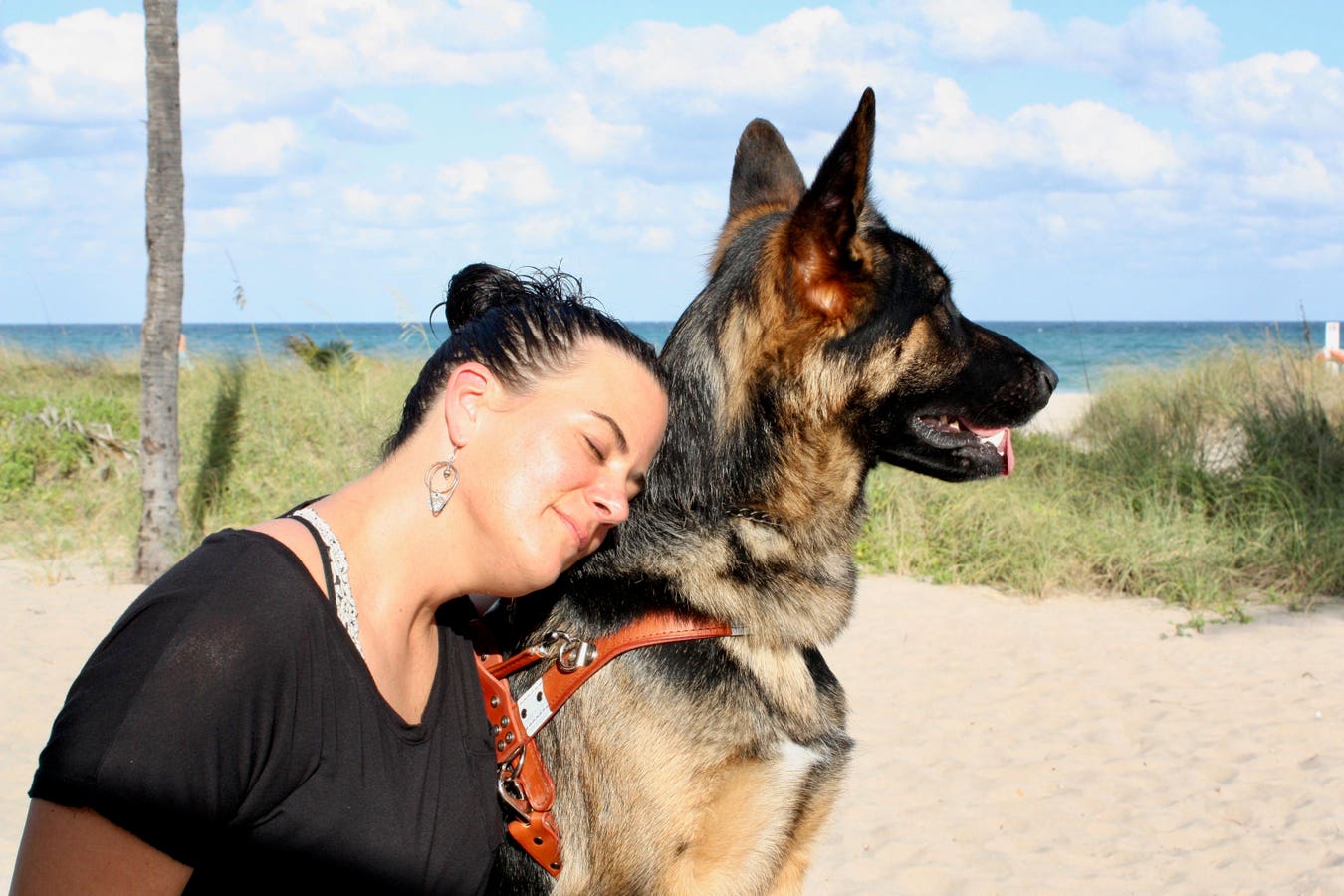
Introduction to Shawn Cheshire
Army veteran Shawn Cheshire doesn’t like to feel limited, so she’s found innovative, inspiring ways to live her life since losing her sight in an accident while working as a paramedic at age 36. “If you want to know who I am and what I stand for, just look at how I live,” she says. To wit: she competed in the 2016 Paralympic Games in Rio de Janeiro and became a 13-time U.S. Champion in paracycling. In 2021, she spent 60 straight days riding a single (not tandem) bicycle across the United States — a 3,600-mile journey chronicled in the documentary “Blind AF.”
Achievements and Expeditions
She went on to power her bicycle over 2,000 miles from Canada to Mexico, and last year, she set a record time for paralympic athletes by completing a 23-mile, rim-to-rim hike across the Grand Canyon without a guide in under 11 hours. “The mentality can’t be, ‘What can I or can’t I do?’” Cheshire says. “It’s more of, ‘If I want to do something, how would I do it?’” It was a tough question to face in the immediate aftermath of becoming blind due to a traumatic brain injury sustained in 2010 in the back of an ambulance during a snowstorm.
Overcoming Challenges
“It is incredible how much we take for granted our independence as sighted individuals. I was a strong, independent single parent and lost all kinds of independence with this injury,” she recalls. “I was really depressed and all I could think about was dying.” After battling complex PTSD through an adaptive program at a VA hospital in which she trained for half marathons, Cheshire started her next chapter. When someone told her she’d never be good enough to compete in the Paralympic Games, it proved to be the impetus she needed to prove them wrong.
Getting A Guide Dog
Another pivotal choice was choosing to partner with a guide dog, a German shepherd named Nick, in 2020. Cheshire hadn’t considered it until she and a friend were shopping in a mall and stopped by a table hosted by the nonprofit Guiding Eyes for the Blind. “A woman named Lisa tried to talk to me about a guide dog, and I’m like, ‘I’m not a dog person. I can barely take care of myself. I don’t know if I can take care of a dog,’” she recalls. “She said, ‘You can try it and if doesn’t work, it’s not like they’re going to leave the dog with you, stuck there forever.’”
Bond with Nick
So Cheshire applied for a guide dog and partnered with Nick, who has “absolutely” increased her independence. The “spunky” service dog not only guides her to doors, stairs, chairs, escalators, curbs and other objects she asks him to find, but helps with her PTSD by waking her from nightmares and reflecting her emotional state. “Nick is literally my emotional barometer,” she says. “If Nick doesn’t seem to be OK and I can’t figure out why, that’s my signal to look at myself and think about how I’m feeling — what’s my anxiety? What’s my fear? Because nine out of ten times, it has more to do with me than him. It’s an incredible bond. Once you bond with these dogs, it is unbelievable how magnificent they are.”
Moving Forward
Nick joins Cheshire when she’s training for her adventures, hiking on trails near their home in Flagstaff, Arizona, or swimming while she paddleboards. He stayed with a Guiding Eyes for the Blind trainer during her bike ride across the U.S. because it wouldn’t be feasible for him to run it. She started that journey by dipping her bike’s wheels in the Pacific Ocean from Florence, Oregon, and ended by being reunited with Nick the night she finished in Virginia Beach, Virginia, where she dipped her wheels in the Atlantic Ocean. The key to the ride was unlikely: music. A wireless JBL speaker on the back of the lead bike played tunes nonstop (which is inaudible in the movie because of copyright considerations).
The Documentary
She also had a two-way radio in her helmet to communicate with the lead bike, follow car and film crew. “They were always giving me feedback as to how close I was to the rumble strip or to the edge of the road or to the guard rail,” she says. “So I was just constantly thinking about all the sounds and staying focused on the music and listening to what the crew was saying. And then really trying not to be overwhelmed and scared by the wind or semi-trucks or all of the other stuff. It was a lot.” Cheshire hopes the film, which was directed by Gina LeVay and screened April 7 as part of the ReelAbilities NY Film Festival, inspires audiences from any walk of life.
Conclusion
“I hope that people can hear and maybe feel that no matter how bad it gets, there’s still a way through,” she says. “There’s always a way through.” Shawn Cheshire’s story is a testament to the human spirit and the incredible bond between a guide dog and their owner. Her determination and perseverance are an inspiration to anyone facing challenges, and her story serves as a reminder that with the right mindset and support, anything is possible.
FAQs
- Q: What inspired Shawn Cheshire to start competing in paracycling?
A: Shawn Cheshire was inspired to start competing in paracycling after someone told her she’d never be good enough to compete in the Paralympic Games. - Q: How did Shawn Cheshire navigate her bike ride across the United States?
A: Shawn Cheshire navigated her bike ride across the United States with the help of a two-way radio in her helmet, a wireless JBL speaker playing music, and feedback from the lead bike, follow car, and film crew. - Q: What is the name of Shawn Cheshire’s guide dog?
A: Shawn Cheshire’s guide dog is named Nick, a German shepherd. - Q: What is the name of the documentary about Shawn Cheshire’s bike ride across the United States?
A: The documentary about Shawn Cheshire’s bike ride across the United States is called “Blind AF.”




Portable Benefits Could Fix the Gig Economy’s Biggest Problem

Ethical Reasoning Has Become a Core Workplace Skill and Training Programs Are Missing It

Stakeholder Pressure on CEOs Has Reached a Breaking Point

Identity Resilience at Work and Why It Matters More Than Grit

The Revenge of Middle Management and Why Organizations Should Pay Attention

First-Generation Professionals Face a Different Workplace and Nobody Prepares Them for It

Small Business Survival in Underserved Communities Needs More Than Microloans

Aging Populations are Reshaping Labor Markets Faster Than Policy Can Respond

How Emotional Intelligence Can Help You Manage Stress and Build Resilience

Interview with Dr. Kristy K. Taylor, WORxK Global News Magazine Founder

Sarah Herrlinger Talks AirPods Pro Hearing Aid

Unlocking Human Potential: Kim Groshek’s Journey to Transforming Leadership and Stress Resilience

NetWork Your Way to Success: Top Tips for Maximizing Your Professional Network

The Power of Belonging: Why Feeling Accepted Matters in the Workplace

Health-care stocks fall after Warren PBM bill, Brian Thompson shooting

Glenda Benevides: Creating Global Impact Through Music
-
 Resiliency1 year ago
How Emotional Intelligence Can Help You Manage Stress and Build Resilience
-
 Career Advice2 years ago
Interview with Dr. Kristy K. Taylor, WORxK Global News Magazine Founder
-
 Diversity and Inclusion (DEIA)2 years ago
Sarah Herrlinger Talks AirPods Pro Hearing Aid
-
 Changemaker Interviews2 years ago
Unlocking Human Potential: Kim Groshek’s Journey to Transforming Leadership and Stress Resilience
-
 Career Advice2 years ago
NetWork Your Way to Success: Top Tips for Maximizing Your Professional Network
-
 Diversity and Inclusion (DEIA)2 years ago
The Power of Belonging: Why Feeling Accepted Matters in the Workplace
-
 Global Trends and Politics2 years ago
Health-care stocks fall after Warren PBM bill, Brian Thompson shooting
-
 Changemaker Interviews2 years ago
Glenda Benevides: Creating Global Impact Through Music