
Innovation and Technology
AI Is Creating A New Economy

Introduction to AI-Driven Economy
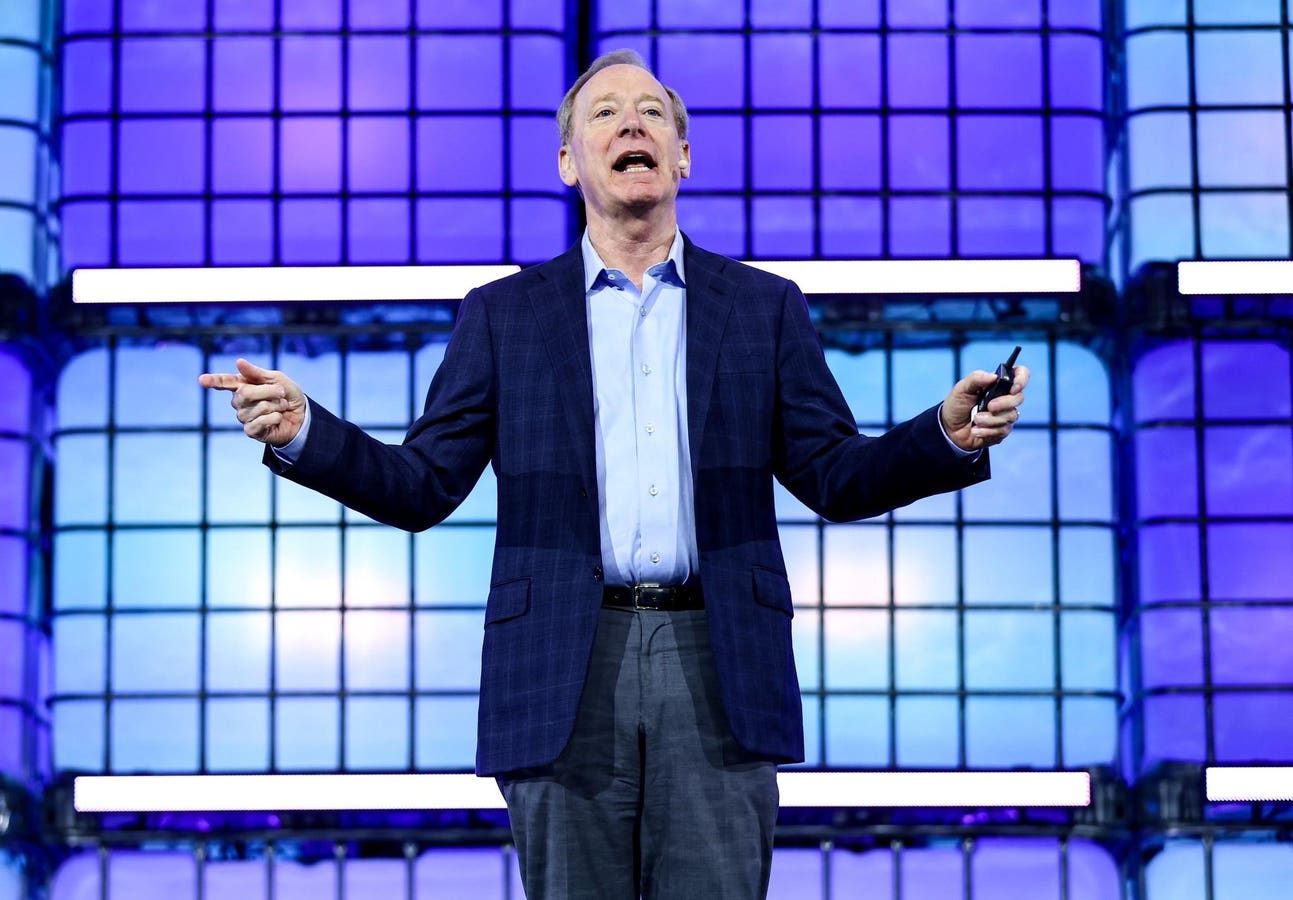
Microsoft president Brad Smith on stage at Web Summit Vancouver. Sportsfile
AI is the next great general purpose technology that is creating a new economy, Microsoft president Brad Smith said Wednesday at Web Summit in Vancouver, Canada, comparing the changes that artificial intelligence will bring to those we’ve seen from electricity. He added that Microsoft is investing $80 billion this year alone to create the infrastructure layer that will help diffuse AI technology to businesses and people around the world.
The New Economy and Its Challenges
He noted that the new economy will come with new challenges. “Are we trying to build machines that are better than people, or are we building machines that will help people be better?” Smith asked. While we remember the massive changes that electrification started 140 years ago, we tend to forget that a technology doesn’t change the world by itself. It requires, Smith said, an entire ecosystem of supporting infrastructure and technologies: a tech stack.
Tech Stack for Electricity and AI
For electricity, that’s well-known:
- Fuels
- Power generation
- Electrical grid
- Transformers, circuit breakers
- Wiring, switches, sockets
- Appliances
- Manufacturers, marketers, users
For AI, the supporting ecosystem or tech stack is built in three layers- Infrastructure
- AI datacenters
- Chips
- Land, electricity, connectivity
- Platform
- AI software platforms
- Data
- Foundation models
- Applications
- AI-infused software
- AI-powered devices
- Infrastructure
Building the Next Industrial Revolution
We often forget about the appliance layer, Smith said, but it’s a critical last-mile technology to bring the benefits of AI to the average person. Appliances must have felt like magic to people who started seeing them over 100 years ago, and “140 years later we have our own opportunity to create things that feel like magic,” he said. “We’re building the world’s next Industrial Revolution,” Smith added. “And we have an opportunity to make it better than the industrial revolutions that we’ve experienced before.”
The Impact of AI on Jobs
Talking about the world’s next revolution inevitably increases anxiety as people wonder if they’ll be replaced by AI. Microsoft itself is replacing people with AI agents in sales and service roles, as are companies like Amazon, Meta and Salesforce. Companies like Klarna, UPS, Duolingo, Intuit and Cisco are doing the same. Many jobs are at risk, and others have already been lost.
Building Technology to Help People
Smith, however, said Microsoft is about building technology that will help people pursue better jobs rather than building machines that will outperform people. The key, he added, is working on “skilling” people for the emerging economy and jobs it will create. The challenge, as he noted, is that there are still hundreds of millions of people globally left out of the revolution in electrification that started 140 years ago.
Achieving Inclusive Growth
Achieving precisely the same result in the new AI revolution is probably going to happen too, absent massive education, training and perhaps significant changes in how our economy functions.
Conclusion
In conclusion, AI is set to revolutionize the world, bringing about a new economy and new opportunities. However, it also poses significant challenges, including the risk of job displacement. To mitigate these risks, it is essential to focus on building technology that helps people and to invest in education and training to prepare workers for the emerging economy.
FAQs
Q: What is the next great general purpose technology, according to Brad Smith?
A: AI is the next great general purpose technology, according to Brad Smith.
Q: How much is Microsoft investing in AI infrastructure this year?
A: Microsoft is investing $80 billion this year alone to create the infrastructure layer that will help diffuse AI technology to businesses and people around the world.
Q: What are the three layers of the AI tech stack?
A: The three layers of the AI tech stack are Infrastructure, Platform, and Applications.
Q: What is the key to preparing workers for the emerging economy, according to Brad Smith?
A: The key to preparing workers for the emerging economy is to focus on “skilling” people for the jobs it will create.




Portable Benefits Could Fix the Gig Economy’s Biggest Problem

Ethical Reasoning Has Become a Core Workplace Skill and Training Programs Are Missing It

Stakeholder Pressure on CEOs Has Reached a Breaking Point

Identity Resilience at Work and Why It Matters More Than Grit

The Revenge of Middle Management and Why Organizations Should Pay Attention

First-Generation Professionals Face a Different Workplace and Nobody Prepares Them for It

Small Business Survival in Underserved Communities Needs More Than Microloans

Aging Populations are Reshaping Labor Markets Faster Than Policy Can Respond

How Emotional Intelligence Can Help You Manage Stress and Build Resilience

Interview with Dr. Kristy K. Taylor, WORxK Global News Magazine Founder

Sarah Herrlinger Talks AirPods Pro Hearing Aid

Unlocking Human Potential: Kim Groshek’s Journey to Transforming Leadership and Stress Resilience

NetWork Your Way to Success: Top Tips for Maximizing Your Professional Network

The Power of Belonging: Why Feeling Accepted Matters in the Workplace

Health-care stocks fall after Warren PBM bill, Brian Thompson shooting

Glenda Benevides: Creating Global Impact Through Music
-
 Resiliency1 year ago
How Emotional Intelligence Can Help You Manage Stress and Build Resilience
-
 Career Advice2 years ago
Interview with Dr. Kristy K. Taylor, WORxK Global News Magazine Founder
-
 Diversity and Inclusion (DEIA)2 years ago
Sarah Herrlinger Talks AirPods Pro Hearing Aid
-
 Changemaker Interviews2 years ago
Unlocking Human Potential: Kim Groshek’s Journey to Transforming Leadership and Stress Resilience
-
 Career Advice2 years ago
NetWork Your Way to Success: Top Tips for Maximizing Your Professional Network
-
 Diversity and Inclusion (DEIA)2 years ago
The Power of Belonging: Why Feeling Accepted Matters in the Workplace
-
 Global Trends and Politics2 years ago
Health-care stocks fall after Warren PBM bill, Brian Thompson shooting
-
 Changemaker Interviews2 years ago
Glenda Benevides: Creating Global Impact Through Music