
Diversity and Inclusion (DEIA)
How the WNBA Became a Safe Space for LGBTQ+ Athletes

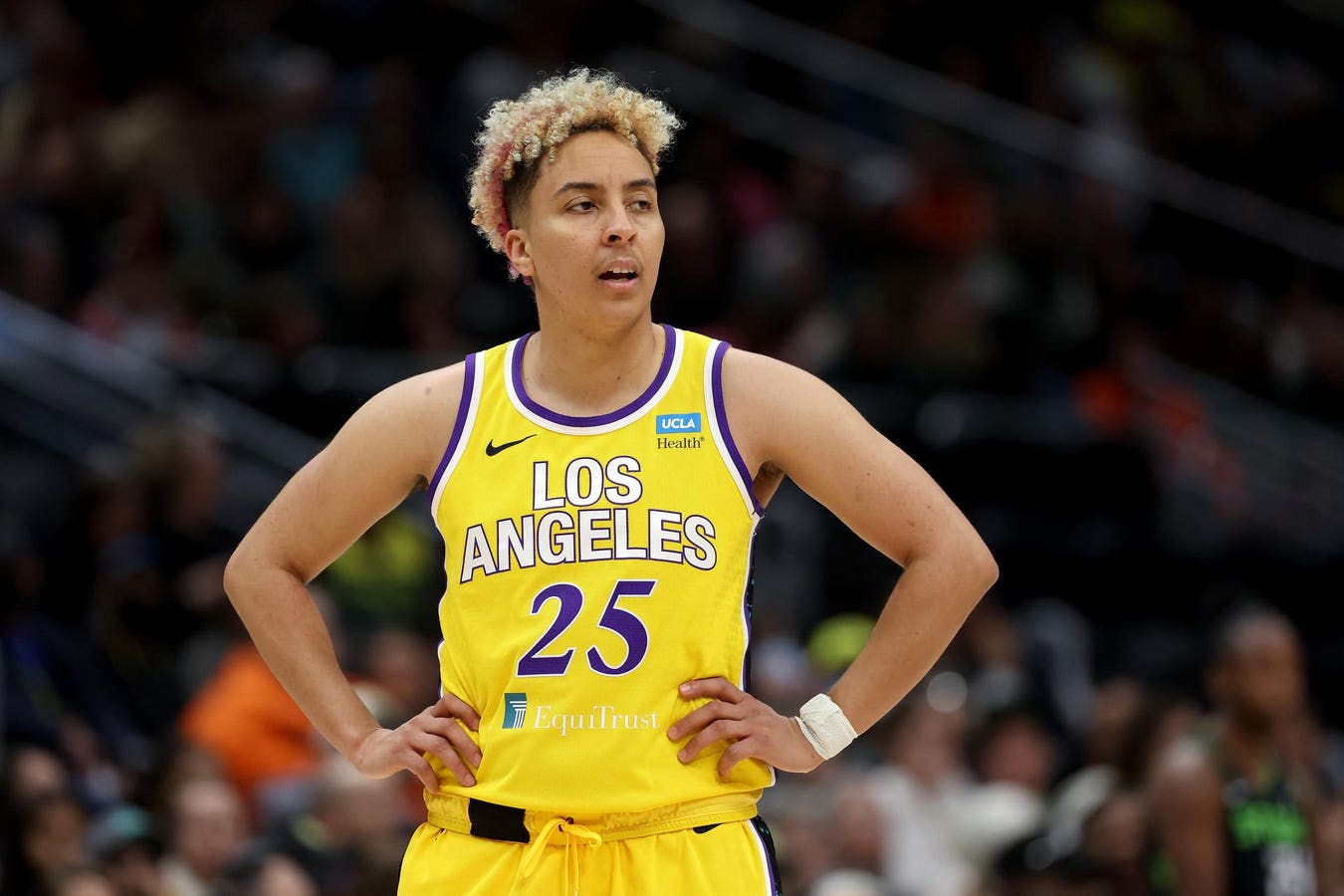
The WNBA has become home to some of the most prominent queer icons in American sports, including Sue Bird, Candace Parker, and Layshia Clarendon. It has seen openly coupled folks, sometimes even on the same team, which was the case of Courtney Vandersloot and Allie Quigley when both represented the Chicago Sky. But it hasn’t always been that way.
The league officially added Pride Month to its calendar in 2014, only 12 years after Sue Wicks came out publicly as a lesbian, becoming the first WNBA player out of the closet. And that was more than a decade before the NBA saw its first out player in Jason Collins.
Sue Bird and the Constraints of Early Visibility
Sue Bird came out in 2017 in an ESPN feature. At the time, she had recently begun a relationship with her now-fiancée, fellow queer icon Megan Rapinoe.
“Honestly, there was no thought that went behind this,” Bird said on Sports Center the day the feature came out. “You know, I’ve always kind of said I never really felt comfortable having like this moment of like me, kind of stepping out being like, Hey, look at me. I’m gay over here. That was never gonna be my moment. That’s just not me.”
Although the league had developed a reputation for supporting the LGBTQ+ community, there was still little room for players to express themselves openly. Bird shared on an episode of Pablo Torre Finds Out that she was encouraged to maintain a “straight” image to succeed in marketing early on in her career.
“It was basically told to me that the only way I was going to have success from a marketing standpoint is to really sell this straight girl next door,” she said. “These were things that were told to me. At 21, I was afraid of all of it. I openly admit this. The way I feel now about all of those conversations.”
Layshia Clarendon Breaks New Ground
The landscape has shifted, and players today reap the benefits of the courage of those who took a stand for their identity before support was as broad as today. One of those players is Layshia Clarendon, who made history as the first player in the league to come out as trans and nonbinary. They shared their gender identity following the 2020 season and announced in 2021 that they had undergone top surgery.
“It’s hard to put into words the feeling of seeing my chest for the first time free of breasts, seeing my chest the way I’ve always seen it, and feeling a sense of gender euphoria as opposed to gender dysphoria,” Clarendon wrote on Instagram.
While Clarendon faced backlash from right-wing media outlets, the response from their team at the time, the New York Liberty, was a sign that the women’s basketball community was about ready to embrace gender beyond the binary.
“The New York Liberty family is in full support of Layshia Clarendon and their choice to live authentically,” the team posted on Twitter. “Layshia is a proud embodiment of our belief that our strength lies in our truth and no one should live constrained by societal boundaries. Layshia’s journey as a pioneering athlete, along with their activism and advocacy work, is an inspiring call for each of us to honor our humanity above all else.”
Just Existing Authentically And No Coming Out Required
Today, fewer players feel pressure to publicly come out. Many simply live as their authentic selves, free from fear of backlash or institutional resistance. That is the case for Dallas Wings forward NaLyssa Smith, who praised the league’s progress in supporting LGBTQ+ players.
“It just shows so much the league has grown. A while back, a lot of people didn’t want to embrace that aspect of their life. And I think people are a lot more open to it, a lot more relationships you see,” Smith, who currently dates her teammate DiJonai Carrington said. “So I think it just shows like, you know, the game is developing, and people are, you know, embracing, you know, what they are, and stuff like that. So I think it’s good for us.”
Seattle Storm point guard Erica Wheeler echoed that sentiment.
“I think it’s super important, because I think we shouldn’t be judged by what we like and what we love. I think we are naturally just humans, so I think it’s super important that the league is empowering us, and it’s important us in that type of way. Me, personally, I’ve never experienced any backlash or anything bad when it comes to it.”
For players like Smith and Wheeler, who have never issued formal coming-out statements, the current climate offers a liberating sense of normalcy. Not having to worry about retaliation simply for being who they are or even having to make coming out statements, allows players to focus on basketball and be the best they can be on the court.
“It lets you just live stress free. You don’t have to worry about, you know, hiding things from anybody, or, you know, people using something against you,” said Smith. “So I think it’s like, I say, it just shows how much the league has grown now there’s like, pride nights, and, you know, they’re embracing it. a lot more so I think it’s a good for us.”
Conclusion
The WNBA has made significant progress in supporting its LGBTQ+ players, from adding Pride Month to its calendar to embracing players who come out as gay, lesbian, trans, or nonbinary. The league’s shift towards acceptance and inclusivity has created a safe and welcoming environment for players to be their authentic selves, without fear of backlash or judgment. As the league continues to grow and evolve, it’s likely that we’ll see even more players feeling comfortable enough to live their truths, both on and off the court.
FAQs
Q: When did the WNBA add Pride Month to its calendar?
A: The WNBA added Pride Month to its calendar in 2014.
Q: Who was the first WNBA player to come out as a lesbian?
A: Sue Wicks was the first WNBA player to come out as a lesbian in 2002.
Q: Who was the first player in the WNBA to come out as trans and nonbinary?
A: Layshia Clarendon was the first player in the WNBA to come out as trans and nonbinary in 2020.
Q: Do players in the WNBA still feel pressure to come out publicly?
A: No, many players in the WNBA no longer feel pressure to come out publicly, and can simply live as their authentic selves without fear of backlash or judgment.




Portable Benefits Could Fix the Gig Economy’s Biggest Problem

Ethical Reasoning Has Become a Core Workplace Skill and Training Programs Are Missing It

Stakeholder Pressure on CEOs Has Reached a Breaking Point

Identity Resilience at Work and Why It Matters More Than Grit

The Revenge of Middle Management and Why Organizations Should Pay Attention

First-Generation Professionals Face a Different Workplace and Nobody Prepares Them for It

Small Business Survival in Underserved Communities Needs More Than Microloans

Aging Populations are Reshaping Labor Markets Faster Than Policy Can Respond

How Emotional Intelligence Can Help You Manage Stress and Build Resilience

Interview with Dr. Kristy K. Taylor, WORxK Global News Magazine Founder

Sarah Herrlinger Talks AirPods Pro Hearing Aid

Unlocking Human Potential: Kim Groshek’s Journey to Transforming Leadership and Stress Resilience

NetWork Your Way to Success: Top Tips for Maximizing Your Professional Network

The Power of Belonging: Why Feeling Accepted Matters in the Workplace

Health-care stocks fall after Warren PBM bill, Brian Thompson shooting

Glenda Benevides: Creating Global Impact Through Music
-
 Resiliency1 year ago
How Emotional Intelligence Can Help You Manage Stress and Build Resilience
-
 Career Advice2 years ago
Interview with Dr. Kristy K. Taylor, WORxK Global News Magazine Founder
-
 Diversity and Inclusion (DEIA)2 years ago
Sarah Herrlinger Talks AirPods Pro Hearing Aid
-
 Changemaker Interviews2 years ago
Unlocking Human Potential: Kim Groshek’s Journey to Transforming Leadership and Stress Resilience
-
 Career Advice2 years ago
NetWork Your Way to Success: Top Tips for Maximizing Your Professional Network
-
 Diversity and Inclusion (DEIA)2 years ago
The Power of Belonging: Why Feeling Accepted Matters in the Workplace
-
 Global Trends and Politics2 years ago
Health-care stocks fall after Warren PBM bill, Brian Thompson shooting
-
 Changemaker Interviews2 years ago
Glenda Benevides: Creating Global Impact Through Music