
Innovation and Technology
Will AI Replace Human Creativity?

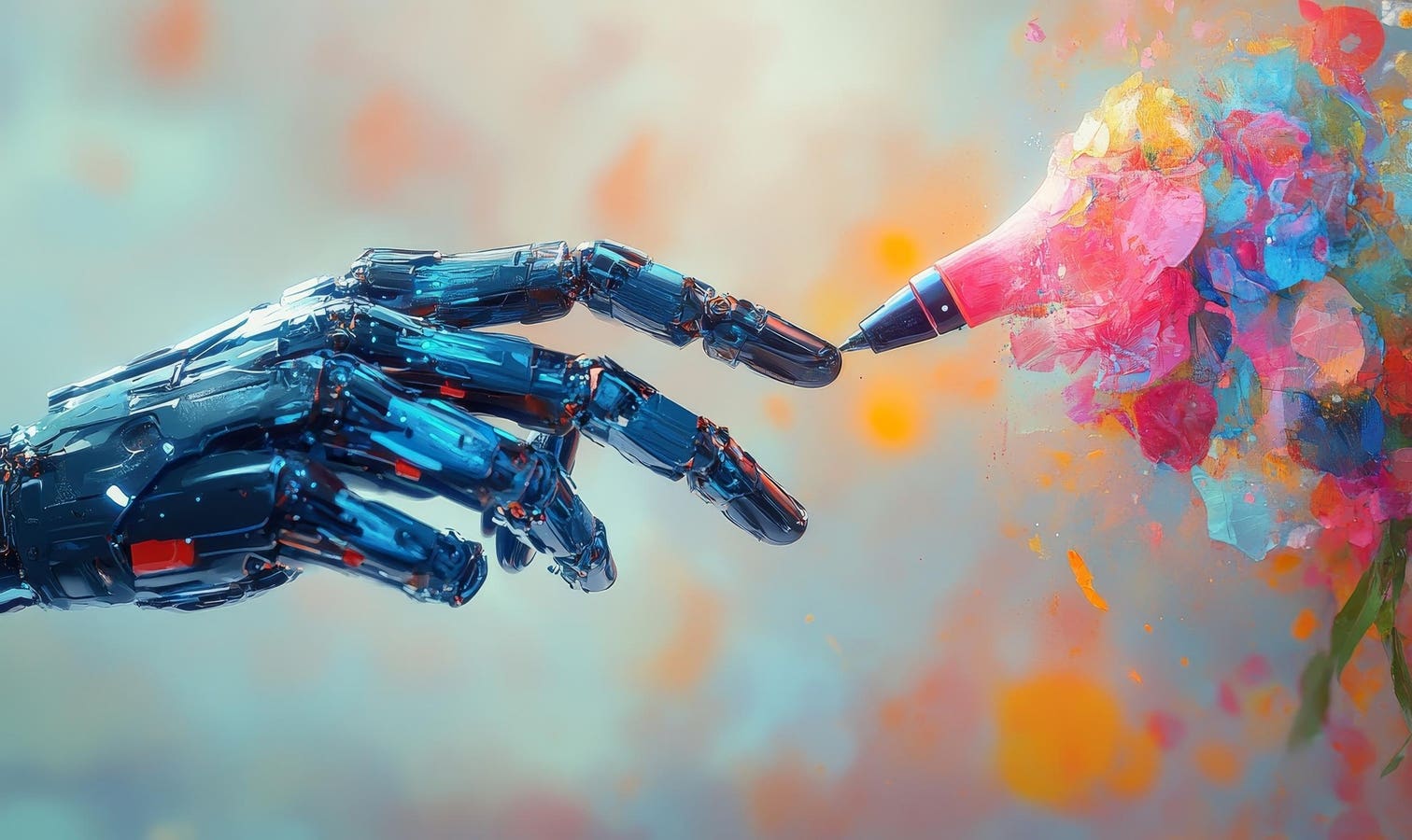
Introduction to AI and Creativity
AI is quickly and dramatically reshaping society, and it’s hard to avoid the changes sweeping through industry as well as our personal lives. As with anything so world-changing, there is still a lot of hype, myths, and in many cases fear surrounding it. Will AI make humans redundant and take our jobs? Will it be used to spread and disseminate fear and disinformation? Will it become sentient, enslave humanity, and take over the world? Well, maybe, but that’s not what I’m talking about today. Today, I’m looking into the frequently aired idea that allowing machines like ChatGPT to think, and even create, for us, will lead to the death of human creativity.
The Threat
One of the biggest worries is that persistently using AI to solve every problem we face could lead to “skill atrophy”. This is in line with the theory that the mind is a muscle, and gets better at its job with exercise. Research is currently ongoing into whether replacing “real” thought with AI thought could lead to us losing skills we’ve developed over millions of years of evolution. Other threats are probably more imminent. If machines replace creative humans, then human creativity becomes less commercially exploitable. This means less pay for creatives, less investment and education in the arts, and fewer opportunities for humans. Ultimately, as AI creativity becomes cheaper and the incentive for humans to be creative themselves diminishes, we could see a rapid increase in the amount of AI content and entertainment that we consume.
The Impact on Human Creativity
Even humans who simply use AI as a tool to help them create could be negatively impacting their own creativity. One study found that while generative AI tools are great for helping writers with some tasks, using them often leads to bland and homogenized work. Undervaluing of human creativity, leading to loss of investment and interest in arts and creative fields, could all have serious knock-on consequences for human creativity and the value of human creatives in society. But is this inevitable, or just one of the possible futures in front of us?
Creativity 2.0
Counter to the idea that AI will damage or destroy the value of human creativity is the idea that it will actually act as a springboard, helping us explore new questions, ideas, and perspectives. It’s also possible that it will have a democratizing effect on creativity. AI chatbots lower the barriers to using digital creative tools, meaning fewer people will be frustrated by failure to get to grips with technology. An example is how AIs can act as assistants to teach us to carry out complex artistic and technical tasks like editing video or writing code. Another argument is that by automating repetitive tasks in the creative process, creatives, problem-solvers, and innovators can spend more time on whatever they feel makes best use of their talents.
Historical Context and Future Possibilities
So a designer might spend less time formatting documents, ensuring they’re following brand guidelines and cleaning up images, and more time finessing their visual storytelling and communicating ideas. Or a novelist could generate timelines to help them keep track of their fictional worlds, rather than having to sift through piles of notes to remember where they left objects and characters. And don’t forget this isn’t the first time humanity has faced these fears. When photography was invented, lots of people thought the art of painting would be forgotten. In reality, it jump-started the impressionist movement and the creation of many great works of art. One hundred fifty years later, painting is still integral to human culture, and millions of us are familiar with great paintings thanks to photos of them.
Myth or Reality?
So, what’s the verdict? Well, I don’t think it would be sensible in any way to say that AI won’t change human creativity. After all, since the dawn of our species, new technologies from cave painting to computing have created new possibilities and inevitably shut down old ones. But that doesn’t necessarily mean it has to devalue, damage or, worst-case scenario, destroy human creativity. From an entertainment perspective, people engage with content like movies, books or music because they provoke human feelings. Music can uplift us, horror movies scare us, and mysteries spark our curiosity. Many people today say they find AI art bland and unfulfilling. We don’t know how that might change in the future. But perhaps right now it’s hampered because we can feel when genuine human emotion has gone into creating something, and we don’t feel it in machine art.
Conclusion
Looking at the bigger picture, creativity also plays a huge role in lots of the things we do every day, from solving problems to navigating relationships with others. These are likely the skills we must be most mindful of preserving. AI tools give us on-the-spot solutions to many challenges that previously required us to exercise and train our brains. We can’t be sure what the consequences of removing those challenges from our lives might be. But it’s early days, and nothing about AI’s impact is set in stone. This means it’s the responsibility of everyone, particularly those of us involved with AI, to shape its development. This could be the difference between a future where all art is made by machines and a future where humans harness technology to create and innovate like never before.
FAQs
- Q: Will AI replace human creatives?
- A: While AI can perform certain creative tasks, it is unlikely to replace human creatives entirely, as human emotion and original thought are unique aspects of human creativity.
- Q: Can AI enhance human creativity?
- A: Yes, AI can act as a tool to enhance human creativity by automating repetitive tasks, providing new perspectives, and assisting in the creative process.
- Q: What are the potential risks of relying on AI for creativity?
- A: The potential risks include skill atrophy, devaluation of human creativity, and over-reliance on technology, which could lead to a loss of human creative skills and original thought.
- Q: How can we ensure that AI benefits human creativity?
- A: By being mindful of its development and use, ensuring that AI is used as a tool to enhance human creativity rather than replace it, and continuing to value and invest in human creative skills and education.




Portable Benefits Could Fix the Gig Economy’s Biggest Problem

Ethical Reasoning Has Become a Core Workplace Skill and Training Programs Are Missing It

Stakeholder Pressure on CEOs Has Reached a Breaking Point

Identity Resilience at Work and Why It Matters More Than Grit

The Revenge of Middle Management and Why Organizations Should Pay Attention

First-Generation Professionals Face a Different Workplace and Nobody Prepares Them for It

Small Business Survival in Underserved Communities Needs More Than Microloans

Aging Populations are Reshaping Labor Markets Faster Than Policy Can Respond

How Emotional Intelligence Can Help You Manage Stress and Build Resilience

Interview with Dr. Kristy K. Taylor, WORxK Global News Magazine Founder

Sarah Herrlinger Talks AirPods Pro Hearing Aid

Unlocking Human Potential: Kim Groshek’s Journey to Transforming Leadership and Stress Resilience

NetWork Your Way to Success: Top Tips for Maximizing Your Professional Network

The Power of Belonging: Why Feeling Accepted Matters in the Workplace

Health-care stocks fall after Warren PBM bill, Brian Thompson shooting

Glenda Benevides: Creating Global Impact Through Music
-
 Resiliency1 year ago
How Emotional Intelligence Can Help You Manage Stress and Build Resilience
-
 Career Advice2 years ago
Interview with Dr. Kristy K. Taylor, WORxK Global News Magazine Founder
-
 Diversity and Inclusion (DEIA)2 years ago
Sarah Herrlinger Talks AirPods Pro Hearing Aid
-
 Changemaker Interviews2 years ago
Unlocking Human Potential: Kim Groshek’s Journey to Transforming Leadership and Stress Resilience
-
 Career Advice2 years ago
NetWork Your Way to Success: Top Tips for Maximizing Your Professional Network
-
 Diversity and Inclusion (DEIA)2 years ago
The Power of Belonging: Why Feeling Accepted Matters in the Workplace
-
 Global Trends and Politics2 years ago
Health-care stocks fall after Warren PBM bill, Brian Thompson shooting
-
 Changemaker Interviews2 years ago
Glenda Benevides: Creating Global Impact Through Music