
Innovation and Technology
The Real Lessons of Steve Jobs

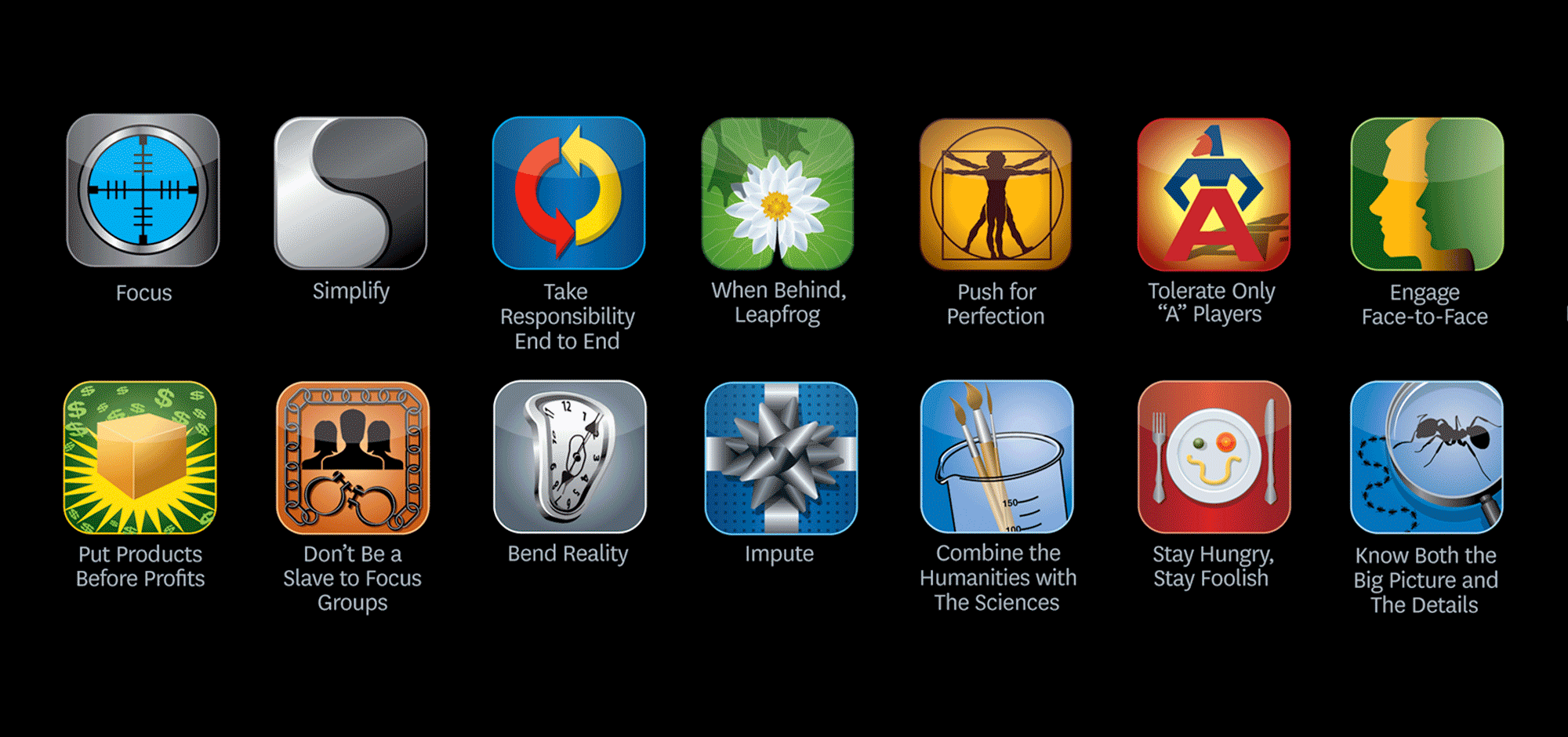
Lessons from Steve Jobs’ Success: Principles for Every CEO to Follow
The Steve Jobs Legend
His saga is the entrepreneurial creation myth writ large: Steve Jobs cofounded Apple in his parents’ garage in 1976, was ousted in 1985, returned to rescue it from near bankruptcy in 1997, and by the time he died, in October 2011, had built it into the world’s most valuable company. Along the way he helped to transform seven industries: personal computing, animated movies, music, phones, tablet computing, retail stores, and digital publishing. He thus belongs in the pantheon of America’s great innovators, along with Thomas Edison, Henry Ford, and Walt Disney. None of these men was a saint, but long after their personalities are forgotten, history will remember how they applied imagination to technology and business.
Principles for Every CEO to Follow
Imagination and Risk-Taking
Jobs was known for his passion for innovation, and his ability to think outside the box. He encouraged his employees to challenge the status quo and come up with new, unconventional ideas. This approach led to some of Apple’s most successful products, such as the iPhone and iPad. Every CEO can learn from Jobs’ approach to imagination and risk-taking by encouraging their own employees to think creatively and take bold action.
Focus and Prioritization
Jobs was notorious for his attention to detail and his ability to prioritize. He was known for his ability to focus on the most important things and eliminate distractions. This allowed him to make quick decisions and stay ahead of the competition. Every CEO can learn from Jobs’ approach to focus and prioritization by setting clear goals and eliminating non-essential tasks.
Empathy and Storytelling
Jobs was a master of storytelling, and he used his ability to connect with people to create a sense of community around Apple’s products. He understood that people’s buying decisions were often driven by emotions, not just logic. Every CEO can learn from Jobs’ approach to empathy and storytelling by understanding their customers’ needs and desires, and creating a narrative that resonates with them.
Conclusion
Steve Jobs’ success was not just due to his innovative products and business model, but also his leadership style and approach to management. Every CEO can learn from Jobs’ principles of imagination, focus, and empathy to create a more innovative and successful organization. By applying these principles, CEOs can drive growth, increase profits, and create a lasting legacy.
FAQs
- What were Steve Jobs’ most successful products?
- What was Steve Jobs’ leadership style like?
- How did Steve Jobs approach innovation?
Steve Jobs’ most successful products include the iPhone, iPad, Macintosh computer, and iPod.
Steve Jobs was known for his demanding and sometimes abrasive leadership style. He was a perfectionist who expected a lot from his employees, but he also inspired loyalty and creativity in those who worked for him.
Steve Jobs approached innovation by combining technology and design to create products that were both functional and beautiful. He encouraged his employees to think outside the box and come up with new, unconventional ideas.




Portable Benefits Could Fix the Gig Economy’s Biggest Problem

Ethical Reasoning Has Become a Core Workplace Skill and Training Programs Are Missing It

Stakeholder Pressure on CEOs Has Reached a Breaking Point

Identity Resilience at Work and Why It Matters More Than Grit

The Revenge of Middle Management and Why Organizations Should Pay Attention

First-Generation Professionals Face a Different Workplace and Nobody Prepares Them for It

Small Business Survival in Underserved Communities Needs More Than Microloans

Aging Populations are Reshaping Labor Markets Faster Than Policy Can Respond

How Emotional Intelligence Can Help You Manage Stress and Build Resilience

Interview with Dr. Kristy K. Taylor, WORxK Global News Magazine Founder

Sarah Herrlinger Talks AirPods Pro Hearing Aid

Unlocking Human Potential: Kim Groshek’s Journey to Transforming Leadership and Stress Resilience

NetWork Your Way to Success: Top Tips for Maximizing Your Professional Network

The Power of Belonging: Why Feeling Accepted Matters in the Workplace

Health-care stocks fall after Warren PBM bill, Brian Thompson shooting

Glenda Benevides: Creating Global Impact Through Music
-
 Resiliency1 year ago
How Emotional Intelligence Can Help You Manage Stress and Build Resilience
-
 Career Advice2 years ago
Interview with Dr. Kristy K. Taylor, WORxK Global News Magazine Founder
-
 Diversity and Inclusion (DEIA)2 years ago
Sarah Herrlinger Talks AirPods Pro Hearing Aid
-
 Changemaker Interviews2 years ago
Unlocking Human Potential: Kim Groshek’s Journey to Transforming Leadership and Stress Resilience
-
 Career Advice2 years ago
NetWork Your Way to Success: Top Tips for Maximizing Your Professional Network
-
 Diversity and Inclusion (DEIA)2 years ago
The Power of Belonging: Why Feeling Accepted Matters in the Workplace
-
 Global Trends and Politics2 years ago
Health-care stocks fall after Warren PBM bill, Brian Thompson shooting
-
 Changemaker Interviews2 years ago
Glenda Benevides: Creating Global Impact Through Music