
Innovation and Technology
These Nobel Prize Winners Paved The Way For Quantum Computing

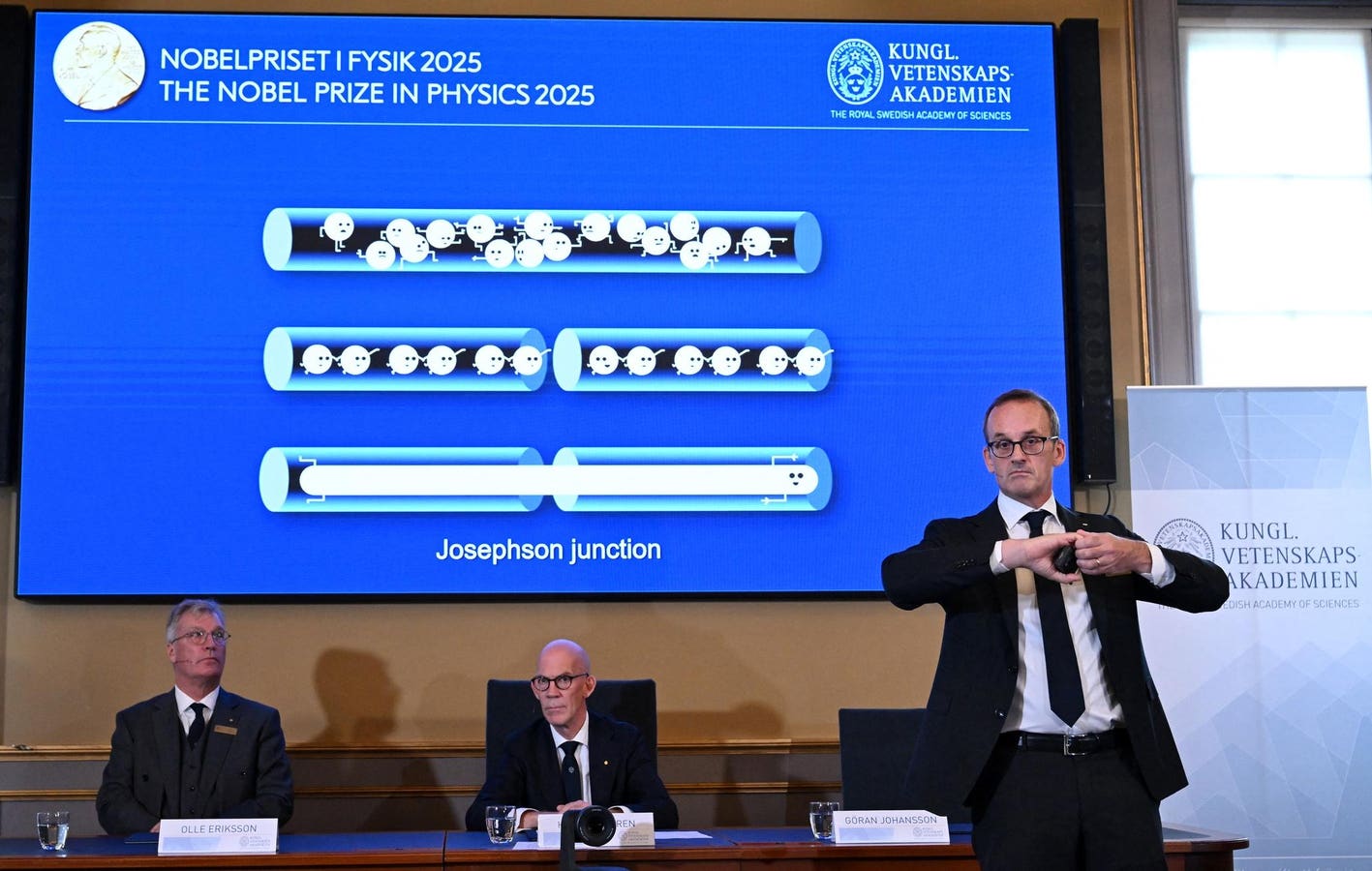
This week, the scientific community celebrated the announcement of the Nobel Prize in Physics, which was awarded to three researchers who paved the way for the development of quantum computers. The prize was given to John Clarke, Michel H. Devoret, and John M. Martinis for their groundbreaking experiments in the 1980s, which led to the creation of superconducting electric circuits that can manipulate electrons to display quantum mechanical properties. This discovery has been crucial in the development of quantum computers, which are now being used by tech companies like Google and IBM.
Breakthroughs in Quantum Computing
The research conducted by Clarke, Devoret, and Martinis has been instrumental in advancing the field of quantum computing. Their experiments involved building a superconducting electric circuit that allows electricity to flow through without resistance. This circuit was then used to manipulate electrons to display certain quantum mechanical properties, which is a crucial component of quantum computers. The discovery has far-reaching implications, and the three researchers will share the approximately $1.2 million award for their contributions to the field.
Startup Uses AI to Track Pathogens
A startup called Hyperspectral is using AI to rapidly detect potentially dangerous microorganisms or chemicals. The company, founded in 2022, aims to use spectrography and AI to identify and classify different substances. Hyperspectral’s AI models are trained on data from thousands of pathogens, enabling its software to quickly identify potential contamination in a sample in minutes. The company has raised a $7 million series A extension, bringing its total funding to about $15.5 million, and is working to bring its “science as a service” into the hands of its first customers.
Quantum Cooling Breakthrough
A quantum hardware startup called EeroQ has demonstrated that it can make a superconducting chip work at temperatures just above 1 Kelvin, which is one degree higher than absolute zero. Currently, quantum computers using these chips have to be cooled to 0.01 K to operate, which requires specialized and expensive equipment. The breakthrough by EeroQ is a significant step towards making quantum computers more practical, as cooling to 1 K is a more feasible and cost-effective option.
Other Notable Developments
In other news, space billionaire Abel Avellan has doubled his net worth in the past month due to his company AST SpaceMobile’s deals with Verizon and other major telecom companies. Additionally, researchers at Florida International University have developed cyberdefenses for drones to prevent them from being hijacked, and rocket startup Stoke Space has raised a $510 million investment round to accelerate development of its reusable spacecraft Nova.
Pro Science Tip: Keep Your Brain Young with Creative Pursuits
A new study has found that engaging in long-term creative pursuits, such as music, painting, or writing, can help keep the brain young. The study, which analyzed the brains of over 1,400 people, found that those who engage in creative activities have “younger” brains than those who don’t, as measured by cognitive tests and brain scans. The study suggests that creative pursuits can help protect brain connections that are vulnerable to accelerated aging.
Entertainment and More from Forbes
For more entertainment and news, check out Forbes’ latest articles, including a profile of Hakeem Jeffries, who became a millionaire, and a story about the world’s youngest self-made billionaire, who is behind a fast-growing crypto startup. Additionally, learn about a $250 million plan to pull lithium from the Great Salt Lake for use in batteries, and discover the best pop album of 2025, Born Blue by singer-songwriter Kings Eliot.




Portable Benefits Could Fix the Gig Economy’s Biggest Problem

Ethical Reasoning Has Become a Core Workplace Skill and Training Programs Are Missing It

Stakeholder Pressure on CEOs Has Reached a Breaking Point

Identity Resilience at Work and Why It Matters More Than Grit

The Revenge of Middle Management and Why Organizations Should Pay Attention

First-Generation Professionals Face a Different Workplace and Nobody Prepares Them for It

Small Business Survival in Underserved Communities Needs More Than Microloans

Aging Populations are Reshaping Labor Markets Faster Than Policy Can Respond

How Emotional Intelligence Can Help You Manage Stress and Build Resilience

Interview with Dr. Kristy K. Taylor, WORxK Global News Magazine Founder

Sarah Herrlinger Talks AirPods Pro Hearing Aid

Unlocking Human Potential: Kim Groshek’s Journey to Transforming Leadership and Stress Resilience

NetWork Your Way to Success: Top Tips for Maximizing Your Professional Network

The Power of Belonging: Why Feeling Accepted Matters in the Workplace

Health-care stocks fall after Warren PBM bill, Brian Thompson shooting

Glenda Benevides: Creating Global Impact Through Music
-
 Resiliency1 year ago
How Emotional Intelligence Can Help You Manage Stress and Build Resilience
-
 Career Advice2 years ago
Interview with Dr. Kristy K. Taylor, WORxK Global News Magazine Founder
-
 Diversity and Inclusion (DEIA)2 years ago
Sarah Herrlinger Talks AirPods Pro Hearing Aid
-
 Changemaker Interviews2 years ago
Unlocking Human Potential: Kim Groshek’s Journey to Transforming Leadership and Stress Resilience
-
 Career Advice2 years ago
NetWork Your Way to Success: Top Tips for Maximizing Your Professional Network
-
 Diversity and Inclusion (DEIA)2 years ago
The Power of Belonging: Why Feeling Accepted Matters in the Workplace
-
 Global Trends and Politics2 years ago
Health-care stocks fall after Warren PBM bill, Brian Thompson shooting
-
 Changemaker Interviews2 years ago
Glenda Benevides: Creating Global Impact Through Music