
Innovation and Technology
Nvidia Expands Into Quantum Computing And Fusion Power

Emerging Tech Insights: Nvidia’s Latest Moves and AI’s Struggles in Finance
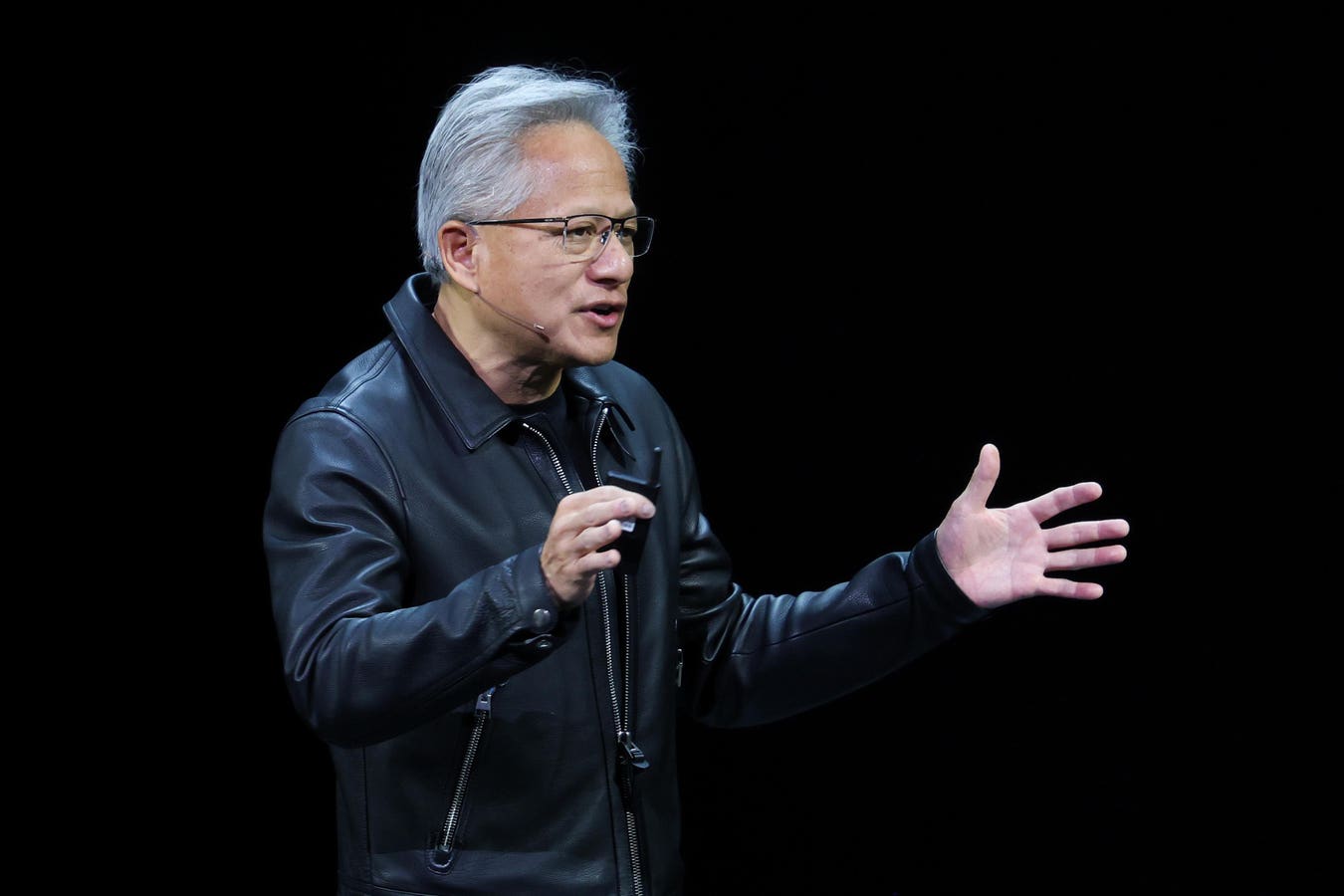
Nvidia, the $5 trillion hardware giant, recently held its annual GTC conference, where the company announced several partnerships related to emerging technologies. One notable partnership is with Oracle and the Department of Energy to build two AI supercomputers, powered by over 100,000 GPUs. These supercomputers will be used to accelerate research with AI agents that can carry out scientific tasks at the Argonne National Laboratory.
Nvidia also announced partnerships to build “digital twins” with industrial manufacturers such as Caterpillar, Toyota, and TSMC. These digital twins will enable engineers to test new ideas, such as rearranging equipment, in a simulated environment before implementing them in the real world. Additionally, Nvidia built a digital twin for a fusion reactor with partner General Atomics, using its software and hardware to power the simulation and potentially speed up fusion development.
Furthermore, Nvidia introduced “NVQLink,” a computing architecture that enables conventional AI supercomputers to be integrated with quantum processors. This solution is hardware-agnostic, which is significant given the multiple distinct quantum tech approaches in the industry. Nvidia is working with 17 different quantum computing partners on NVQLink, as well as nine U.S. national laboratories.
Challenges in AI Adoption: Why AI Models Struggle with Finance
Despite the significant investments in AI, with companies like Meta, Google, and Microsoft planning to hike their capital expenditures to build out AI data centers, the return on investment for AI use cases has been weak. A recent MIT study found that 95% of generative AI pilots at companies have failed to develop beyond the proof-of-concept stage. Leading AI labs like OpenAI are still struggling to get their AI to perform tasks that entry-level investment bankers can do.
The main challenge lies in the lack of specialized real-world workflow data. While there is an abundance of publicly available data for generating language or code, there is significantly less data available for tasks like managing an IPO or merger. This data is largely private, making it difficult for AI models to learn and master these specific skillsets.
Robert Nishihara, co-founder of Anyscale, notes that large language models perform well when they have access to a lot of data, but the lack of data for real-world tasks hinders AI’s ability to master these skills. This highlights the need for more data and better training methods to improve AI’s performance in finance and other industries.
Breakthrough Discovery: Superconducting Semiconductors
Researchers have made a groundbreaking discovery by turning germanium, a semiconductor used in computers and fiber optics, into a superconductor. This allows electricity to flow without resistance, boosting energy efficiency and enabling quantum computation. The discovery could pave the way for the next generation of quantum machines and has significant implications for various industries.
Other Notable Developments in Science and Tech
Researchers at ETH Zurich have developed artificial muscles that can be wirelessly controlled with ultrasound, enabling smoother and gentler movements than conventional robotics. Additionally, new findings suggest that Mars may be able to support microscopic life due to liquid water flowing through its permafrost.
AI company SandboxAQ has released a quantitative AI model focused on discovering new catalysts for energy, chemical, agricultural, and other applications. The model was trained on over 13 million quantum chemistry calculations. The Japanese space agency’s new HTV-X spacecraft has also delivered cargo to the International Space Station for the first time.
Pro Science Tip: Improve Your Sleep with a Healthy Diet
A new study has found that increasing fruit and vegetable intake to the recommended daily amount can lead to better sleep. The study suggests that carbohydrates found in fruits and vegetables cause the body to produce more melatonin, promoting better sleep. With only about 10% of Americans meeting the daily recommendation of five cups of fruits and vegetables, incorporating more of these foods into your diet could have a significant impact on your sleep quality.




Portable Benefits Could Fix the Gig Economy’s Biggest Problem

Ethical Reasoning Has Become a Core Workplace Skill and Training Programs Are Missing It

Stakeholder Pressure on CEOs Has Reached a Breaking Point

Identity Resilience at Work and Why It Matters More Than Grit

The Revenge of Middle Management and Why Organizations Should Pay Attention

First-Generation Professionals Face a Different Workplace and Nobody Prepares Them for It

Small Business Survival in Underserved Communities Needs More Than Microloans

Aging Populations are Reshaping Labor Markets Faster Than Policy Can Respond

How Emotional Intelligence Can Help You Manage Stress and Build Resilience

Interview with Dr. Kristy K. Taylor, WORxK Global News Magazine Founder

Sarah Herrlinger Talks AirPods Pro Hearing Aid

Unlocking Human Potential: Kim Groshek’s Journey to Transforming Leadership and Stress Resilience

NetWork Your Way to Success: Top Tips for Maximizing Your Professional Network

The Power of Belonging: Why Feeling Accepted Matters in the Workplace

Health-care stocks fall after Warren PBM bill, Brian Thompson shooting

Glenda Benevides: Creating Global Impact Through Music
-
 Resiliency1 year ago
How Emotional Intelligence Can Help You Manage Stress and Build Resilience
-
 Career Advice2 years ago
Interview with Dr. Kristy K. Taylor, WORxK Global News Magazine Founder
-
 Diversity and Inclusion (DEIA)2 years ago
Sarah Herrlinger Talks AirPods Pro Hearing Aid
-
 Changemaker Interviews2 years ago
Unlocking Human Potential: Kim Groshek’s Journey to Transforming Leadership and Stress Resilience
-
 Career Advice2 years ago
NetWork Your Way to Success: Top Tips for Maximizing Your Professional Network
-
 Diversity and Inclusion (DEIA)2 years ago
The Power of Belonging: Why Feeling Accepted Matters in the Workplace
-
 Global Trends and Politics2 years ago
Health-care stocks fall after Warren PBM bill, Brian Thompson shooting
-
 Changemaker Interviews2 years ago
Glenda Benevides: Creating Global Impact Through Music