
Innovation and Technology
Seagate Shows 6.9TB Per Disk And Discusses Ferroelectric Recording

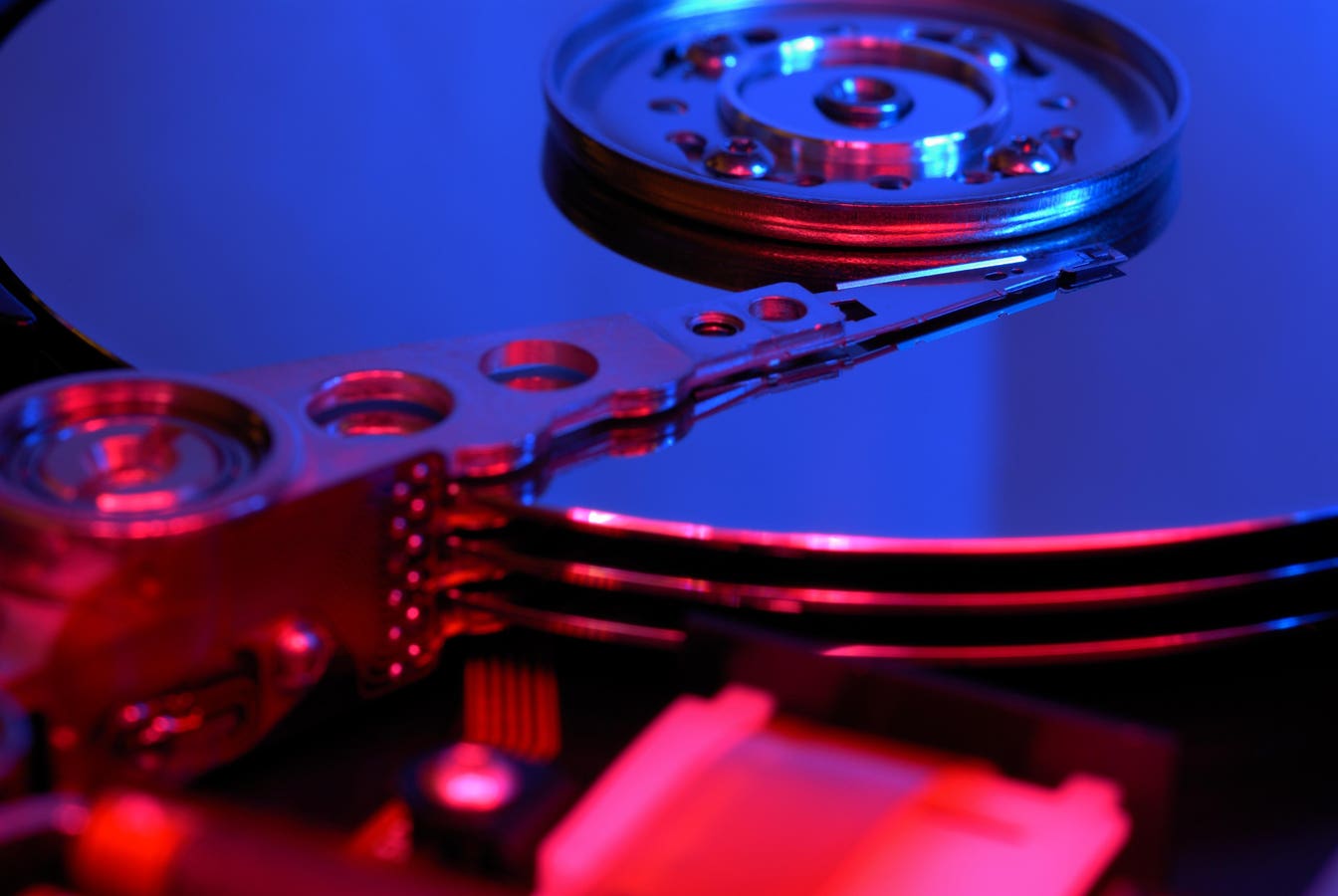
Advancements in Hard Disk Drive Technology: Seagate’s 6.9TB per Disk Demonstration
Recent reports have highlighted a significant breakthrough in hard disk drive (HDD) technology, with Seagate Technology demonstrating a 6.9TB per disk laboratory achievement. This development was first reported by guru3D and is based on a seminar abstract presented by Seagate in October. The seminar discussed a multi-level recording technique using a three-dimensional magnetic recording medium, which could potentially lead to higher storage capacities.
The demonstration is a result of collaborative research between Seagate Technology, NIMS, and Tohoku University, which began in March 2024. The team explored the use of multi-level recording to increase magnetic recording areal density beyond the current limits of heat-assisted magnetic recording (HAMR). This technology has the potential to enable 3-4 multiple recording levels, significantly increasing storage capacity.
Increasing Areal Density and Storage Capacity
The article references an increase in magnetic recording areal density from 1.5Tbpsi to 4.0Tbpsi and beyond. To put this into perspective, current 32TB 10-disk HDDs require an areal density of approximately 1.5Tbpsi. A 4.0Tbpsi HDD could potentially provide a 10-disk 85TB capacity. The image below illustrates the comparison between conventional HAMR recording and two-layer recording.
Seagate’s May 2025 analyst event mentioned a laboratory demonstration achieving 6.5TB per disk, which translates to a 10-disk 65TB HDD. The recent announcement of 6.9TB per disk likely implies an areal density of around 3.2Tbpsi, potentially utilizing multi-layer recording. Although the details of the October announcement are unclear, it is evident that Seagate is pushing the boundaries of HDD technology.
Ferroelectric Recording: A Potential Successor to Magnetic Recording
The October paper abstract also mentioned ferroelectric recording as a potential successor to magnetic recording. Ferroelectric solid-state non-volatile memory devices have been around for decades, with applications in RFID readable fare cards. However, the materials used in older ferroelectric memory devices contained elements like lead, which are not suitable for modern semiconductor manufacturing processes.
Recent discoveries have found that hafnium oxide can exhibit a ferroelectric state, making it a potential material for solid-state memory. Hafnium oxide is commonly used as a higher dielectric constant insulator in modern solid-state electronics, making it a more acceptable material for modern semiconductor manufacturing facilities. A ferroelectric recording technology from Seagate could potentially extend conventional HDD technology, using ferroelectric recording approaches instead of conventional ferromagnetic recording.
A search revealed information on a ferroelectric recording drive from 2016, which demonstrated high-density read/write operations using a hard disk drive-type test system. The abstract mentioned achieving a recording density of 3.4 Tbit/in.2 and successfully demonstrating writing and reading operations at a density of 1 Tbit/in.2. Further research is needed to understand how this ferroelectric recording drive works, and we will share more information as it becomes available.
Conclusion
Seagate’s 6.9TB per disk demonstration is a significant achievement, likely made possible by multi-level recording. The mention of ferroelectric recording as a potential future technology is also noteworthy. As HDD technology continues to evolve, we can expect to see further innovations and increased storage capacities. With the potential for ferroelectric recording to succeed magnetic recording, the future of data storage looks promising.




Portable Benefits Could Fix the Gig Economy’s Biggest Problem

Ethical Reasoning Has Become a Core Workplace Skill and Training Programs Are Missing It

Stakeholder Pressure on CEOs Has Reached a Breaking Point

Identity Resilience at Work and Why It Matters More Than Grit

The Revenge of Middle Management and Why Organizations Should Pay Attention

First-Generation Professionals Face a Different Workplace and Nobody Prepares Them for It

Small Business Survival in Underserved Communities Needs More Than Microloans

Aging Populations are Reshaping Labor Markets Faster Than Policy Can Respond

How Emotional Intelligence Can Help You Manage Stress and Build Resilience

Interview with Dr. Kristy K. Taylor, WORxK Global News Magazine Founder

Sarah Herrlinger Talks AirPods Pro Hearing Aid

Unlocking Human Potential: Kim Groshek’s Journey to Transforming Leadership and Stress Resilience

NetWork Your Way to Success: Top Tips for Maximizing Your Professional Network

The Power of Belonging: Why Feeling Accepted Matters in the Workplace

Health-care stocks fall after Warren PBM bill, Brian Thompson shooting

Glenda Benevides: Creating Global Impact Through Music
-
 Resiliency1 year ago
How Emotional Intelligence Can Help You Manage Stress and Build Resilience
-
 Career Advice2 years ago
Interview with Dr. Kristy K. Taylor, WORxK Global News Magazine Founder
-
 Diversity and Inclusion (DEIA)2 years ago
Sarah Herrlinger Talks AirPods Pro Hearing Aid
-
 Changemaker Interviews2 years ago
Unlocking Human Potential: Kim Groshek’s Journey to Transforming Leadership and Stress Resilience
-
 Career Advice2 years ago
NetWork Your Way to Success: Top Tips for Maximizing Your Professional Network
-
 Diversity and Inclusion (DEIA)2 years ago
The Power of Belonging: Why Feeling Accepted Matters in the Workplace
-
 Global Trends and Politics2 years ago
Health-care stocks fall after Warren PBM bill, Brian Thompson shooting
-
 Changemaker Interviews2 years ago
Glenda Benevides: Creating Global Impact Through Music