
Innovation and Technology
Inside The Enterprise Shift Redefining Autonomous AI

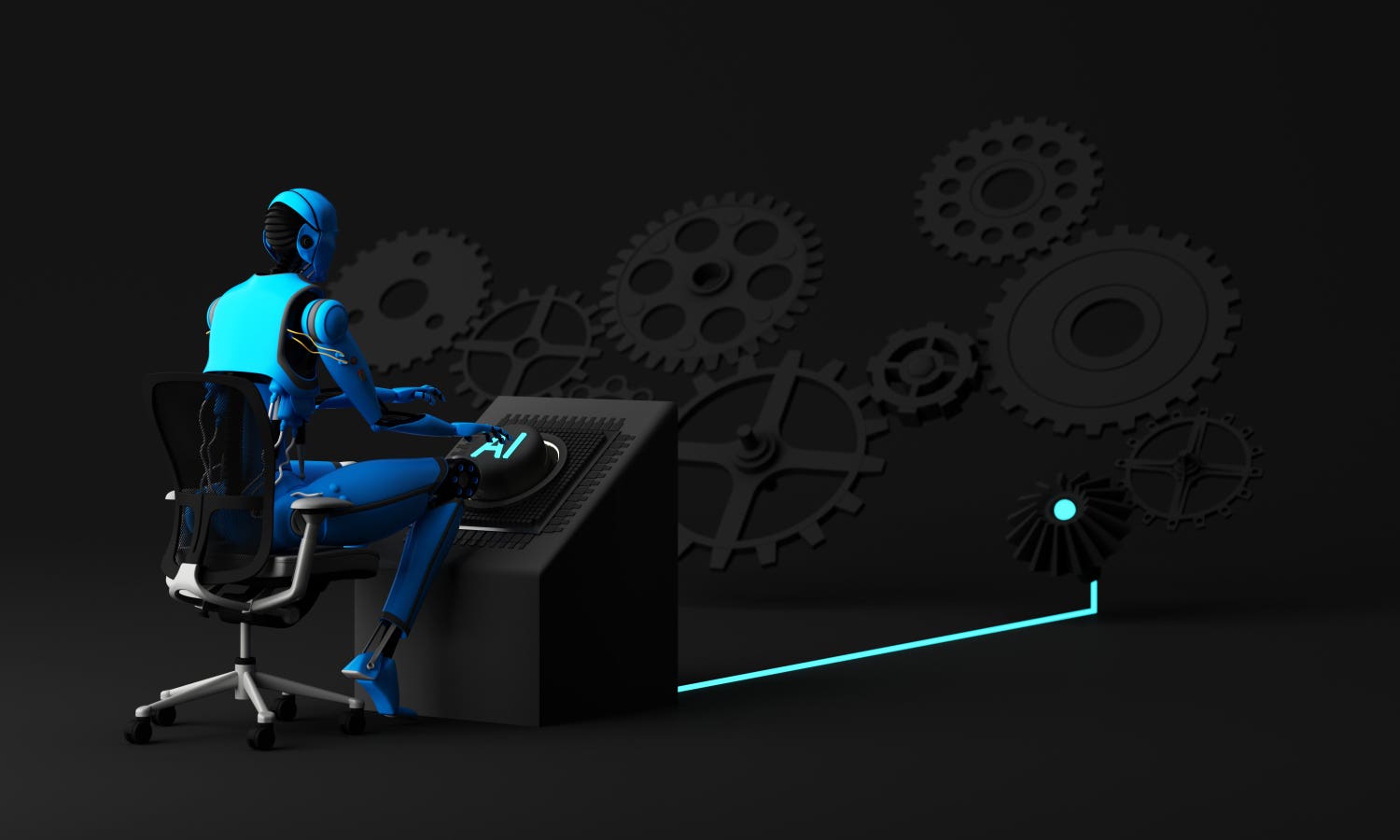
The integration of artificial intelligence (AI) into daily workflows is becoming increasingly prevalent, with a growing emphasis on trust, accountability, and predictable results. This shift is largely driven by the need for autonomy in enterprise settings, where AI agents are being tasked with navigating complex workflows, answering support tickets, and surfacing insights. According to a recent report by Net Guru, AI adoption and experimentation across business functions have risen to nearly 80%, up from approximately 55% a year earlier.
A key factor in the successful implementation of AI agents is the development of intelligence rooted in semantics, control, and contextual reasoning. Sridhar Ramaswamy, CEO of Snowflake, emphasizes the importance of building intelligent agents that are grounded in a customer’s data and perform tasks that real users want. This approach is reflected in Snowflake’s platform, where the company is betting on a future where enterprise AI agents are not only powerful but also accountable, precise, and productively constrained.
The Evolution of Enterprise AI
The concept of enterprise AI has largely remained passive, with most deployments stopping at summarization or on-demand data retrieval. However, Snowflake is pushing beyond this boundary by building agents that can reason through multi-step processes and take limited action, all within user-defined rules and permissions. This shift towards active execution is marked by the introduction of Snowflake Intelligence, a suite of agentic capabilities that includes tools for automatically generating SQL queries, recommending actions across dashboards, and assisting in data classification.
One of the primary goals of Snowflake’s approach is to make users 10x more productive, but only if the AI operates with the right constraints. To achieve this, the company is investing in a semantically aware platform that understands how data maps to business processes and keeps the model grounded in the reality of each organization’s operations. This approach is designed to reduce hallucinations, which occur when an AI model confidently invents facts or outputs that don’t match reality.
Addressing the Challenge of Hallucination
Hallucination is a significant problem in enterprise AI, where the stakes are too high to tolerate errors. Snowflake’s answer to this challenge is to limit what the model is allowed to see, touch, and say, by reducing hallucinations through infrastructure-first approaches. This involves constraining every single action an agent takes with policies, ensuring that users are allowed to perform specific tasks with specific data, and only in certain situations.
The control is built directly into the platform itself, across roles, permissions, and data mesh structures. The goal is to make AI outputs both reproducible and reviewable, so teams can audit what an agent did and why. This philosophy distinguishes Snowflake’s vision from many open-ended agentic tools available in the market, which often ask customers to trust the model without providing sufficient control or accountability.
Reimagining the Role of AI Agents
One of the biggest concerns surrounding autonomous AI is job displacement, as agents become more capable and potentially replace human workers. However, Ramaswamy emphasizes that the goal of AI is not to replace people but to make their work more effective. Snowflake’s interface design reflects this belief, with users staying in the loop and having control over the agent’s output.
The company’s earliest agentic deployments are already showing the potential of this approach, with customers like Cisco, TS Imagine, Fanatics, and Toyota Motor Europe embedding agents into workflows where speed and accuracy matter, but decisions still require human judgment. These use cases demonstrate that trust and transparency are winning factors in the agentic arms race, and that the right foundation is crucial for powering responsible autonomy.
Building a Foundation for Responsible Autonomy
Behind every AI agent, there’s a stack of decisions, including how the data is structured, how the model is grounded, how policies are enforced, and how results are monitored. This is where the conversation about AI shifts from features to infrastructure, and where many enterprise deployments still struggle. Snowflake’s vision goes beyond agents, including Snowflake Cortex, Streamlit, and Document AI, which create a pathway from raw data to safe execution, without sacrificing visibility or human oversight.
The company’s emphasis on trust and control reflects a broader enterprise reality, where autonomy should be introduced carefully, with systems that prove they can be trusted before being given more responsibility. As companies scale AI, most are still in the early stages of adoption and governance, and only a fraction have pushed agentic systems into widespread use. The next phase of enterprise AI is likely to be as much about culture, policy, and data readiness as it is about model capability.




Portable Benefits Could Fix the Gig Economy’s Biggest Problem

Ethical Reasoning Has Become a Core Workplace Skill and Training Programs Are Missing It

Stakeholder Pressure on CEOs Has Reached a Breaking Point

Identity Resilience at Work and Why It Matters More Than Grit

The Revenge of Middle Management and Why Organizations Should Pay Attention

First-Generation Professionals Face a Different Workplace and Nobody Prepares Them for It

Small Business Survival in Underserved Communities Needs More Than Microloans

Aging Populations are Reshaping Labor Markets Faster Than Policy Can Respond

How Emotional Intelligence Can Help You Manage Stress and Build Resilience

Interview with Dr. Kristy K. Taylor, WORxK Global News Magazine Founder

Sarah Herrlinger Talks AirPods Pro Hearing Aid

Unlocking Human Potential: Kim Groshek’s Journey to Transforming Leadership and Stress Resilience

NetWork Your Way to Success: Top Tips for Maximizing Your Professional Network

The Power of Belonging: Why Feeling Accepted Matters in the Workplace

Health-care stocks fall after Warren PBM bill, Brian Thompson shooting

Glenda Benevides: Creating Global Impact Through Music
-
 Resiliency1 year ago
How Emotional Intelligence Can Help You Manage Stress and Build Resilience
-
 Career Advice2 years ago
Interview with Dr. Kristy K. Taylor, WORxK Global News Magazine Founder
-
 Diversity and Inclusion (DEIA)2 years ago
Sarah Herrlinger Talks AirPods Pro Hearing Aid
-
 Changemaker Interviews2 years ago
Unlocking Human Potential: Kim Groshek’s Journey to Transforming Leadership and Stress Resilience
-
 Career Advice2 years ago
NetWork Your Way to Success: Top Tips for Maximizing Your Professional Network
-
 Diversity and Inclusion (DEIA)2 years ago
The Power of Belonging: Why Feeling Accepted Matters in the Workplace
-
 Global Trends and Politics2 years ago
Health-care stocks fall after Warren PBM bill, Brian Thompson shooting
-
 Changemaker Interviews2 years ago
Glenda Benevides: Creating Global Impact Through Music