
Resiliency
The Distributed Response: Building Resilience from the Edge Up

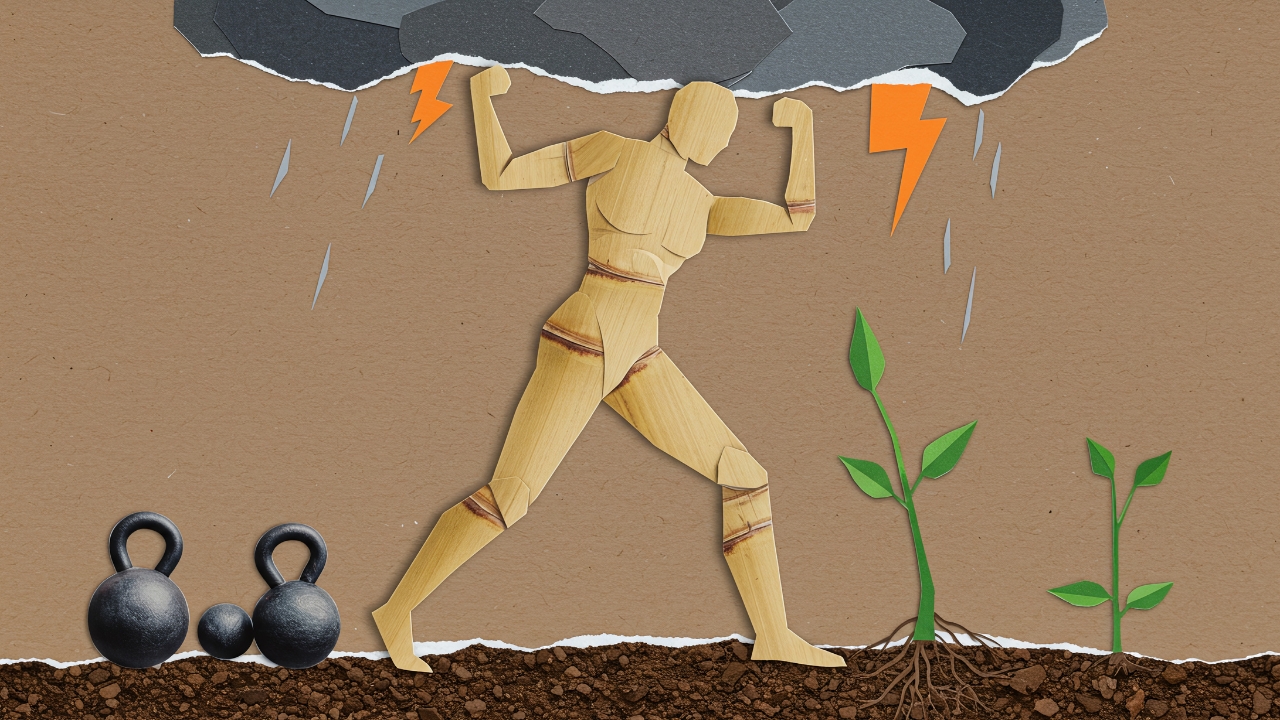
The traditional approach to organizational resilience has historically relied on a centralized “Crisis Management Team.” When a disruption occurred, the protocol was to wait for information to travel up the chain of command, for a decision to be made at the top, and for instructions to be filtered back down. In a modern environment where market shifts and technical failures happen in seconds, this lag time has become a significant liability.
Today’s most durable organizations are pivoting toward Edge-Led Resilience. This model assumes that the people closest to the problem—the “edge” of the organization—are the best equipped to solve it. Resilience is no longer seen as a set of instructions stored in a binder, but as a cultural capability that allows every employee to act as a first responder.
The Problem with Centralized Bottlenecks
Centralized resilience models are built for “known-unknowns”—predictable problems like power outages or seasonal supply shifts. They struggle, however, with “unknown-unknowns”—unprecedented events that don’t fit into a pre-written playbook. In these scenarios, a central committee often lacks the real-time data needed to make an accurate call, leading to “analysis paralysis.”
By the time the executive team has fully grasped the situation, the window for effective intervention has often closed. Edge-led resilience solves this by distributing the authority to pivot, allowing the organization to respond to threats in parallel rather than in a linear sequence.
Three Pillars of Edge-Led Resilience
To move authority to the edge without creating chaos, organizations are focusing on three structural requirements:
1. High-Context Transparency For a frontline worker to make a high-stakes decision, they need access to the same strategic context as a senior leader. This involves maintaining “The Glass House” approach to data—ensuring that real-time financial health, supply chain status, and risk assessments are available to all. When the “why” behind a company’s strategy is clear, employees can make autonomous choices that align with the long-term mission even in the heat of a crisis.
2. Psychological Safety and the ‘Safe-to-Fail’ Protocol True resilience requires a culture where an employee feels safe making a split-second decision, even if it turns out to be wrong. Organizations are implementing “Safe-to-Fail” guardrails—pre-defined boundaries within which employees can experiment or pivot without seeking approval. If a decision falls within these boundaries, the employee is protected from repercussions, fostering a culture of proactive problem-solving rather than fearful hesitation.
3. Cognitive Diversity as a Survival Tool Resilience is a byproduct of how many different perspectives can be brought to bear on a problem. Groupthink is the enemy of adaptation. Resilient teams are intentionally built with a mix of “personality archetypes”: the skeptic who identifies risks early, the visionary who sees alternative paths, and the pragmatist who understands the operational constraints. This diversity ensures that the “edge” response isn’t just fast, but well-rounded.
The Shift from ‘Planning’ to ‘Preparedness’
There is a critical distinction between having a plan and being prepared. A plan is static; preparedness is a state of being. Resilient organizations are replacing long, descriptive planning documents with Scenario-Based Wargaming.
Instead of reading a manual, teams participate in regular, high-intensity simulations where they must navigate a hypothetical total system failure. These exercises aren’t designed to find the “correct” answer, but to build the “muscle memory” of collaborative decision-making. Over time, these sessions expose the hidden dependencies in the organization—those small, overlooked links that could cause a domino effect during a real disruption.
Redefining the Role of Leadership
In this decentralized model, the role of the CEO and the executive suite changes fundamentally. They are no longer the “Chief Deciders” during a crisis; they become the Chief Context Officers. Their primary responsibility is to ensure the organization’s “Operating System”—its values, its communication channels, and its trust levels—is robust enough to support autonomous action.
By shifting the weight of resilience from the center to the edge, companies are creating a self-healing system. When a problem strikes one part of the network, the rest of the organization doesn’t wait for permission to help; it adapts, reroutes, and recovers in real-time.


Portable Benefits Could Fix the Gig Economy’s Biggest Problem

Ethical Reasoning Has Become a Core Workplace Skill and Training Programs Are Missing It

Stakeholder Pressure on CEOs Has Reached a Breaking Point

Identity Resilience at Work and Why It Matters More Than Grit

The Revenge of Middle Management and Why Organizations Should Pay Attention

First-Generation Professionals Face a Different Workplace and Nobody Prepares Them for It

Small Business Survival in Underserved Communities Needs More Than Microloans

Aging Populations are Reshaping Labor Markets Faster Than Policy Can Respond

How Emotional Intelligence Can Help You Manage Stress and Build Resilience

Interview with Dr. Kristy K. Taylor, WORxK Global News Magazine Founder

Sarah Herrlinger Talks AirPods Pro Hearing Aid

Unlocking Human Potential: Kim Groshek’s Journey to Transforming Leadership and Stress Resilience

NetWork Your Way to Success: Top Tips for Maximizing Your Professional Network

The Power of Belonging: Why Feeling Accepted Matters in the Workplace

Health-care stocks fall after Warren PBM bill, Brian Thompson shooting

Glenda Benevides: Creating Global Impact Through Music
-
 Resiliency1 year ago
How Emotional Intelligence Can Help You Manage Stress and Build Resilience
-
 Career Advice2 years ago
Interview with Dr. Kristy K. Taylor, WORxK Global News Magazine Founder
-
 Diversity and Inclusion (DEIA)2 years ago
Sarah Herrlinger Talks AirPods Pro Hearing Aid
-
 Changemaker Interviews2 years ago
Unlocking Human Potential: Kim Groshek’s Journey to Transforming Leadership and Stress Resilience
-
 Career Advice2 years ago
NetWork Your Way to Success: Top Tips for Maximizing Your Professional Network
-
 Diversity and Inclusion (DEIA)2 years ago
The Power of Belonging: Why Feeling Accepted Matters in the Workplace
-
 Global Trends and Politics2 years ago
Health-care stocks fall after Warren PBM bill, Brian Thompson shooting
-
 Changemaker Interviews2 years ago
Glenda Benevides: Creating Global Impact Through Music