
Innovation and Technology
AI Companies Are Facing A Potential $800 Billion Shortfall

The world of technology is constantly evolving, and this week is no exception. From the latest advancements in AI to innovative solutions in bond trading, there’s always something new to explore. In this article, we’ll delve into the latest developments in the tech industry, including the potential economic implications of AI, the use of quantum computers in bond trading, and the discovery of magnetic transistors.
The Economic Implications of AI
As AI technology continues to advance, it’s becoming increasingly clear that its computational demands are growing at an alarming rate. According to a recent report from Bain & Company, the computational demands of AI are growing at about twice the speed of Moore’s Law, which predicts that computing power per dollar doubles about every two years. This poses a significant challenge, as chip manufacturers are running into physical limitations that are slowing down the progression of Moore’s Law.
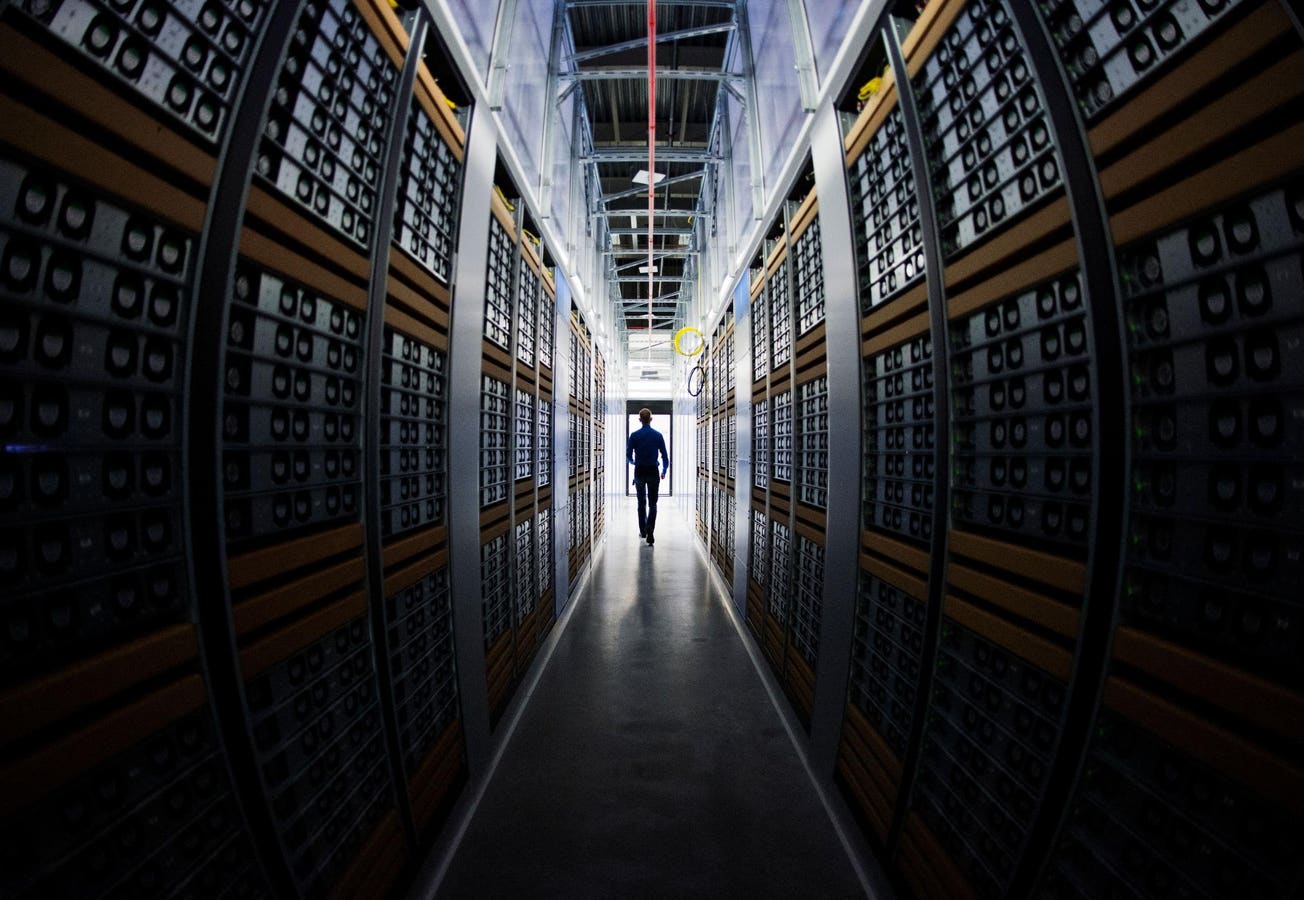
The result is a growing need for data centers to keep up with the increasing demands of AI. However, this growth faces a serious barrier: economics. By 2030, tech companies will need to find $2 trillion in new AI revenue to make a profit on the cost of deployment, but estimates suggest that they’ll be about $800 billion short. This could have significant implications for the economy as a whole, potentially even leading to recession if companies can’t find the revenue they need to keep spending on AI infrastructure.
Quantum Computers in Bond Trading
A team at HSBC bank, working with researchers at IBM, has successfully used quantum computers to predict the bond market. By developing a hybrid approach that combined conventional and quantum algorithms, the team was able to achieve a 34% improvement in prediction accuracy compared to purely classical computing approaches. This represents a significant breakthrough in the use of quantum computers for real-world business problems, and could potentially give companies a competitive edge in the bond market.
The team’s approach used IBM’s quantum computers to run quantum algorithms, which were then combined with conventional algorithms to produce the final result. This hybrid approach allowed the team to leverage the strengths of both quantum and classical computing, and could potentially be used in a variety of other applications beyond bond trading.
Discovery of Magnetic Transistors
Engineers at MIT have made a significant breakthrough in the development of magnetic transistors, which could enable faster and more energy-efficient semiconductors. By using chromium sulfur bromide instead of silicon in a conventional microchip, the researchers were able to create transistors that can be switched on and off with an electric current. This could potentially lead to significant advances in a variety of applications, including AI, where faster and more efficient processing is critical.
The use of magnetic transistors also allows for memory to be built into the chip, rather than being a separate component. This could potentially speed up a number of applications, and could also lead to significant advances in the development of more efficient and effective computing systems.
Other Developments in Tech
In addition to these significant advancements, there have been a number of other developments in the tech industry this week. Impulse Space has signed a 2027 launch deal with satellite communications company Astranis, which will use a SpaceX Falcon 9 to deliver Impulse’s Helios rocket to low Earth orbit. Venture capital firm Acumen has raised nearly $250 million for its effort to electrify 70 million people in sub-Saharan Africa using primarily off-grid solar power. And Major League Baseball is bringing robot umpires to the plate, which will determine a ball or strike in the event of a challenge to the human umpire’s call.
NASA has also announced its newest class of astronauts, which includes 10 people selected from over 8,000 candidates. The agency’s latest explorers will join the existing astronaut corps, and for the first time ever, a majority of the class are women. This is a significant milestone for NASA, and could potentially lead to a more diverse and inclusive astronaut corps in the future.
Conclusion
In conclusion, this week has seen a number of significant developments in the tech industry, from the potential economic implications of AI to the use of quantum computers in bond trading and the discovery of magnetic transistors. These advancements have the potential to lead to significant advances in a variety of applications, and could potentially change the way we live and work in the future. As the tech industry continues to evolve, it will be exciting to see what other developments and innovations emerge in the weeks and months to come.




Community Mentorship Programs Help Strengthen Local Workforce and Social Impact

Low-Code Platforms are Changing How Businesses Build Internal Technology

Microlearning in Employee Training: A Practical Approach to Workplace Skill Development

Decision-Making Frameworks Improve Strategic Leadership and Organizational Clarity

Career Ladder Programs Strengthen Workforce Development and Employee Retention

Workplace Recognition Programs Improve Organizational Culture and Employee Engagement

Why Mental Endurance is Essential for Workplace Resilience

What Informational Interviews are and Why they Matter

How Emotional Intelligence Can Help You Manage Stress and Build Resilience

Interview with Dr. Kristy K. Taylor, WORxK Global News Magazine Founder

Sarah Herrlinger Talks AirPods Pro Hearing Aid

NetWork Your Way to Success: Top Tips for Maximizing Your Professional Network

Unlocking Human Potential: Kim Groshek’s Journey to Transforming Leadership and Stress Resilience

The Power of Belonging: Why Feeling Accepted Matters in the Workplace

Health-care stocks fall after Warren PBM bill, Brian Thompson shooting

Glenda Benevides: Creating Global Impact Through Music
-
 Resiliency7 months ago
How Emotional Intelligence Can Help You Manage Stress and Build Resilience
-
 Career Advice1 year ago
Interview with Dr. Kristy K. Taylor, WORxK Global News Magazine Founder
-
 Diversity and Inclusion (DEIA)1 year ago
Sarah Herrlinger Talks AirPods Pro Hearing Aid
-
 Career Advice1 year ago
NetWork Your Way to Success: Top Tips for Maximizing Your Professional Network
-
 Changemaker Interviews1 year ago
Unlocking Human Potential: Kim Groshek’s Journey to Transforming Leadership and Stress Resilience
-
 Diversity and Inclusion (DEIA)1 year ago
The Power of Belonging: Why Feeling Accepted Matters in the Workplace
-
 Global Trends and Politics1 year ago
Health-care stocks fall after Warren PBM bill, Brian Thompson shooting
-
 Changemaker Interviews12 months ago
Glenda Benevides: Creating Global Impact Through Music