
Global Trends and Politics
Boeing Reaches Deal with DOJ to Avoid Prosecution Over 737 Max Crashes

Introduction to the Boeing 737 Max Crashes
Ethiopian Federal policemen stand at the scene of the Ethiopian Airlines Flight ET 302 plane crash, near the town of Bishoftu, southeast of Addis Ababa, Ethiopia March 11, 2019.
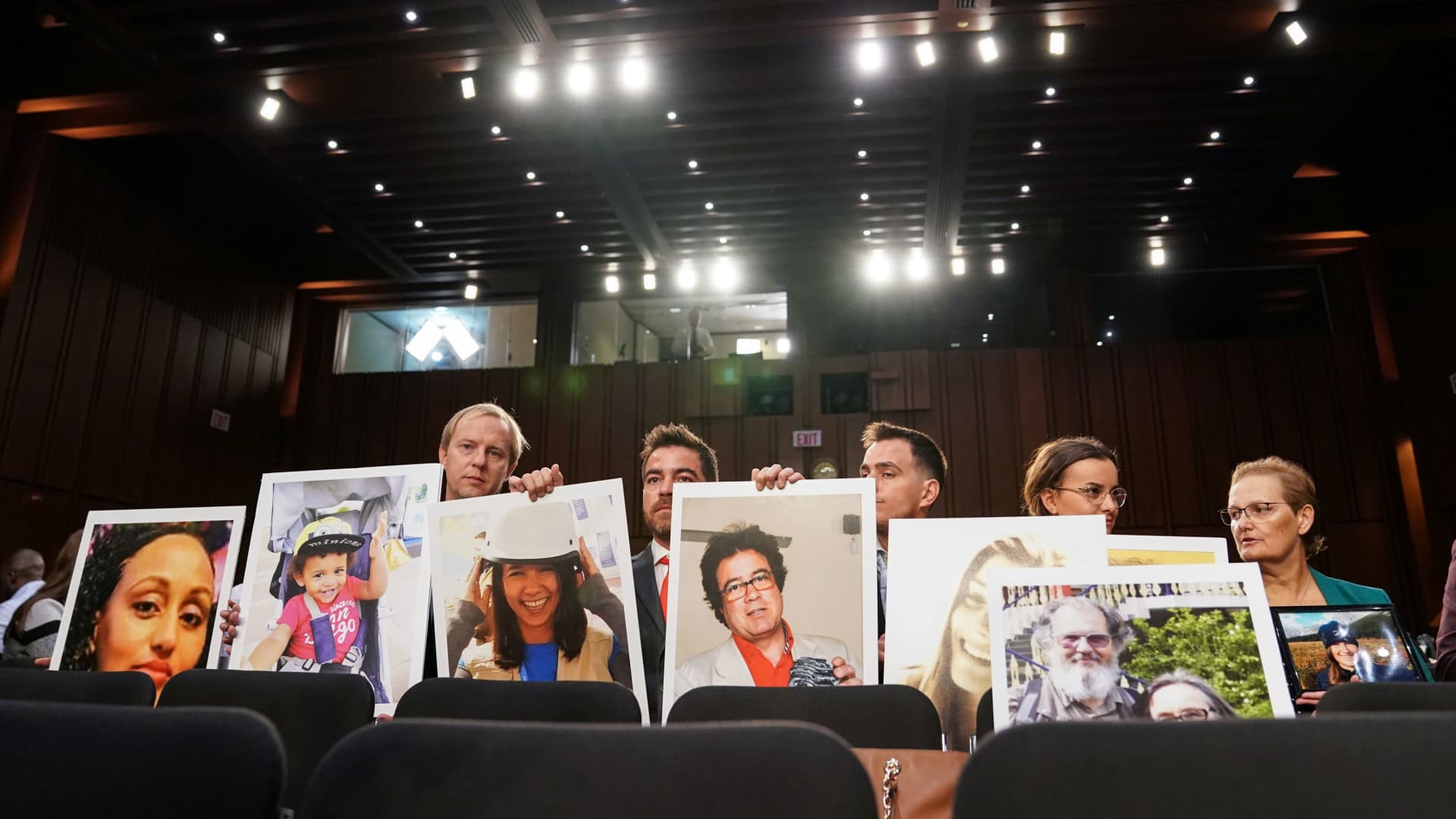
The U.S. Justice Department said Friday that it has reached a deal with Boeing to avoid prosecution over two crashes of the plane maker’s 737 Max that killed 346 people.
The Non-Prosecution Agreement
The so-called non-prosecution agreement would allow Boeing, a major military contractor and top U.S. exporter, to avoid being labeled a felon. The decision means Boeing won’t face trial as scheduled next month, as crash victims’ family members have urged for years.
The Department of Justice met with crash victims’ family members last week to discuss the potential deal.
Terms of the Agreement
In a court filing on Friday the DOJ said it "is the Government’s judgment that the Agreement is a fair and just resolution that serves the public interest."
The agreement "guarantees further accountability and substantial benefits from Boeing immediately, while avoiding the uncertainty and litigation risk presented by proceeding to trial."
The DOJ said it intends to file a motion to dismiss the case once the "agreement in principle" is finalized, by no later than the end of next week.
Under the agreement, Boeing will have to "pay or invest" more than $1.1 billion, the DOJ said in its filing in federal court in Texas on Friday, including a $487.2 million criminal fine, though $243.6 million it already paid in an earlier agreement would be credited. It also includes $444.5 million for a new fund for crash victims, and $445 million more on compliance, safety and quality programs.
Background of the Crashes
The company has been trying for years to put the two crashes of its best-selling Max planes — a Lion Air flight in October 2018 and an Ethiopian Airlines flight less than five months later — behind it. The Maxes were grounded worldwide for nearly two years after the second crash, a pause that gave rival Airbus a head start to recover from the Covid pandemic.
But families of the crash victims have criticized previous agreements as sweetheart deals for Boeing, called for more accountability from the company and said its executives should stand trial. In 2022, a former chief technical pilot for Boeing was acquitted on fraud charges tied to the Max’s development.
Previous Settlements
The aerospace giant reached a settlement in 2021 in the final days of the first Trump administration that shielded it from prosecution for three years.
Under that deal, Boeing agreed to pay a $2.51 billion fine to avoid prosecution. That included a $243.6 million criminal penalty, a $500 million fund for crash victims family members and $1.77 billion for its airline customers.
That 2021 settlement was set to expire two days after a door panel blew out of a nearly new 737 Max 9 operated by Alaska Airlines on Jan. 5, 2024, after the aircraft left Boeing’s factory without key bolts installed.
Recent Developments
But last year, U.S. prosecutors said Boeing violated the 2021 settlement, accusing the company of failing to set up and enforce a compliance and ethics program to detect violations of U.S. fraud laws.
Last July, toward the end of the Biden administration, Boeing agreed to plead guilty to the criminal fraud charge in a new settlement. A federal judge later rejected the plea deal, citing concerns with a diversity, equity and inclusion requirements for choosing a corporate monitor.
Under that 2024 deal, Boeing would have faced a fine of up to $487.2 million, though the Justice Department recommended that the court credit Boeing with half that amount it paid under the previous agreement.
Conclusion
The U.S. Justice Department’s decision to reach a non-prosecution agreement with Boeing has sparked controversy among the families of the crash victims. While the agreement provides some accountability and compensation, many feel that it does not go far enough in holding the company responsible for its actions. The case highlights the complex and often contentious relationship between government regulators and large corporations.
FAQs
Q: What is the non-prosecution agreement between the US Justice Department and Boeing?
A: The non-prosecution agreement is a deal that allows Boeing to avoid prosecution over two crashes of its 737 Max planes that killed 346 people.
Q: How much will Boeing have to pay under the agreement?
A: Boeing will have to pay or invest more than $1.1 billion, including a $487.2 million criminal fine, $444.5 million for a new fund for crash victims, and $445 million more on compliance, safety and quality programs.
Q: What were the circumstances surrounding the two crashes?
A: The crashes occurred in October 2018 and March 2019, involving a Lion Air flight and an Ethiopian Airlines flight, respectively. The Maxes were grounded worldwide for nearly two years after the second crash.
Q: Have there been any previous settlements or agreements between Boeing and the US government?
A: Yes, Boeing reached a settlement in 2021 that shielded it from prosecution for three years, and agreed to pay a $2.51 billion fine to avoid prosecution.
Q: What is the reaction of the families of the crash victims to the non-prosecution agreement?
A: Many families of the crash victims have criticized the agreement as a sweetheart deal for Boeing and have called for more accountability from the company and its executives.


Community Mentorship Programs Help Strengthen Local Workforce and Social Impact

Low-Code Platforms are Changing How Businesses Build Internal Technology

Microlearning in Employee Training: A Practical Approach to Workplace Skill Development

Decision-Making Frameworks Improve Strategic Leadership and Organizational Clarity

Career Ladder Programs Strengthen Workforce Development and Employee Retention

Workplace Recognition Programs Improve Organizational Culture and Employee Engagement

Why Mental Endurance is Essential for Workplace Resilience

What Informational Interviews are and Why they Matter

How Emotional Intelligence Can Help You Manage Stress and Build Resilience

Interview with Dr. Kristy K. Taylor, WORxK Global News Magazine Founder

Sarah Herrlinger Talks AirPods Pro Hearing Aid

NetWork Your Way to Success: Top Tips for Maximizing Your Professional Network

Unlocking Human Potential: Kim Groshek’s Journey to Transforming Leadership and Stress Resilience

The Power of Belonging: Why Feeling Accepted Matters in the Workplace

Health-care stocks fall after Warren PBM bill, Brian Thompson shooting

Glenda Benevides: Creating Global Impact Through Music
-
 Resiliency7 months ago
How Emotional Intelligence Can Help You Manage Stress and Build Resilience
-
 Career Advice1 year ago
Interview with Dr. Kristy K. Taylor, WORxK Global News Magazine Founder
-
 Diversity and Inclusion (DEIA)1 year ago
Sarah Herrlinger Talks AirPods Pro Hearing Aid
-
 Career Advice1 year ago
NetWork Your Way to Success: Top Tips for Maximizing Your Professional Network
-
 Changemaker Interviews1 year ago
Unlocking Human Potential: Kim Groshek’s Journey to Transforming Leadership and Stress Resilience
-
 Diversity and Inclusion (DEIA)1 year ago
The Power of Belonging: Why Feeling Accepted Matters in the Workplace
-
 Global Trends and Politics1 year ago
Health-care stocks fall after Warren PBM bill, Brian Thompson shooting
-
 Changemaker Interviews12 months ago
Glenda Benevides: Creating Global Impact Through Music