
Global Trends and Politics
Employee-Focused Turnaround Plan

Introduction to Starbucks’ Turnaround Strategy
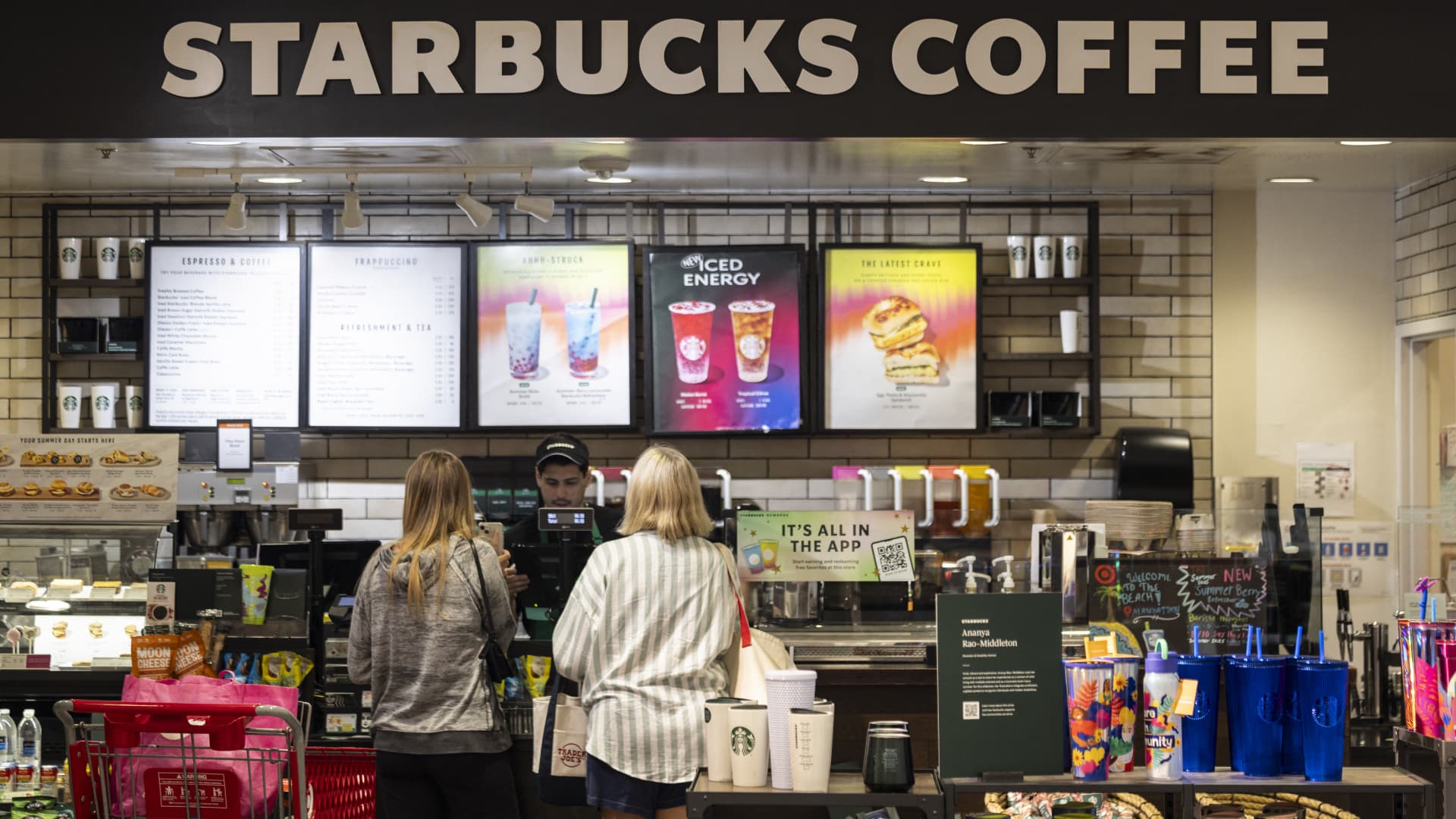
Customers order at a Starbucks in Manhattan Beach, California, on July 19, 2024. As Starbucks aims to bring back customers and assuage investors with its turnaround strategy, it is also winning over its store managers with promises to add more seating inside cafes and promote internally.
The "Back to Starbucks" Strategy
Since CEO Brian Niccol’s first week at the company, he’s been pledging to bring the company "back to Starbucks" to lift sluggish sales. That goal was in full view at the company’s Leadership Experience, a three-day event in Las Vegas for more than 14,000 store leaders this week. Starbucks unveiled a new coffee called the 1971 Roast, a callback to the year that its first location opened at Pike Place in Seattle. The finalists at Starbucks’ first-ever Global Barista Championships referred to "back to Starbucks" as they prepared drinks for judges. Even the wifi password was "backtostarbucks!".
Winning Back Customers and Investors
To investors, Niccol has already presented a multi-part strategy that involves retooling the company’s marketing strategy, improving staffing in cafes, fixing the chain’s mobile app issues and making its locations cozier. The company also laid off roughly 1,100 corporate workers earlier this year, saying it aimed to operate more efficiently and reduce redundancies. Starbucks shares have climbed nearly 20% since April, and are trading just shy of where they were after a nearly 25% spike the day Niccol was announced as CEO.
Regaining Faith Among Employees
While Starbucks has taken major steps to win back customers and Wall Street, it’s also trying to regain faith among its employees. Staffers have had concerns about hours and workloads for years, sparking a broad union push across the U.S. To excite the chain’s store managers, Starbucks executives’ pitch this week focused on giving them more control. Before launching new drinks, like a protein-packed cold foam, the company is first testing them in five stores to gain feedback from baristas.
A Culture Shift
New Initiatives
When the chain increases its staffing this summer, managers will have more input on how many baristas they need. And next year, most North American stores will add an assistant manager to their rosters. "You are the leaders of Starbucks. Your focus on the customer is critical. Your leadership is critical. And as you return to your coffeehouses, please remember: coffee, community, opportunity, all the good that follows," Niccol said on Tuesday.
Returning to Starbucks’ Roots
Niccol’s "back to Starbucks" strategy centers on the idea that the company’s culture has faltered. Its Leadership Experience, typically held every couple of years, was the first since 2019 — three CEOs ago. "We are a business of connection and humanity," Niccol said on Tuesday afternoon, addressing a crowd of more than 14,000 managers. "Great people make great things happen." As more customers order their lattes via the company’s app, its cafes have lost their identity as a "third place" for people to hang out and sip their drinks.
Promoting Internally and Adding Seating
To return to Starbucks’ prior culture, the company is unwinding previous decisions – like removing seats from its cafes. In recent years, the chain has removed 30,000 seats from its locations. Those renovations have irritated both customers and employees; the manager of Niccol’s local Starbucks in Newport Beach, California, even asked him to remove her store from its renovation list because she wanted to keep the seating, according to Niccol. "We’re going to put those seats back in," Niccol said, bringing a big wave of applause from the audience.
Staffing and Union Concerns
He earned more applause from the audience when discussing the chain’s plans to promote internally as it eventually adds 10,000 more locations in the U.S. Although historically roughly 60% of Starbucks store managers have been internal promotions, the company wants to raise that to 90% for its retail leadership roles. Thousands of new cafes means 1,000 more district managers, 100 regional directors and 14 regional vice presidents for the company – and more upward career mobility for its store leaders. Staffing more broadly has been a concern for Starbucks and its employees, fueling a wave of union elections across hundreds its stores.
Schultz’s Stamp of Approval
Underscoring the challenges Niccol faces in recapturing the company’s brand, the two speakers who scored the most applause from store managers are no longer actively involved in the company. Former chairwoman Mellody Hobson scored standing ovations during both her entry and exit onto the arena’s stage. Hobson, wiping tears from her eyes, thanked the Starbucks employees whom she said always made her feel welcome in their stores. Former Starbucks CEO Howard Schultz also earned standing ovations from store managers. Schultz, the three-time CEO who grew Starbucks from a small chain into a coffee powerhouse, made a surprise appearance at the Leadership Experience on Wednesday morning.
Conclusion
In conclusion, Starbucks is taking significant steps to regain its footing and win back customers, investors, and employees. The company’s "back to Starbucks" strategy, led by CEO Brian Niccol, aims to recapture the company’s culture and identity as a "third place" for people to connect and enjoy their coffee. With promises to add more seating, promote internally, and improve staffing, Starbucks is working to address concerns and criticisms from all stakeholders.
FAQs
Q: What is Starbucks’ "back to Starbucks" strategy?
A: The "back to Starbucks" strategy is a plan to recapture the company’s culture and identity as a "third place" for people to connect and enjoy their coffee. It involves retooling the company’s marketing strategy, improving staffing, fixing mobile app issues, and making locations cozier.
Q: How is Starbucks planning to promote internally?
A: Starbucks wants to raise the percentage of internal promotions for retail leadership roles to 90%. The company plans to add 10,000 more locations in the U.S., which will create more opportunities for upward career mobility for store leaders.
Q: What is the Green Apron labor model?
A: The Green Apron labor model is a new staffing model that Starbucks is rolling out to improve service times and boost traffic. As part of the model, managers will have more input on how much labor their store needs.
Q: Who is Howard Schultz and what is his role in Starbucks?
A: Howard Schultz is the former CEO of Starbucks who grew the company from a small chain into a coffee powerhouse. He made a surprise appearance at the Leadership Experience and expressed his support for Niccol’s "back to Starbucks" strategy.
Q: What is the significance of the 1971 Roast coffee?
A: The 1971 Roast coffee is a new coffee launched by Starbucks as a callback to the year that its first location opened at Pike Place in Seattle. It is part of the company’s efforts to reconnect with its heritage and culture.


Community Mentorship Programs Help Strengthen Local Workforce and Social Impact

Low-Code Platforms are Changing How Businesses Build Internal Technology

Microlearning in Employee Training: A Practical Approach to Workplace Skill Development

Decision-Making Frameworks Improve Strategic Leadership and Organizational Clarity

Career Ladder Programs Strengthen Workforce Development and Employee Retention

Workplace Recognition Programs Improve Organizational Culture and Employee Engagement

Why Mental Endurance is Essential for Workplace Resilience

What Informational Interviews are and Why they Matter

How Emotional Intelligence Can Help You Manage Stress and Build Resilience

Interview with Dr. Kristy K. Taylor, WORxK Global News Magazine Founder

Sarah Herrlinger Talks AirPods Pro Hearing Aid

NetWork Your Way to Success: Top Tips for Maximizing Your Professional Network

Unlocking Human Potential: Kim Groshek’s Journey to Transforming Leadership and Stress Resilience

The Power of Belonging: Why Feeling Accepted Matters in the Workplace

Health-care stocks fall after Warren PBM bill, Brian Thompson shooting

Glenda Benevides: Creating Global Impact Through Music
-
 Resiliency7 months ago
How Emotional Intelligence Can Help You Manage Stress and Build Resilience
-
 Career Advice1 year ago
Interview with Dr. Kristy K. Taylor, WORxK Global News Magazine Founder
-
 Diversity and Inclusion (DEIA)1 year ago
Sarah Herrlinger Talks AirPods Pro Hearing Aid
-
 Career Advice1 year ago
NetWork Your Way to Success: Top Tips for Maximizing Your Professional Network
-
 Changemaker Interviews1 year ago
Unlocking Human Potential: Kim Groshek’s Journey to Transforming Leadership and Stress Resilience
-
 Diversity and Inclusion (DEIA)1 year ago
The Power of Belonging: Why Feeling Accepted Matters in the Workplace
-
 Global Trends and Politics1 year ago
Health-care stocks fall after Warren PBM bill, Brian Thompson shooting
-
 Changemaker Interviews12 months ago
Glenda Benevides: Creating Global Impact Through Music