
Innovation and Technology
Even AI Gets ‘Brain Rot’ From Junky Online Content

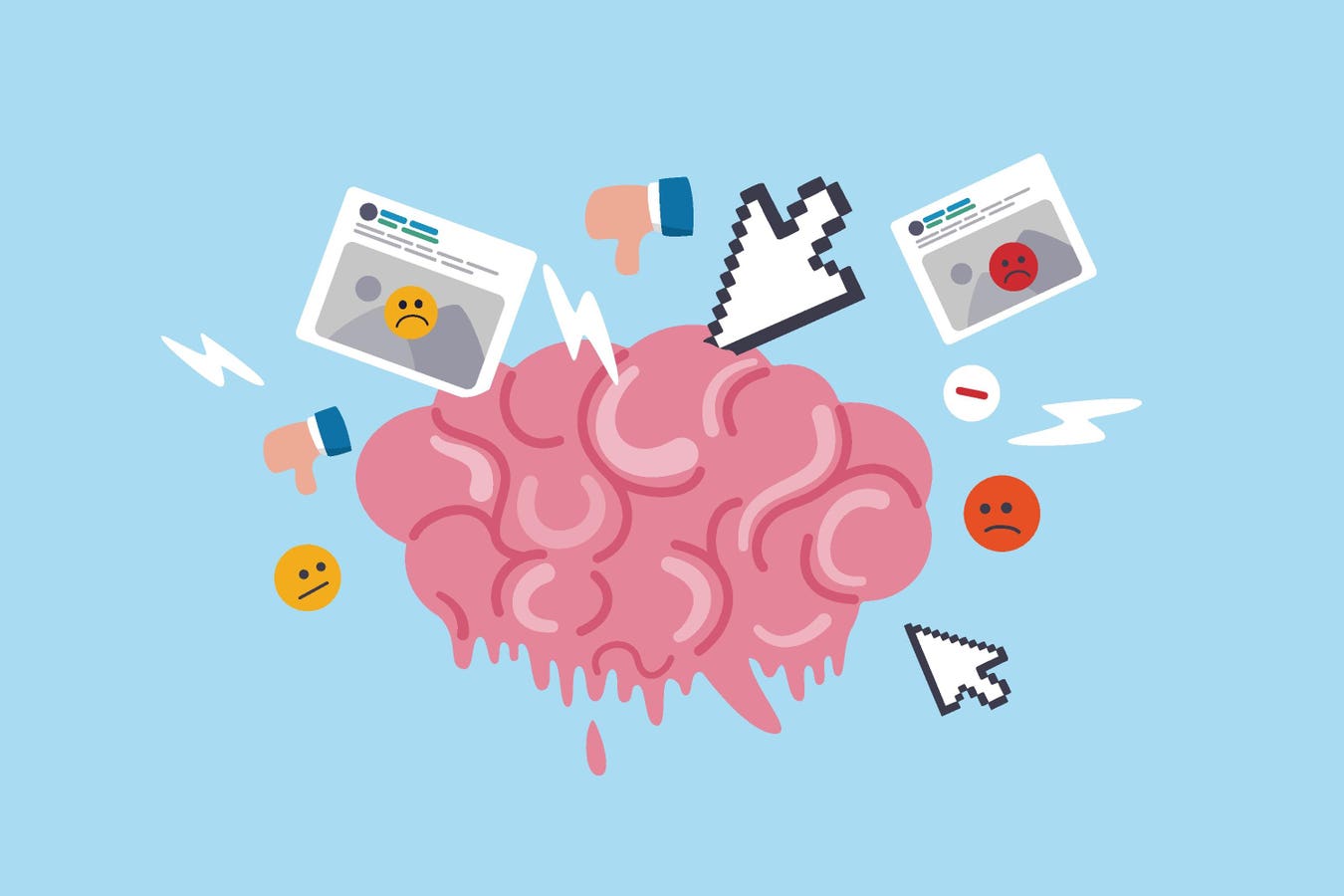
The rise of click-bait and attention-grabbing online content has sparked concerns about its impact on human cognition, with many referring to it as “brain rot.” However, a new study suggests that this phenomenon may not be limited to humans alone. Researchers from the University of Texas at Austin, Texas A&M University, and Purdue University have found that large language models, which are increasingly relied upon for information, can also suffer from a form of “brain rot” when exposed to low-quality online content.
Understanding the Impact of Low-Quality Content on AI
The study, which is currently undergoing peer review, explored the effects of viral or attention-grabbing text on AI models. The researchers found that when these models were trained on low-quality content, they displayed lapses in reasoning, factual inconsistencies, and an inability to maintain logical coherence. This is concerning, as AI models are becoming increasingly integrated into our daily lives, and their ability to provide accurate and reliable information is crucial.
The researchers deliberately used terms like “think,” “reason,” and “understanding” to draw parallels between humans and artificial intelligence. They argue that the quality of the data used to train AI models has a significant impact on their performance and that exposure to low-quality content can have lasting effects. In fact, even after extensive “rehabilitation” on cleaner data, the degraded models never fully recovered, suggesting that the damage caused by low-quality content can be permanent.
Defining “Junk Content” and Its Effects on AI
To test their hypothesis, the research team constructed “junk” and control datasets from social media platforms. The junk set included highly popular content engineered to grab attention with minimal information, such as click-bait threads, recycled meme commentary, and algorithmically generated listicles. They found that this type of content, although it may appear clean and fluent, can quietly degrade reasoning and teach models to mimic attention rather than understanding.
The researchers trained large language models, including Meta’s open-source Llama3 and versions of Alibaba’s Qwen LLM, on the junk data and observed a resulting cognitive decay. The damage caused by the low-quality content had a lasting impact on the models, with the researchers noting that “AI brain rot” is not just a temporary glitch, but a form of cognitive scarring. This means that models that appear fluent but reason shallowly can be confident yet confused, which can have significant implications for users who rely on them for information.
Expert Insights and the Future of AI Safety
Ilia Shumailov, a former Google DeepMind AI senior research scientist, notes that the results of the study align with academic literature on model poisoning, which describes what happens when attackers manipulate AI training data to introduce vulnerabilities and biases. However, he also cautions that it is hard to extrapolate from small studies to what would happen at scale, given that most internet data is of poor quality, yet capable models can still be developed.
Gideon Futerman, a special projects associate at the Center for AI Safety, notes that leading AI corporations are already working to improve the quality of the data used during training. He emphasizes the importance of “cognitive hygiene” and the need for systematic study to understand the impact of low-quality data on AI models. As online content becomes increasingly AI-synthetic and engagement-driven, the risk of future AI models inheriting distortions in reasoning and representation embedded within that data is a growing concern.




Community Mentorship Programs Help Strengthen Local Workforce and Social Impact

Low-Code Platforms are Changing How Businesses Build Internal Technology

Microlearning in Employee Training: A Practical Approach to Workplace Skill Development

Decision-Making Frameworks Improve Strategic Leadership and Organizational Clarity

Career Ladder Programs Strengthen Workforce Development and Employee Retention

Workplace Recognition Programs Improve Organizational Culture and Employee Engagement

Why Mental Endurance is Essential for Workplace Resilience

What Informational Interviews are and Why they Matter

How Emotional Intelligence Can Help You Manage Stress and Build Resilience

Interview with Dr. Kristy K. Taylor, WORxK Global News Magazine Founder

Sarah Herrlinger Talks AirPods Pro Hearing Aid

NetWork Your Way to Success: Top Tips for Maximizing Your Professional Network

Unlocking Human Potential: Kim Groshek’s Journey to Transforming Leadership and Stress Resilience

The Power of Belonging: Why Feeling Accepted Matters in the Workplace

Health-care stocks fall after Warren PBM bill, Brian Thompson shooting

Glenda Benevides: Creating Global Impact Through Music
-
 Resiliency7 months ago
How Emotional Intelligence Can Help You Manage Stress and Build Resilience
-
 Career Advice1 year ago
Interview with Dr. Kristy K. Taylor, WORxK Global News Magazine Founder
-
 Diversity and Inclusion (DEIA)1 year ago
Sarah Herrlinger Talks AirPods Pro Hearing Aid
-
 Career Advice1 year ago
NetWork Your Way to Success: Top Tips for Maximizing Your Professional Network
-
 Changemaker Interviews1 year ago
Unlocking Human Potential: Kim Groshek’s Journey to Transforming Leadership and Stress Resilience
-
 Diversity and Inclusion (DEIA)1 year ago
The Power of Belonging: Why Feeling Accepted Matters in the Workplace
-
 Global Trends and Politics1 year ago
Health-care stocks fall after Warren PBM bill, Brian Thompson shooting
-
 Changemaker Interviews12 months ago
Glenda Benevides: Creating Global Impact Through Music