
Global Trends and Politics
Homeowners are losing thousands in equity thanks to weakening prices

Homeowners See Decline in Equity as Housing Market Shifts
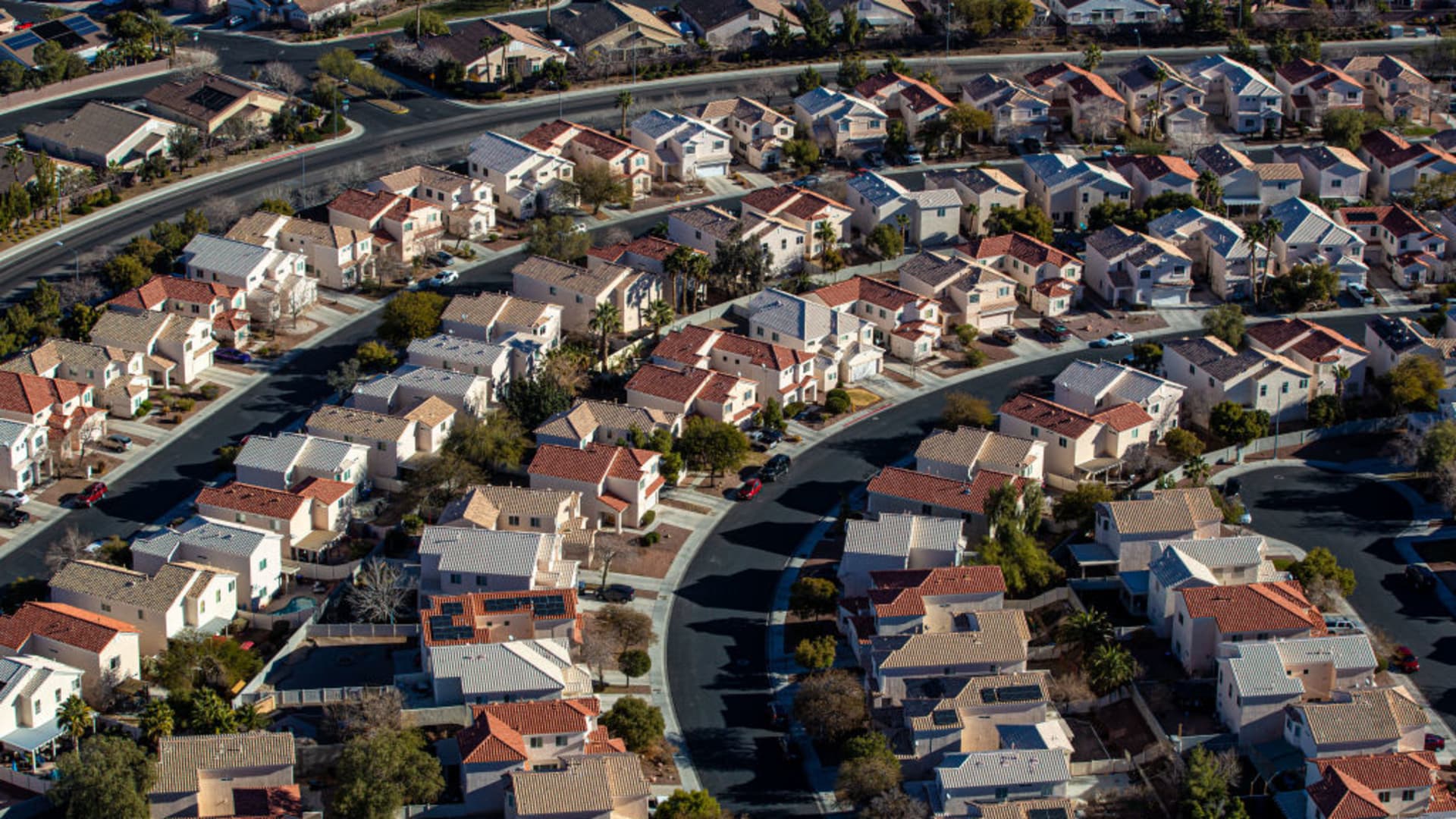
The US housing market has experienced a significant slowdown in recent months, with home values losing ground and previously substantial annual gains dwindling. As a result, homeowners are witnessing a decline in their equity, with borrower equity falling 2.1% in the third quarter of this year compared to the same period last year. This translates to a collective loss of $373.8 billion, according to a report from Cotality.
The decline in equity is largely attributed to the slowing pace of home price growth and the market’s recalibration from pandemic-era peaks. The average homeowner has seen a loss of $13,400 in equity, while the number of homes in a negative equity position has increased by 21% from last year to 1.2 million. This means that over a million homeowners now owe more on their mortgages than their homes are worth.
Causes of the Decline
The rise in negative equity is driven in part by affordability challenges, which have led many first-time and lower-income buyers to over-leverage through piggyback loans or minimal down payments. Those who purchased their homes more recently, when mortgage rates were higher and prices had peaked, are more likely to be in a negative equity position. Additionally, homeowners have been pulling more equity out of their homes, thanks to significant gains in the past five years.
Home values have increased by approximately 52% since January 2020, according to the S&P Cotality Case-Shiller national home price index. While this growth has slowed in recent months, the average equity gain per homeowner was still $25,000 in 2023 and $4,900 in 2024. However, not all markets are experiencing the same trend, with cities like Boston, Chicago, and New York still seeing positive equity growth.
Regional Variations
The biggest losses in equity have been seen in cities like Los Angeles, San Francisco, Washington, Miami, and Houston, Texas. These markets have been particularly affected by the slowdown in home price growth and the increase in mortgage rates. In contrast, cities with more stable economies and labor markets, such as Boston and New York, have been more resilient.
According to Selma Hepp, chief economist at Cotality, “The future performance of highly leveraged loans will hinge on the strength of the US economy and labor market.” As the housing market continues to evolve, it is essential to closely monitor these loans and their potential impact on the overall economy. Despite the decline in equity, homeowners still have a collective net equity of $17.1 trillion for homes with a mortgage, providing a cushion against potential economic downturns.


Community Mentorship Programs Help Strengthen Local Workforce and Social Impact

Low-Code Platforms are Changing How Businesses Build Internal Technology

Microlearning in Employee Training: A Practical Approach to Workplace Skill Development

Decision-Making Frameworks Improve Strategic Leadership and Organizational Clarity

Career Ladder Programs Strengthen Workforce Development and Employee Retention

Workplace Recognition Programs Improve Organizational Culture and Employee Engagement

Why Mental Endurance is Essential for Workplace Resilience

What Informational Interviews are and Why they Matter

How Emotional Intelligence Can Help You Manage Stress and Build Resilience

Interview with Dr. Kristy K. Taylor, WORxK Global News Magazine Founder

Sarah Herrlinger Talks AirPods Pro Hearing Aid

NetWork Your Way to Success: Top Tips for Maximizing Your Professional Network

Unlocking Human Potential: Kim Groshek’s Journey to Transforming Leadership and Stress Resilience

The Power of Belonging: Why Feeling Accepted Matters in the Workplace

Health-care stocks fall after Warren PBM bill, Brian Thompson shooting

Glenda Benevides: Creating Global Impact Through Music
-
 Resiliency7 months ago
How Emotional Intelligence Can Help You Manage Stress and Build Resilience
-
 Career Advice1 year ago
Interview with Dr. Kristy K. Taylor, WORxK Global News Magazine Founder
-
 Diversity and Inclusion (DEIA)1 year ago
Sarah Herrlinger Talks AirPods Pro Hearing Aid
-
 Career Advice1 year ago
NetWork Your Way to Success: Top Tips for Maximizing Your Professional Network
-
 Changemaker Interviews1 year ago
Unlocking Human Potential: Kim Groshek’s Journey to Transforming Leadership and Stress Resilience
-
 Diversity and Inclusion (DEIA)1 year ago
The Power of Belonging: Why Feeling Accepted Matters in the Workplace
-
 Global Trends and Politics1 year ago
Health-care stocks fall after Warren PBM bill, Brian Thompson shooting
-
 Changemaker Interviews12 months ago
Glenda Benevides: Creating Global Impact Through Music