
Innovation and Technology
How Would An AI Recession Impact AI Commercialization?

Assessing the AI Market: Is a Bubble Forming?
The 2025 IEEE Hot Chips Symposium at Stanford University has brought together industry experts to showcase the latest advancements in semiconductor devices, with a significant focus on artificial intelligence. While the exhibits and presentations have highlighted the rapid progress in AI technology, recent economic developments and comments from experts have sparked concerns about a potential bubble in the AI market.
A recent article by Nick Lichtenberg, published on Yahoo Finance, points to a slowdown in consumer spending during the summer of 2025. This decline is attributed to increased unemployment and lower job growth, partly due to the implementation of AI in various industries. The article also notes that giant tech companies have invested heavily in data centers, with their spending now contributing more to US economic growth than consumer spending.
Economic Trends and AI Infrastructure Spending
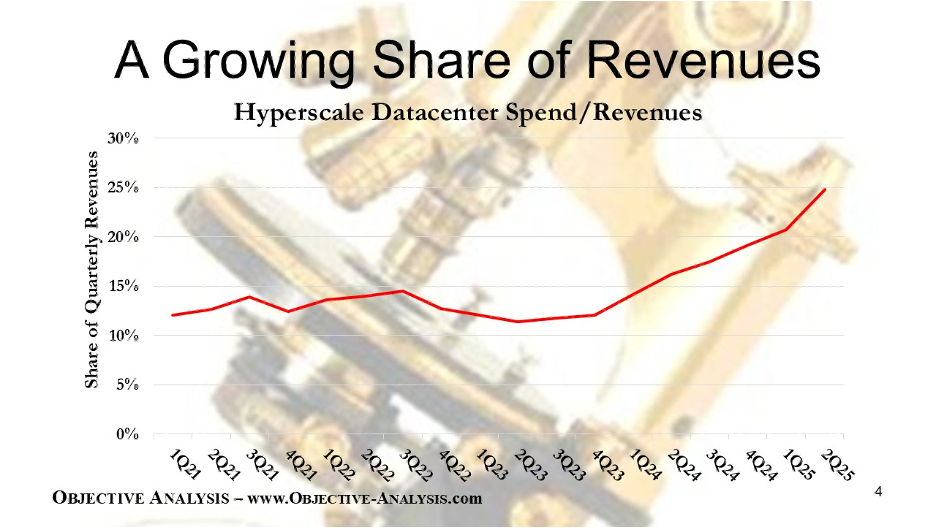
A presentation by Jim Handy of Objective Analysis at the 2025 FMS conference revealed that the quarterly ratio of hyperscale data center spending to revenue has increased by over 10% since 2023. If this trend continues, it is projected to soon double the 2023 ratio. This significant spending on AI infrastructure has exceeded AI-related revenues, raising questions about the sustainability of this trend.
A study by MIT, which analyzed over 300 publicly disclosed AI initiatives and surveyed 153 senior leaders, found that only 5% of integrated AI pilots have generated millions in value, while the majority have had no measurable impact on profit and loss statements. The study suggests that the primary barrier to scaling AI systems is not infrastructure, regulation, or talent, but rather the ability to learn and adapt.
Rethinking the Approach to AI Implementation
The MIT study indicates that popular AI tools like ChatGPT and CoPilot primarily enhance individual productivity, rather than driving business performance. Most enterprise-wide pilot programs fail due to brittle workflows, lack of contextual learning, and misalignment with day-to-day operations. In contrast, programs that incorporate external partners familiar with AI implementation have seen twice the success rate of internal-only builds.
The study’s findings suggest that a focus on using AI to enhance human agency, rather than replacing human workers, is more effective. By targeting specific processes and incorporating learning-capable systems, businesses can deliver real value without requiring significant organizational restructuring.
The Future of AI: Augmented Intelligence
Industry pundits have drawn parallels between the current AI frenzy and prior industry bubbles, such as the Internet Bubble in the early 2000s. A potential correction in the AI market could lead to a reduction in investments, but this does not mean that AI will cease to be a valuable technology. Instead, an AI recession may result in a more focused use of AI, with big models being developed to enhance business value and increase employee effectiveness.
Ultimately, the current wave of AI may be better understood as Augmented Intelligence, aimed at increasing human intelligence and agency, rather than replacing humans altogether. By embracing this approach, businesses can unlock the true potential of AI and create a more sustainable and effective future for the technology.




Community Mentorship Programs Help Strengthen Local Workforce and Social Impact

Low-Code Platforms are Changing How Businesses Build Internal Technology

Microlearning in Employee Training: A Practical Approach to Workplace Skill Development

Decision-Making Frameworks Improve Strategic Leadership and Organizational Clarity

Career Ladder Programs Strengthen Workforce Development and Employee Retention

Workplace Recognition Programs Improve Organizational Culture and Employee Engagement

Why Mental Endurance is Essential for Workplace Resilience

What Informational Interviews are and Why they Matter

How Emotional Intelligence Can Help You Manage Stress and Build Resilience

Interview with Dr. Kristy K. Taylor, WORxK Global News Magazine Founder

Sarah Herrlinger Talks AirPods Pro Hearing Aid

NetWork Your Way to Success: Top Tips for Maximizing Your Professional Network

Unlocking Human Potential: Kim Groshek’s Journey to Transforming Leadership and Stress Resilience

The Power of Belonging: Why Feeling Accepted Matters in the Workplace

Health-care stocks fall after Warren PBM bill, Brian Thompson shooting

Glenda Benevides: Creating Global Impact Through Music
-
 Resiliency7 months ago
How Emotional Intelligence Can Help You Manage Stress and Build Resilience
-
 Career Advice1 year ago
Interview with Dr. Kristy K. Taylor, WORxK Global News Magazine Founder
-
 Diversity and Inclusion (DEIA)1 year ago
Sarah Herrlinger Talks AirPods Pro Hearing Aid
-
 Career Advice1 year ago
NetWork Your Way to Success: Top Tips for Maximizing Your Professional Network
-
 Changemaker Interviews1 year ago
Unlocking Human Potential: Kim Groshek’s Journey to Transforming Leadership and Stress Resilience
-
 Diversity and Inclusion (DEIA)1 year ago
The Power of Belonging: Why Feeling Accepted Matters in the Workplace
-
 Global Trends and Politics1 year ago
Health-care stocks fall after Warren PBM bill, Brian Thompson shooting
-
 Changemaker Interviews12 months ago
Glenda Benevides: Creating Global Impact Through Music