
Global Trends and Politics
Medicare drug price negotiations list includes Ozempic

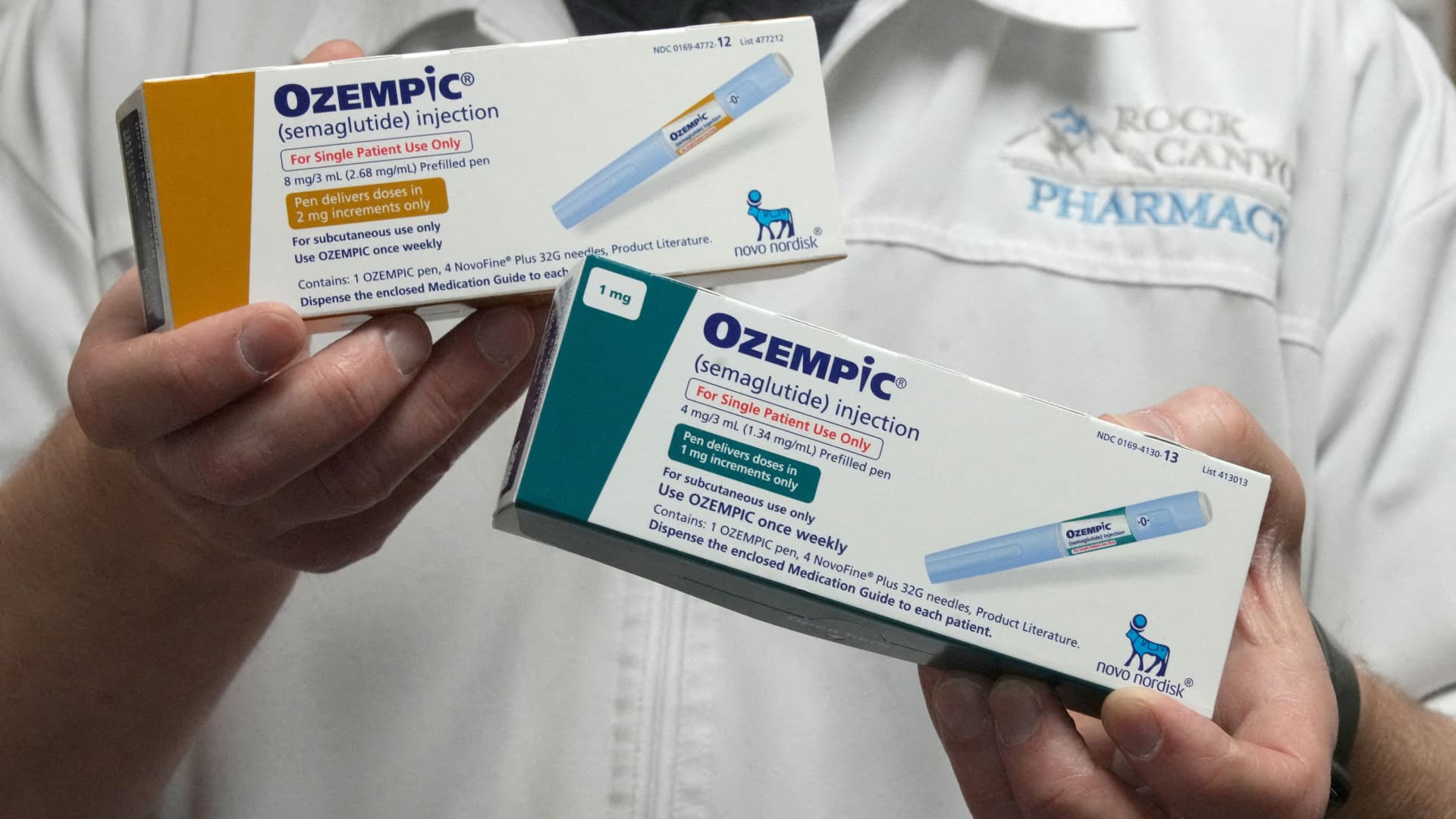
A Box of Ozempic and Contents Sit on a Table in Dudley, North Tyneside, Britain, October 31, 2023.
The Biden administration on Friday unveiled the next 15 prescription drugs that will be subject to price negotiations between manufacturers and Medicare, kicking off the second phase of a landmark process that aims to make costly medications more affordable for seniors.
Topping the list are Novo Nordisk’s blockbuster diabetes injection Ozempic, weight loss shot Wegovy and diabetes pill Rybelsus, which are considered one product in the talks since they all share the same active ingredient: semaglutide. Those treatments fueled the rise of the red-hot obesity market and have been difficult for patients to access due to cost, insurance coverage and supply constraints.
The agreed-upon prices for the second wave of drugs are scheduled to go into effect in 2027. But it’s unclear whether President-elect Donald Trump could try to change or scale back some of the law’s provisions when he takes office next week.
The 15 Drugs Subject to the Initial Talks This Year:
- Ozempic, Wegovy, Rybelsus (semaglutide), made by Novo Nordisk, is used for Type 2 diabetes, weight management, and cardiovascular health
- Trelegy Ellipta, made by GSK, is an inhaler used for chronic obstructive pulmonary disease and asthma
- Xtandi, made by Pfizer, is used to treat prostate cancer in men
- Pomalyst, made by Bristol Myers Squibb, is used to treat a blood cancer called multiple myeloma and a cancer that develops in people with HIV
- Ibrance, made by Pfizer, is used to treat certain breast cancers
- Ofev, made by Boehringer Ingelheim, is used to treat chronic lung diseases in adults
- Linzess, made by AbbVie and Ironwood Pharmaceuticals, is used to treat irritable bowel syndrome and chronic constipation
- Calquence, made by AstraZeneca, is used to treat certain types of blood cancer
- Austedo, Austedo XR, made by Teva Pharmaceuticals, is used to treat involuntary movements caused by tardive dyskinesia or Huntington’s disease
- Breo Ellipta, made by GSK and Theravance, is an inhaler used to treat chronic obstructive pulmonary disease
- Tradjenta, made by Boehringer Ingelheim and Eli Lilly, is used for Type 2 diabetes management
- Xifaxan, made by Salix Pharmaceuticals, is used to treat diarrhea caused by traveling or irritable bowel syndrome
- Vraylar, made by AbbVie, is used to treat schizophrenia, bipolar I disorder, and major depressive disorder
- Janumet, Janumet XR, made by Merck, is used to manage Type 2 diabetes
- Otezla, made by Amgen, is used to treat plaque psoriasis, psoriatic arthritis, and oral ulcers
How the Negotiation Process Works:
President Joe Biden’s Inflation Reduction Act gave Medicare the power to directly hash out drug prices with manufacturers for the first time in the federal program’s nearly 60-year history. Some congressional Democrats and consumer advocates have long pushed for the change, as many seniors around the country struggle to afford care.
What’s Next in the Medicare Price Talks?
Drugmakers will have until February 28 to decide whether to participate in the program. If a drugmaker declines to negotiate, it must either pay an excise tax of up to 95% of its medication’s U.S. sales or pull all of its products from the Medicare and Medicaid markets.
Conclusion:
The Medicare price negotiation process is a significant step towards making costly medications more affordable for seniors. The program aims to reduce the prices of 25 medications, which account for 36% of all Medicare Part D prescription drug costs. The negotiation process is expected to save Medicare enrollees around $1.5 billion in out-of-pocket costs in 2026 alone.
FAQs:
Q: What is the Medicare price negotiation process?
A: The Medicare price negotiation process is a program that allows Medicare to directly negotiate prices with drug manufacturers for certain medications.
Q: What medications are included in the first two rounds of negotiations?
A: The first round includes 10 medications, and the second round includes 15 medications.
Q: How much will the Medicare price negotiation process save Medicare enrollees?
A: The program is expected to save Medicare enrollees around $1.5 billion in out-of-pocket costs in 2026 alone.
Q: What happens if a drugmaker declines to participate in the program?
A: If a drugmaker declines to negotiate, it must either pay an excise tax of up to 95% of its medication’s U.S. sales or pull all of its products from the Medicare and Medicaid markets.


Community Mentorship Programs Help Strengthen Local Workforce and Social Impact

Low-Code Platforms are Changing How Businesses Build Internal Technology

Microlearning in Employee Training: A Practical Approach to Workplace Skill Development

Decision-Making Frameworks Improve Strategic Leadership and Organizational Clarity

Career Ladder Programs Strengthen Workforce Development and Employee Retention

Workplace Recognition Programs Improve Organizational Culture and Employee Engagement

Why Mental Endurance is Essential for Workplace Resilience

What Informational Interviews are and Why they Matter

How Emotional Intelligence Can Help You Manage Stress and Build Resilience

Interview with Dr. Kristy K. Taylor, WORxK Global News Magazine Founder

Sarah Herrlinger Talks AirPods Pro Hearing Aid

NetWork Your Way to Success: Top Tips for Maximizing Your Professional Network

Unlocking Human Potential: Kim Groshek’s Journey to Transforming Leadership and Stress Resilience

The Power of Belonging: Why Feeling Accepted Matters in the Workplace

Health-care stocks fall after Warren PBM bill, Brian Thompson shooting

Glenda Benevides: Creating Global Impact Through Music
-
 Resiliency7 months ago
How Emotional Intelligence Can Help You Manage Stress and Build Resilience
-
 Career Advice1 year ago
Interview with Dr. Kristy K. Taylor, WORxK Global News Magazine Founder
-
 Diversity and Inclusion (DEIA)1 year ago
Sarah Herrlinger Talks AirPods Pro Hearing Aid
-
 Career Advice1 year ago
NetWork Your Way to Success: Top Tips for Maximizing Your Professional Network
-
 Changemaker Interviews1 year ago
Unlocking Human Potential: Kim Groshek’s Journey to Transforming Leadership and Stress Resilience
-
 Diversity and Inclusion (DEIA)1 year ago
The Power of Belonging: Why Feeling Accepted Matters in the Workplace
-
 Global Trends and Politics1 year ago
Health-care stocks fall after Warren PBM bill, Brian Thompson shooting
-
 Changemaker Interviews12 months ago
Glenda Benevides: Creating Global Impact Through Music