
Global Trends and Politics
Nine pharma companies ink deals with Trump to lower drug prices

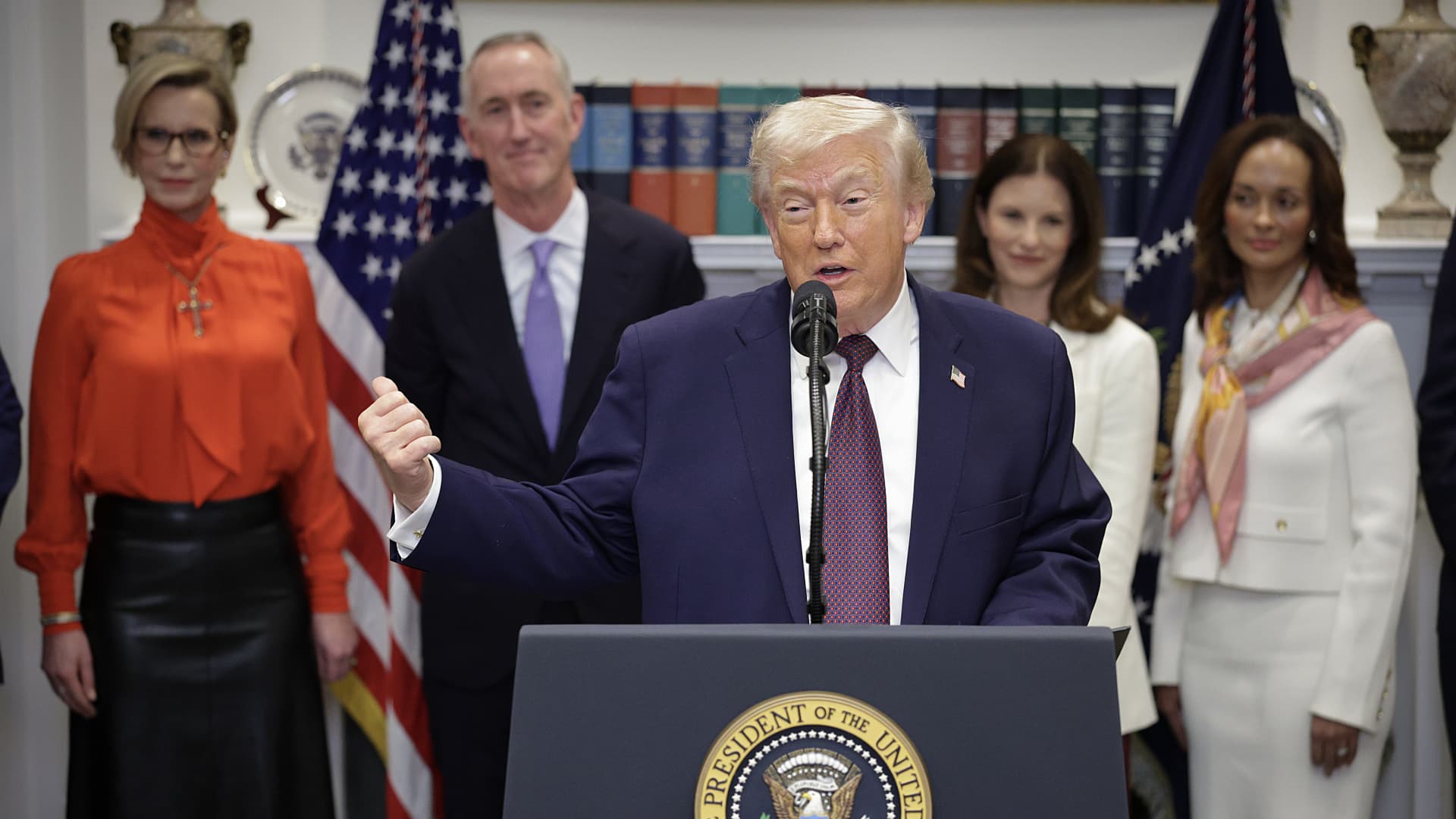
In a significant move to lower prescription drug prices, several major U.S. and European-based pharmaceutical companies have signed deals with President Donald Trump to voluntarily reduce their medication prices. This development is part of the Trump administration’s efforts to link U.S. drug prices to those in other countries, where prices are often lower. The companies involved in the agreements include Merck, Bristol Myers Squibb, Amgen, Gilead, GSK, Sanofi, Roche’s Genentech, Boehringer Ingelheim, and Novartis.
As part of the deal, these companies will offer their medications at lower prices in exchange for a three-year grace period, during which their products will not face pharmaceutical-specific tariffs planned by the Trump administration. However, this exemption is contingent on the companies investing further in U.S. manufacturing. One notable pledge is from Bristol Myers Squibb, which will offer its blockbuster blood thinner, Eliquis, for free to Medicaid patients.
Background and Implications
The agreements are a result of Trump’s “most favored nation” policy, which aims to increase drug prices outside the U.S. and end what the administration refers to as “global freeloading.” In July, Trump sent letters to 17 drugmakers, urging them to lower their prices. So far, 14 out of these 17 companies have agreed to significantly reduce their drug prices for American patients. Trump has hailed this as a major victory for patient affordability in the history of American healthcare, stating that every American will benefit from these agreements.
Johnson & Johnson, AbbVie, and Regeneron are the remaining major companies that have not yet signed drug pricing deals. However, Trump has indicated that Johnson & Johnson will be joining the agreement soon. The full terms of the deals have not been released, making it difficult to assess the broad impact of these agreements on drug prices and accessibility.
How the Drug Pricing Deals Will Work
The drugmakers have agreed to take several measures to reduce U.S. drug prices. These include selling existing treatments to Medicaid patients at the lowest “most favored nation” prices and guaranteeing pricing for new medicines. Additionally, the companies will list their most popular drugs on Trump’s upcoming direct-to-consumer website, TrumpRx, which is set to launch in January. Some companies have also announced new or expanded direct-to-consumer offerings for certain drugs at discounted prices.
For example, Gilead will launch a program to enable patients to access its hepatitis C treatment, Epclusa, at a discounted price. Sanofi will offer discounts of nearly 70% on certain medicines for infections, cardiovascular conditions, and diabetic conditions on TrumpRx and other direct-to-consumer platforms. Merck will offer three diabetes medications at a roughly 70% discount to cash-paying patients through a direct-to-patient program, which will also include its experimental daily cholesterol pill if it gets approved in the U.S.
Amgen will expand its existing direct-to-patient program to include preventative migraine medication Aimovig and autoimmune treatment Amjevita at 60% and 80% discounted monthly prices, respectively. These moves are part of a broader effort by the Trump administration to increase transparency and reduce prices in the pharmaceutical industry, aiming to make drugs more affordable for Americans.
Context and Criticism
The issue of drug pricing has been contentious, with U.S. prescription drug prices averaging nearly three times higher than those overseas, according to a 2024 study by Rand Corp. The trade association PhRMA has argued that most-favored nation pricing is not the best approach to lowering drug costs for Americans, instead pointing to pharmacy benefit managers as a significant factor in the price disparity. Despite these criticisms, the agreements mark a significant step towards addressing the long-standing issue of high drug prices in the U.S.
The U.S. market is crucial for many drugmakers, regardless of their country of origin. European pharmaceutical companies, in particular, are heavily exposed to the U.S. market, with many generating a majority of their sales in the U.S. This underscores the potential impact of these agreements on both the companies involved and the broader pharmaceutical industry.


Community Mentorship Programs Help Strengthen Local Workforce and Social Impact

Low-Code Platforms are Changing How Businesses Build Internal Technology

Microlearning in Employee Training: A Practical Approach to Workplace Skill Development

Decision-Making Frameworks Improve Strategic Leadership and Organizational Clarity

Career Ladder Programs Strengthen Workforce Development and Employee Retention

Workplace Recognition Programs Improve Organizational Culture and Employee Engagement

Why Mental Endurance is Essential for Workplace Resilience

What Informational Interviews are and Why they Matter

How Emotional Intelligence Can Help You Manage Stress and Build Resilience

Interview with Dr. Kristy K. Taylor, WORxK Global News Magazine Founder

Sarah Herrlinger Talks AirPods Pro Hearing Aid

NetWork Your Way to Success: Top Tips for Maximizing Your Professional Network

Unlocking Human Potential: Kim Groshek’s Journey to Transforming Leadership and Stress Resilience

The Power of Belonging: Why Feeling Accepted Matters in the Workplace

Health-care stocks fall after Warren PBM bill, Brian Thompson shooting

Glenda Benevides: Creating Global Impact Through Music
-
 Resiliency7 months ago
How Emotional Intelligence Can Help You Manage Stress and Build Resilience
-
 Career Advice1 year ago
Interview with Dr. Kristy K. Taylor, WORxK Global News Magazine Founder
-
 Diversity and Inclusion (DEIA)1 year ago
Sarah Herrlinger Talks AirPods Pro Hearing Aid
-
 Career Advice1 year ago
NetWork Your Way to Success: Top Tips for Maximizing Your Professional Network
-
 Changemaker Interviews1 year ago
Unlocking Human Potential: Kim Groshek’s Journey to Transforming Leadership and Stress Resilience
-
 Diversity and Inclusion (DEIA)1 year ago
The Power of Belonging: Why Feeling Accepted Matters in the Workplace
-
 Global Trends and Politics1 year ago
Health-care stocks fall after Warren PBM bill, Brian Thompson shooting
-
 Changemaker Interviews12 months ago
Glenda Benevides: Creating Global Impact Through Music