
Innovation and Technology
QClaw Goes Global. The Agent Built Itself In 5 Days

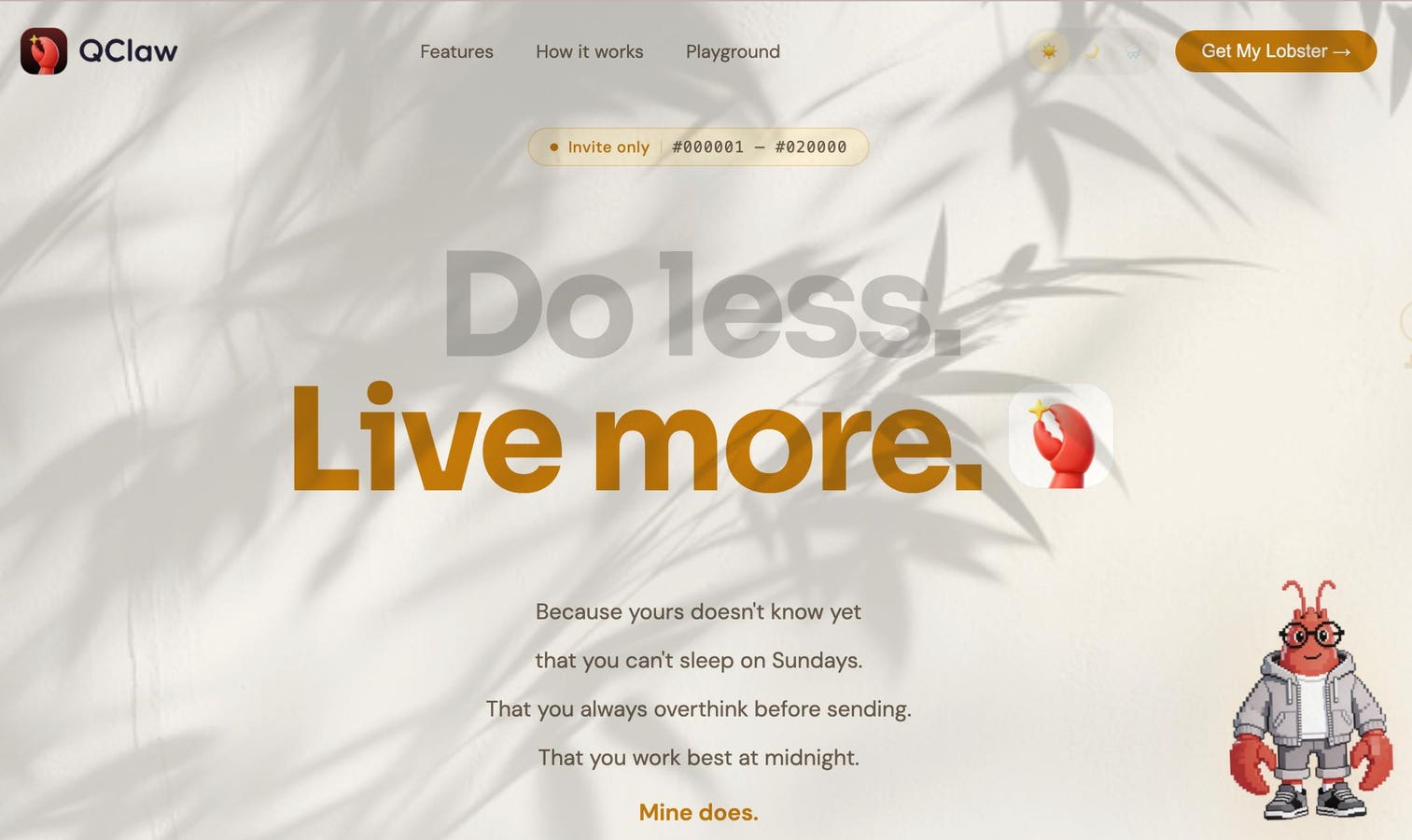
Tencent’s international beta test for QClaw has sparked interest in the concept of “zero deployment” and its potential to revolutionize the way we interact with AI agents. The idea that an AI system can generate its own codebase, with 99% of the overseas codebase being created in just five days, raises questions about the role of human input in the development process.
The QClaw product is built around the idea that an AI agent should be able to write its own software, and by extension, the user should not have to write anything either. This recursive quality is not incidental, but rather a deliberate design choice that aims to simplify the user experience. The onboarding sequence for QClaw is remarkably straightforward, requiring just three steps: downloading the installer, scanning a QR code, and sending a message via WhatsApp or Telegram.
Streamlining the User Experience
The lack of technical complexity in setting up QClaw is a deliberate choice, aimed at making the product accessible to a broader audience. By eliminating the need for terminal commands, API keys, and environment configuration, QClaw’s developers have created a system that can be used by anyone, regardless of their technical expertise. The phone becomes the interface, and the computer becomes the worker, with the agent seamlessly moving between the two without requiring user intervention.
This approach has already shown significant promise, with QClaw crossing the 1 million user mark within just 10 days of its domestic launch. The international demand for the product has been driven by ordinary end-users, rather than developers, who are eager to access the benefits of AI-powered automation without requiring specialized knowledge.
Delegation and Productivity
QClaw’s capabilities are organized into three categories, each corresponding to a different psychological relationship with productivity. The “QClaw It” mode handles tasks that are necessary but unrewarding, such as tax preparation, while “QClaw Daily” addresses the need to maintain habits and routines, such as a physical training program. The “QClaw Up” mode, on the other hand, enables users to tap into specialized knowledge or hired capacity, such as operationalizing a viral Twitter growth strategy.
These modes of delegation reflect a deeper understanding of the ways in which people interact with technology and the role that AI can play in augmenting human productivity. By providing a framework for users to articulate their intent and delegate tasks with precision, QClaw is helping to establish a new paradigm for human-machine collaboration.
Technical Architecture and Security
The technical decisions behind QClaw reveal a specific bet about the future of AI infrastructure. All processing runs locally on the user’s device, with data remaining on the machine and not being transmitted to external servers. This approach, referred to internally as “Lobster Guard,” provides an additional layer of security and control for users, who retain ownership of their data by default.
The implications of this approach are twofold. Local execution means that the agent operates within the hardware limits of the user’s machine, but it also means that users have complete control over their data and can choose to share it or keep it private. The interface layer is equally deliberate, with QClaw embedding control into familiar messaging platforms like WhatsApp and Telegram, effectively collapsing the distance between intention and execution.
The Future of Agents and Automation
QClaw’s international launch arrives at a moment when the agent category is generating significant technical excitement but remains confined to a narrow user base. The people who can build agents are not the same as those who need them, and QClaw’s approach is designed to target the latter group. By removing deployment entirely and anchoring the experience in familiar chat interfaces, QClaw is making agents accessible to a broader audience, including professionals who need automation but have never written a line of code.
The significance of QClaw extends beyond product strategy, as it represents a new frontier in human-machine collaboration. Agents require users to articulate intent precisely, delegate with trust, and evaluate output rather than supervise process. These are the foundational skills of the next decade of work, and QClaw is making them learnable through daily use, rather than specialized training.




Portable Benefits Could Fix the Gig Economy’s Biggest Problem

Ethical Reasoning Has Become a Core Workplace Skill and Training Programs Are Missing It

Stakeholder Pressure on CEOs Has Reached a Breaking Point

Identity Resilience at Work and Why It Matters More Than Grit

The Revenge of Middle Management and Why Organizations Should Pay Attention

First-Generation Professionals Face a Different Workplace and Nobody Prepares Them for It

Small Business Survival in Underserved Communities Needs More Than Microloans

Aging Populations are Reshaping Labor Markets Faster Than Policy Can Respond

How Emotional Intelligence Can Help You Manage Stress and Build Resilience

Interview with Dr. Kristy K. Taylor, WORxK Global News Magazine Founder

Sarah Herrlinger Talks AirPods Pro Hearing Aid

Unlocking Human Potential: Kim Groshek’s Journey to Transforming Leadership and Stress Resilience

NetWork Your Way to Success: Top Tips for Maximizing Your Professional Network

The Power of Belonging: Why Feeling Accepted Matters in the Workplace

Health-care stocks fall after Warren PBM bill, Brian Thompson shooting

Glenda Benevides: Creating Global Impact Through Music
-
 Resiliency1 year ago
How Emotional Intelligence Can Help You Manage Stress and Build Resilience
-
 Career Advice2 years ago
Interview with Dr. Kristy K. Taylor, WORxK Global News Magazine Founder
-
 Diversity and Inclusion (DEIA)2 years ago
Sarah Herrlinger Talks AirPods Pro Hearing Aid
-
 Changemaker Interviews2 years ago
Unlocking Human Potential: Kim Groshek’s Journey to Transforming Leadership and Stress Resilience
-
 Career Advice2 years ago
NetWork Your Way to Success: Top Tips for Maximizing Your Professional Network
-
 Diversity and Inclusion (DEIA)2 years ago
The Power of Belonging: Why Feeling Accepted Matters in the Workplace
-
 Global Trends and Politics2 years ago
Health-care stocks fall after Warren PBM bill, Brian Thompson shooting
-
 Changemaker Interviews2 years ago
Glenda Benevides: Creating Global Impact Through Music