
Global Trends and Politics
Sarepta stock falls on FDA gene therapy Elevidys comment

Introduction to Sarepta Therapeutics
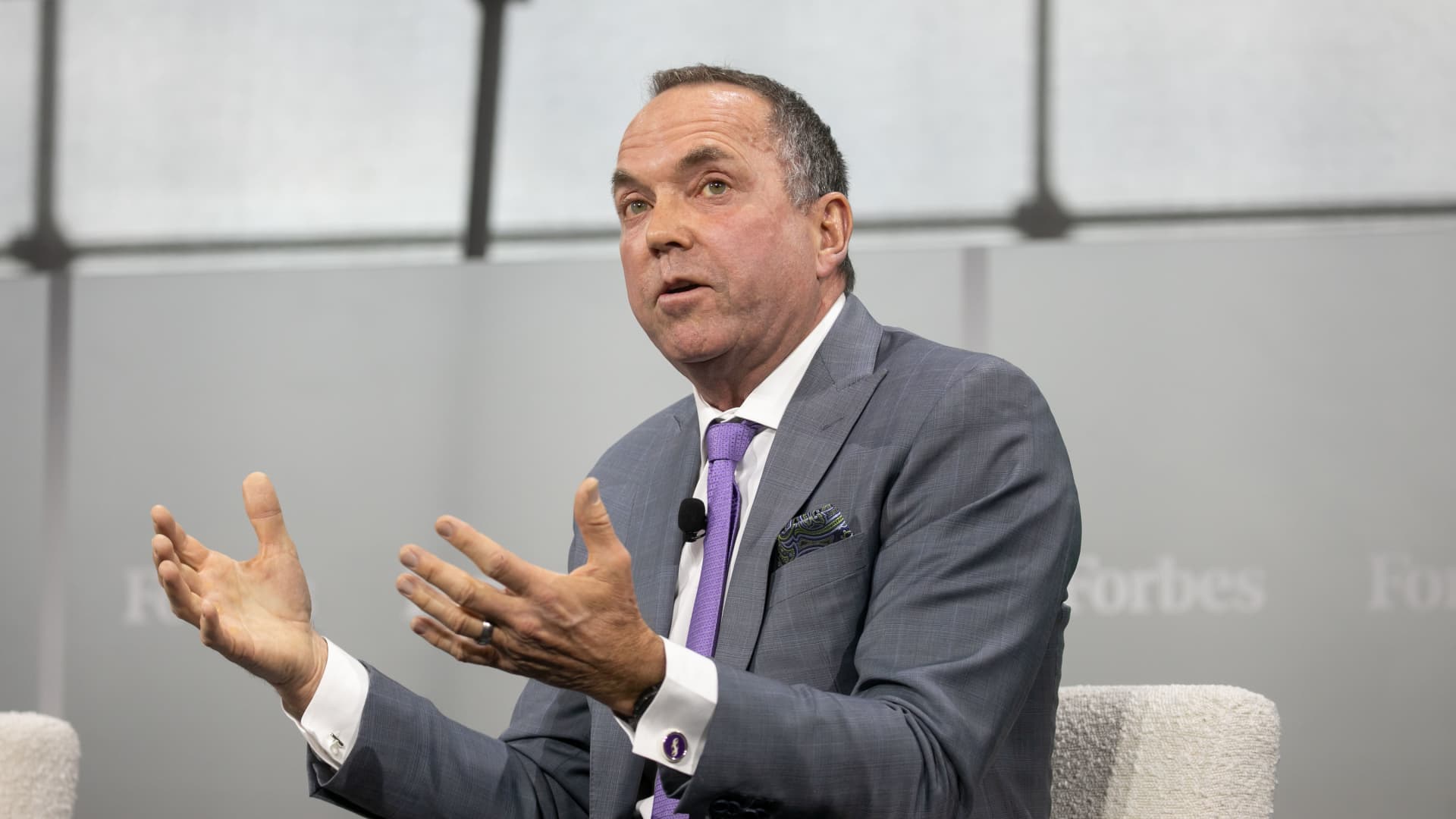
Douglas Ingram, president and chief executive officer of Sarepta Therapeutics Inc., during the Forbes Healthcare Summit in New York, US, on Tuesday, Dec. 5, 2023.
Shares of Sarepta Therapeutics plunged more than 30% on Friday as the future of its approved gene therapy treatment appeared at risk.
FDA Investigation and Gene Therapy Treatment
The Food and Drug Administration will request that the company voluntarily stop all shipments of the treatment, Elevidys, a person familiar with the matter told CNBC.
Sarepta told CNBC it had not heard from the FDA.
Separately, FDA Commissioner Marty Makary said in an interview with Bloomberg News that the agency is considering whether the company’s gene therapy should stay on the market.
The FDA has been investigating two patient deaths tied to Elevidys, which accounts for more than half of Sarepta’s total net product revenue. The company also reported a third death tied to a separate experimental gene therapy.
Controversy Surrounding Elevidys
Elevidys has been mired in controversy even since before it was approved. The gene therapy has yet to clearly prove it can benefit people with Duchenne muscular dystrophy, a condition that erodes muscle function over time.
People with the disease eventually lose the ability to walk, and most die by their early 20s, meaning there’s a huge unmet need for treatment. The FDA in 2023 originally granted Elevidys a conditional approval for patients only between the ages of 4 and 5, the group that saw the most benefit in clinical trials.
Expansion of Approval and Safety Concerns
The following year, the agency granted the treatment full approval for patients 4 and older who could still walk and accelerated approval for patients 4 and up who could no longer walk. The latter decision was especially contentious because there was less evidence that Elevidys could help people whose disease had already progressed so much.
Plus, Elevidys failed to meet its goal in a Phase 3 trial, though the company contended that the drug showed promise on other metrics in the study. Then head of the FDA’s Center for Biologics Evaluation and Research, Peter Marks, agreed with Sarepta’s assessment and overruled FDA staff to expand approval of Elevidys.
Earlier this year, Sarepta disclosed that two teenage boys died from liver failure after receiving Elevidys. Then this week, reports emerged that another person died during a Phase 1 trial investigating another one of Sarepta’s gene therapies for a different disease.
Impact on Sarepta Therapeutics
The two therapies are different, though they share the same method of delivery, heightening the safety concerns around Elevidys. The safety risks of Elevidys are especially important given the uncertain benefit, said BMO analyst Kostas Biliouris.
For example, Novartis’ gene therapy Zolgensma for spinal muscular atrophy has also caused liver toxicity and death, but the benefit of that treatment is clear.
"That’s why deaths here matter so much versus Zolgensma, for example," Biliouris said.
And Zolgensma is just one drug of many for a large company like Novartis. For Sarepta, Elevidys is everything.
Investor Concerns
Executives this week tried to reassure investors that even if it can only treat patients who can still walk, where deaths haven’t been reported, the therapy should bring in at least $500 million a year. Sarepta last month stopped shipping Elevidys to patients who can no longer walk while it explores a safer way to administer the treatment.
The top concern for investors at this point is whether the FDA pulls the drug, Biliouris said. The company’s stock has now fallen more than 87% this year.
"If the FDA pulls Elevidys from the market," he says, "Sarepta is done."
Patient Perspective
Jennifer Handt, whose son was diagnosed with Duchenne muscular dystrophy in late 2020, said it was "heartbreaking" that other patients won’t have a treatment option to turn to if shipments of Elevidys are paused.
Her son, Charlie, was dosed with Elevidys in 2022 as part of Sarepta’s late-stage trial and noticed improvements in six to 12 months, including increased stamina and more fluid motions. The drug also eased a telltale symptom of the condition called Gowers’ sign, which causes children difficulty when getting up from a sitting or lying position.
She said her son is "completely stable" three years out from his dose. Handt said she was aware of the liver toxicity risks before Charlie enrolled in the trial.
"We don’t have the luxury of not taking the risk," Handt said. "There are families that dealt with this disease before that would have done anything to have an option, even if there are risks."
"Every family should have the choice to take this leap with this drug and potentially see benefits," she added.
Conclusion
The future of Sarepta Therapeutics’ gene therapy treatment, Elevidys, is uncertain due to safety concerns and the FDA’s investigation into patient deaths. The company’s stock has plummeted, and investors are worried about the potential impact on the company’s revenue. While some patients have seen benefits from the treatment, the risks associated with it cannot be ignored. The FDA’s decision on whether to pull the drug from the market will be crucial in determining the future of Sarepta Therapeutics.
FAQs
Q: What is Elevidys, and what is it used for?
A: Elevidys is a gene therapy treatment used to treat Duchenne muscular dystrophy, a condition that erodes muscle function over time.
Q: What are the safety concerns surrounding Elevidys?
A: The FDA has been investigating two patient deaths tied to Elevidys, and there are concerns about liver toxicity and the uncertain benefit of the treatment.
Q: What is the FDA’s stance on Elevidys?
A: The FDA is considering whether to pull Elevidys from the market due to safety concerns and is investigating the deaths tied to the treatment.
Q: How has the controversy surrounding Elevidys affected Sarepta Therapeutics?
A: The company’s stock has fallen more than 87% this year, and investors are worried about the potential impact on the company’s revenue.
Q: What do patients and families affected by Duchenne muscular dystrophy think about Elevidys?
A: Some patients and families believe that the potential benefits of Elevidys outweigh the risks and that they should have the option to choose the treatment.


Community Mentorship Programs Help Strengthen Local Workforce and Social Impact

Low-Code Platforms are Changing How Businesses Build Internal Technology

Microlearning in Employee Training: A Practical Approach to Workplace Skill Development

Decision-Making Frameworks Improve Strategic Leadership and Organizational Clarity

Career Ladder Programs Strengthen Workforce Development and Employee Retention

Workplace Recognition Programs Improve Organizational Culture and Employee Engagement

Why Mental Endurance is Essential for Workplace Resilience

What Informational Interviews are and Why they Matter

How Emotional Intelligence Can Help You Manage Stress and Build Resilience

Interview with Dr. Kristy K. Taylor, WORxK Global News Magazine Founder

Sarah Herrlinger Talks AirPods Pro Hearing Aid

NetWork Your Way to Success: Top Tips for Maximizing Your Professional Network

Unlocking Human Potential: Kim Groshek’s Journey to Transforming Leadership and Stress Resilience

The Power of Belonging: Why Feeling Accepted Matters in the Workplace

Health-care stocks fall after Warren PBM bill, Brian Thompson shooting

Glenda Benevides: Creating Global Impact Through Music
-
 Resiliency7 months ago
How Emotional Intelligence Can Help You Manage Stress and Build Resilience
-
 Career Advice1 year ago
Interview with Dr. Kristy K. Taylor, WORxK Global News Magazine Founder
-
 Diversity and Inclusion (DEIA)1 year ago
Sarah Herrlinger Talks AirPods Pro Hearing Aid
-
 Career Advice1 year ago
NetWork Your Way to Success: Top Tips for Maximizing Your Professional Network
-
 Changemaker Interviews1 year ago
Unlocking Human Potential: Kim Groshek’s Journey to Transforming Leadership and Stress Resilience
-
 Diversity and Inclusion (DEIA)1 year ago
The Power of Belonging: Why Feeling Accepted Matters in the Workplace
-
 Global Trends and Politics1 year ago
Health-care stocks fall after Warren PBM bill, Brian Thompson shooting
-
 Changemaker Interviews12 months ago
Glenda Benevides: Creating Global Impact Through Music