
Innovation and Technology
The Missing Piece in Competitive Strategy

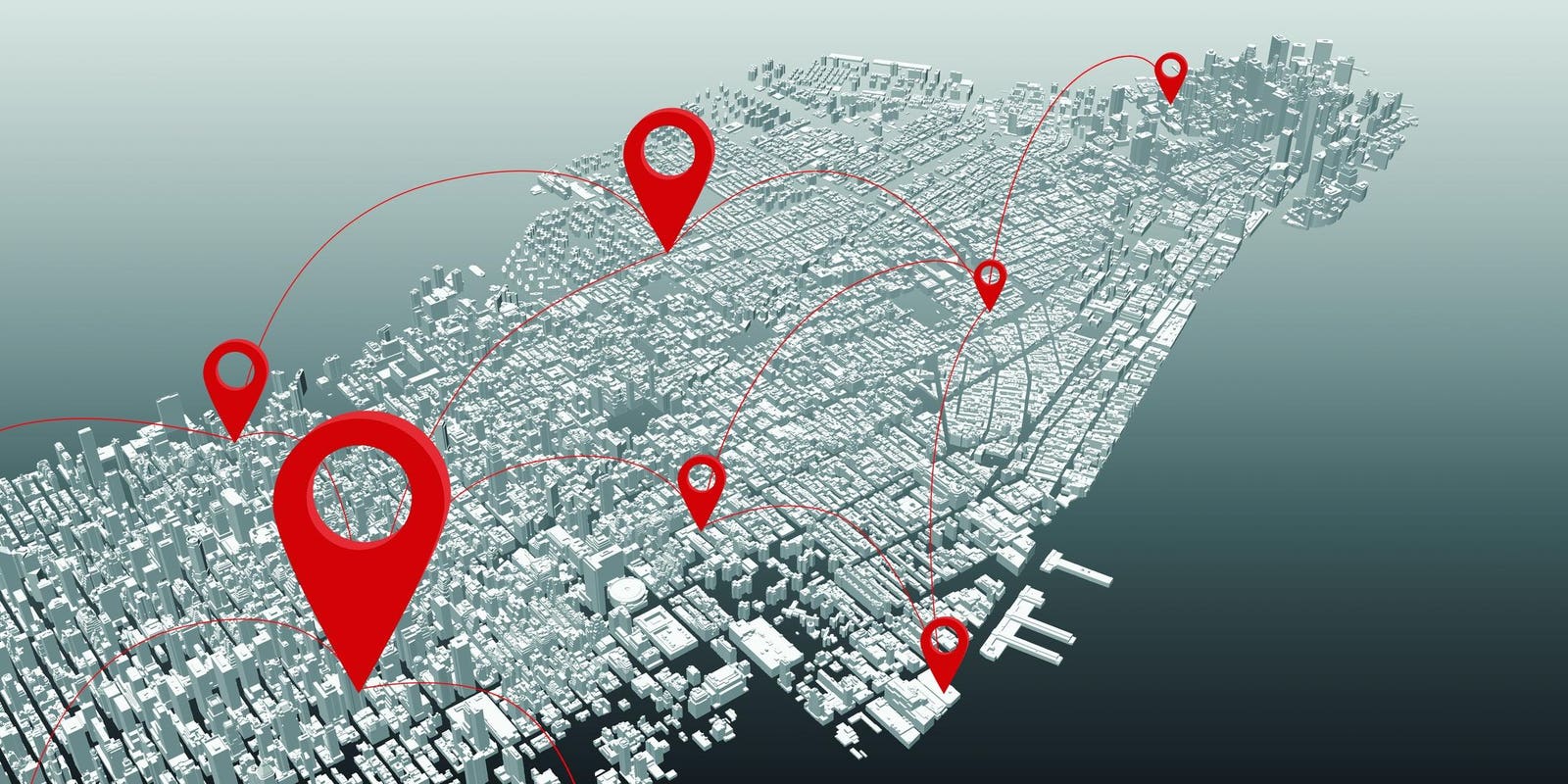
Introduction to Location Intelligence
A major brewery had a new idea for how to find new customers, create new buzz, and build new loyalty. They had big-time marketing, distribution into stores large and small, and strong relationships with customers, eateries, and bars. What they wanted to do was create their own branded pubs, but they needed decisive insight and intelligence about their own business. So, they mapped the popularity of craft beers by neighborhood, studied nighttime traffic patterns, and added information on the density and appeal of other restaurants and bars.
The Power of "Where"
They looked at dining-out behavior and spending, where it was rising or declining by category, and areas that were expanding, teasing out places where income might increase and demographics were shifting to match their target groups. They created their own business intelligence portfolio around the brewery idea, built on a single quality: Location. Business intelligence that melds internal customer and operational data with external data of every sort. The question they were trying to answer was, "Where would people be most interested in these new brew pubs?" and "Where do the demographics, values, behaviors, and preferences match the new community the brewer is hoping to tap?"
The Importance of Location in Business
“Where?” is really the question of the moment, whether you’re in construction or energy, consumer goods or retail, restaurants or banking. “Where” questions are incredibly potent—they unlock growth, efficiencies, and innovation. Oddly, though, location is the one thing most often missing from strategic planning, analysis, business intelligence, and operations. Leaving out location means missing chances for efficiency in operations and supply chain, reducing risk, improving marketing effectiveness, and increasing adaptability in an uncertain business environment.
The Cost of Missing Location Intelligence
Leaving out location means missing the chance to grow existing customers in unexpected ways and to find new customers and markets. You’re missing opportunity. Location isn’t about where you are, it’s about where you’re going. There are tools to bring location intelligence right into existing business intelligence platforms, exponentially enriching their analytical power. We’re talking about being able to make the invisible visible—patterns, perils, possibilities—and to map the future.
Mapping and Spatial Analytics
This approach has a name: mapping and spatial analytics. It’s making sure you’re applying “where” to basically every question and analysis your company undertakes. It’s weaving spatial intelligence into all the other kinds of intelligence analysis you already do. Once you start using it, ‘where’ becomes not just intuitive, it becomes instantly compelling. You start asking, in every setting, how does location fit into this? What about “the where”? Two things are key: ‘spatial analytics’ are easy to use—the complexity is under the hood. And as you’ll quickly see, it provides a striking competitive advantage.
Real-World Applications of Mapping and Spatial Analytics
Here are a few examples of how different industries are using mapping and spatial analytics:
- Retail: The third largest fast-food chain in the U.S. by sales uses location data for everything from site selection and drive-through optimization to supply chain risk management and competitive intelligence.
- Consumer goods: One of the world’s largest apparel companies uses mapping and analytics to trace its supply chain across 40 countries and compress six-month reporting tasks into days or weeks.
- Logistics and transportation: One of America’s largest transportation services companies uses mapping and spatial analytics to assess where its customers are, where its trucks are, and where its service depots are.
- Banking: A major bank serving the Southeast and Midwest U.S. uses mapping and analytics to figure out where it should grow and expand its services.
The Value of Location Intelligence
Not all locations are equal. In business, we know this intuitively—not all outlets do the same volume, not all neighborhoods have the same growth prospects, not all communities face the same kinds of extreme weather risk or climate opportunity. Location is not some niche quality anymore; it’s a kind of master key that unlocks all the other elements of business intelligence in ways that are revealing, creative, and energizing.
Conclusion
Location intelligence is a powerful tool that can help businesses make informed decisions, reduce risk, and increase efficiency. By applying “where” to every question and analysis, companies can unlock growth, innovation, and competitive advantage. With the right tools and techniques, businesses can make the invisible visible, map the future, and thrive in a dynamic and uncertain environment.
FAQs
- What is location intelligence?: Location intelligence refers to the process of using geographic data and spatial analysis to gain insights and make informed decisions.
- How can location intelligence be used in business?: Location intelligence can be used in a variety of ways, including site selection, supply chain optimization, risk management, and competitive intelligence.
- What are the benefits of using location intelligence?: The benefits of using location intelligence include increased efficiency, reduced risk, and improved decision-making.
- What tools and techniques are used in location intelligence?: The tools and techniques used in location intelligence include geographic information systems (GIS), spatial analysis, and mapping and spatial analytics software.
- How can I get started with location intelligence?: To get started with location intelligence, you can begin by identifying your business needs and goals, and then exploring the various tools and techniques available to help you achieve them.




Community Mentorship Programs Help Strengthen Local Workforce and Social Impact

Low-Code Platforms are Changing How Businesses Build Internal Technology

Microlearning in Employee Training: A Practical Approach to Workplace Skill Development

Decision-Making Frameworks Improve Strategic Leadership and Organizational Clarity

Career Ladder Programs Strengthen Workforce Development and Employee Retention

Workplace Recognition Programs Improve Organizational Culture and Employee Engagement

Why Mental Endurance is Essential for Workplace Resilience

What Informational Interviews are and Why they Matter

How Emotional Intelligence Can Help You Manage Stress and Build Resilience

Interview with Dr. Kristy K. Taylor, WORxK Global News Magazine Founder

Sarah Herrlinger Talks AirPods Pro Hearing Aid

NetWork Your Way to Success: Top Tips for Maximizing Your Professional Network

Unlocking Human Potential: Kim Groshek’s Journey to Transforming Leadership and Stress Resilience

The Power of Belonging: Why Feeling Accepted Matters in the Workplace

Health-care stocks fall after Warren PBM bill, Brian Thompson shooting

Glenda Benevides: Creating Global Impact Through Music
-
 Resiliency7 months ago
How Emotional Intelligence Can Help You Manage Stress and Build Resilience
-
 Career Advice1 year ago
Interview with Dr. Kristy K. Taylor, WORxK Global News Magazine Founder
-
 Diversity and Inclusion (DEIA)1 year ago
Sarah Herrlinger Talks AirPods Pro Hearing Aid
-
 Career Advice1 year ago
NetWork Your Way to Success: Top Tips for Maximizing Your Professional Network
-
 Changemaker Interviews1 year ago
Unlocking Human Potential: Kim Groshek’s Journey to Transforming Leadership and Stress Resilience
-
 Diversity and Inclusion (DEIA)1 year ago
The Power of Belonging: Why Feeling Accepted Matters in the Workplace
-
 Global Trends and Politics1 year ago
Health-care stocks fall after Warren PBM bill, Brian Thompson shooting
-
 Changemaker Interviews12 months ago
Glenda Benevides: Creating Global Impact Through Music