
Global Trends and Politics
Trump asks drugmakers to cut U.S. prices within 60 days

Introduction to Trump’s Plan
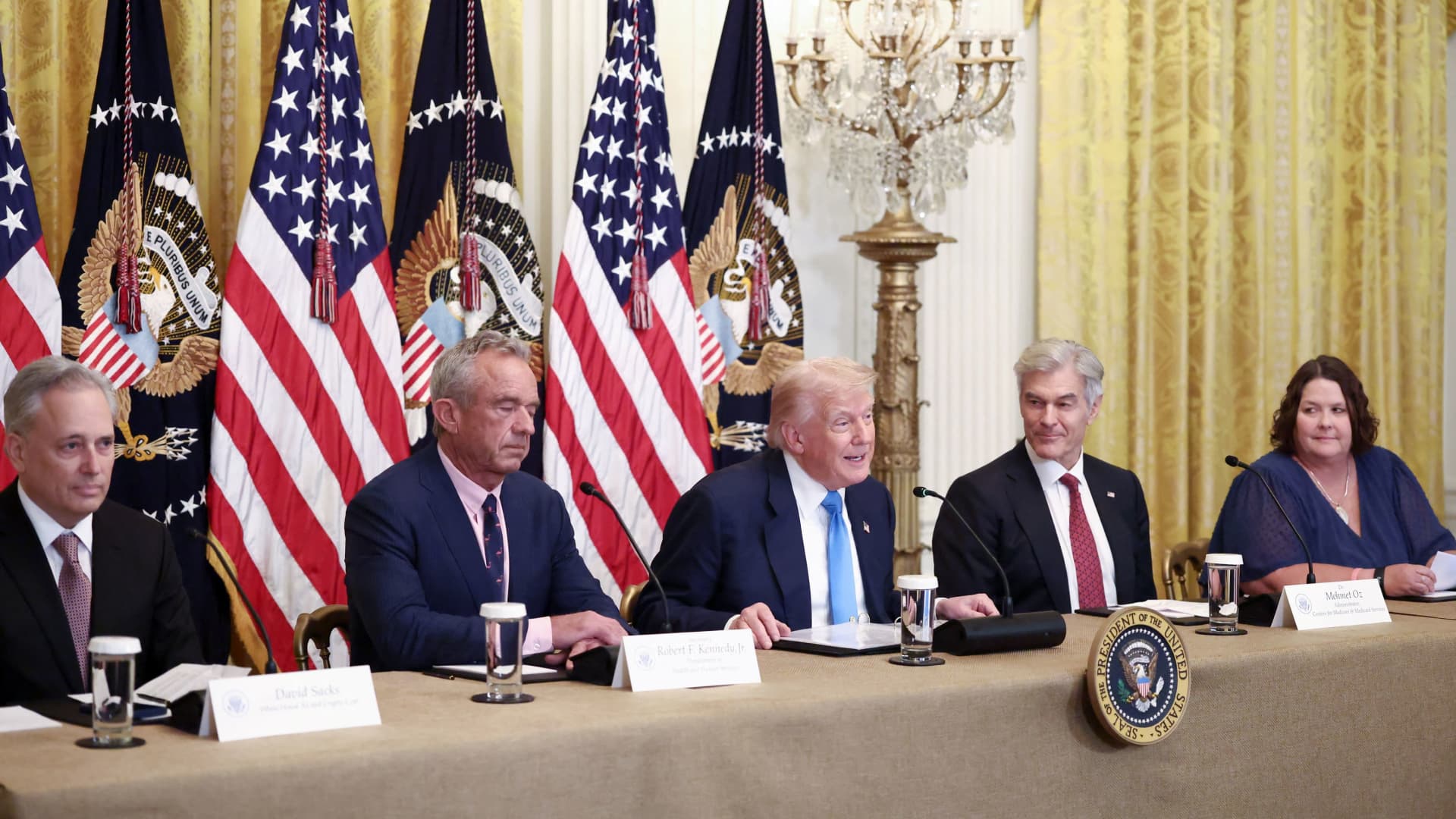
U.S. President Donald Trump, U.S. Health and Human Services (HHS) Secretary Robert F. Kennedy, Jr., Dr. Mehmet Oz, Administrator for the Centers for Medicare & Medicaid Services, David Sacks, AI & Crypto Czar and Amy Gleason, Acting Administrator, Department of Government Efficiency (DOGE) attend the "Making Health Technology Great Again" event in the East Room at the White House in Washington, D.C., U.S., July 30, 2025.
Trump’s Request to Pharmaceutical Companies
President Donald Trump on Thursday said he asked major pharmaceutical companies to take steps to cut U.S. drug prices within the next 60 days. On Truth Social on Thursday, Trump posted individual letters he sent 17 drugmakers: AbbVie, Amgen, AstraZeneca, Boehringer Ingelheim, Bristol Myers Squibb, Eli Lilly, EMD Serono, Genentech, Gilead, GSK, Johnson & Johnson, Merck, Novartis, Novo Nordisk, Pfizer, Regeneron, and Sanofi. Trump threatened to "deploy every tool in our arsenal to protect American families from continued abusive drug pricing practices" if companies refuse to comply. He asked for each company to commit to his several goals by Sept. 29.
Background and Context
The letters come after Trump in May signed an executive order reviving a controversial plan, known as the "most favored nation" policy, that aims to slash drug costs by tying the prices of some medicines in the U.S. to the significantly lower ones abroad. It was Trump’s latest effort to try to rein in U.S. prescription drug prices, which are two to three times higher on average than those in other developed nations – and up to 10 times more than in certain countries, according to the Rand Corp., a public policy think tank.
White House Press Briefing
White House Press Secretary Karoline Leavitt holds U.S. President Donald Trump’s letter to Eli Lilly CEO David Ricks during a press briefing at the White House in Washington, D.C., U.S., July 31, 2025.
Trump’s Demands
In the letters on Thursday, Trump said drugmakers have proposed potential solutions for high U.S. drug prices. But he said those proposals "promised more of the same: shifting blame and requesting policy changes that would result in billions of dollars in handouts to the industry." He said moving forward, he will only accept commitments from drugmakers that provide "American families immediate relief from the vastly inflated drug prices and an end to the free ride of American innovation by European and other developed nations." Trump said a collaborative effort towards lowering U.S. drug prices would be the "most effective path" for companies, the government and patients.
Market Reaction
Shares of drugmakers fell following the announcement on Thursday. Shares of Bristol Myers Squibb and Novo Nordisk dropped nearly 5%, GSK and Merck’s stocks fell more than 3% and shares of Sanofi tumbled more than 8%.
Steps to Lower Drug Prices
Here are the steps Trump is asking companies to take:
- He called on drugmakers to provide their full portfolio of existing medicines at the lowest price offered in other developed nations – or what he calls the most-favored-nation price – to every single Medicaid patient.
- Trump also asked companies to contract with the U.S. to guarantee that Medicare, Medicaid and commercial payers receive most-favored-nation prices on all new drugs upon launch and moving forward.
- He called on companies to negotiate harder with what he called "foreign freeloading nations," adding that U.S. trade policy will try to support that effort. He said increased revenues abroad must be "repatriated to lower drug prices" for American patients and taxpayers through an agreement with the U.S.
- He asked drugmakers to adopt models that sell their medicines directly to consumers or businesses, which effectively eliminates middlemen and aims to ensure that all Americans get the same most-favored nation prices that companies offer to third-party payers.
Industry Response
Alex Schriver, senior vice president of PhRMA, the industry’s largest lobbying group, said "importing foreign price controls would undermine American leadership, hurting patients and workers." The group added that to reduce price differences with other countries, U.S. officials should "rein in health care middlemen driving up costs for Americans and get foreign countries to pay their fair share for innovative medicines." PhRMA is referring to pharmacy benefit managers, insurers and other payers.
Company Statements
In separate statements, spokespeople for Pfizer, Novo Nordisk and Novartis said they are working to find solutions that help Americans access and afford drugs they need. Pfizer said that the company’s discussions with the Trump administration and Congress "have been productive." Novartis said it is reviewing the letter.
Conclusion
The announcement comes just days after AstraZeneca said it has proposed price cuts to certain drugs in the U.S., and that the Trump administration is considering those proposals. AstraZeneca added that it is considering selling some drugs to patients directly, which is a move that companies like Eli Lilly, Novo Nordisk, Pfizer and Bristol Myers Squibb have adopted as patients struggle to afford drugs in the U.S. Drugmakers are also bracing for the president’s planned tariffs on pharmaceuticals imported into the U.S.
FAQs
Q: What is Trump’s plan to lower drug prices?
A: Trump’s plan involves asking pharmaceutical companies to provide their full portfolio of existing medicines at the lowest price offered in other developed nations to every single Medicaid patient, contracting with the U.S. to guarantee most-favored-nation prices on all new drugs, negotiating harder with foreign nations, and adopting models that sell medicines directly to consumers or businesses.
Q: How have pharmaceutical companies responded to Trump’s plan?
A: Some companies, such as Pfizer, Novo Nordisk, and Novartis, have stated that they are working to find solutions to help Americans access and afford drugs, while others, such as PhRMA, have expressed concerns that importing foreign price controls would undermine American leadership and hurt patients and workers.
Q: What are the potential consequences of Trump’s plan?
A: The potential consequences of Trump’s plan include lower drug prices for American patients, increased revenues for pharmaceutical companies, and potential changes to the way pharmaceuticals are priced and sold in the U.S.
Q: What is the timeline for Trump’s plan?
A: Trump has asked pharmaceutical companies to commit to his goals by Sept. 29, and has threatened to "deploy every tool in our arsenal" if companies refuse to comply.
Q: How will Trump’s plan affect the pharmaceutical industry?
A: Trump’s plan has the potential to significantly impact the pharmaceutical industry, potentially leading to lower profits for companies that do not comply with his demands, and potentially changing the way pharmaceuticals are priced and sold in the U.S.


Community Mentorship Programs Help Strengthen Local Workforce and Social Impact

Low-Code Platforms are Changing How Businesses Build Internal Technology

Microlearning in Employee Training: A Practical Approach to Workplace Skill Development

Decision-Making Frameworks Improve Strategic Leadership and Organizational Clarity

Career Ladder Programs Strengthen Workforce Development and Employee Retention

Workplace Recognition Programs Improve Organizational Culture and Employee Engagement

Why Mental Endurance is Essential for Workplace Resilience

What Informational Interviews are and Why they Matter

How Emotional Intelligence Can Help You Manage Stress and Build Resilience

Interview with Dr. Kristy K. Taylor, WORxK Global News Magazine Founder

Sarah Herrlinger Talks AirPods Pro Hearing Aid

NetWork Your Way to Success: Top Tips for Maximizing Your Professional Network

Unlocking Human Potential: Kim Groshek’s Journey to Transforming Leadership and Stress Resilience

The Power of Belonging: Why Feeling Accepted Matters in the Workplace

Health-care stocks fall after Warren PBM bill, Brian Thompson shooting

Glenda Benevides: Creating Global Impact Through Music
-
 Resiliency7 months ago
How Emotional Intelligence Can Help You Manage Stress and Build Resilience
-
 Career Advice1 year ago
Interview with Dr. Kristy K. Taylor, WORxK Global News Magazine Founder
-
 Diversity and Inclusion (DEIA)1 year ago
Sarah Herrlinger Talks AirPods Pro Hearing Aid
-
 Career Advice1 year ago
NetWork Your Way to Success: Top Tips for Maximizing Your Professional Network
-
 Changemaker Interviews1 year ago
Unlocking Human Potential: Kim Groshek’s Journey to Transforming Leadership and Stress Resilience
-
 Diversity and Inclusion (DEIA)1 year ago
The Power of Belonging: Why Feeling Accepted Matters in the Workplace
-
 Global Trends and Politics1 year ago
Health-care stocks fall after Warren PBM bill, Brian Thompson shooting
-
 Changemaker Interviews12 months ago
Glenda Benevides: Creating Global Impact Through Music