
Global Trends and Politics
Trump Eases Auto Tariffs

Introduction to Auto Tariffs
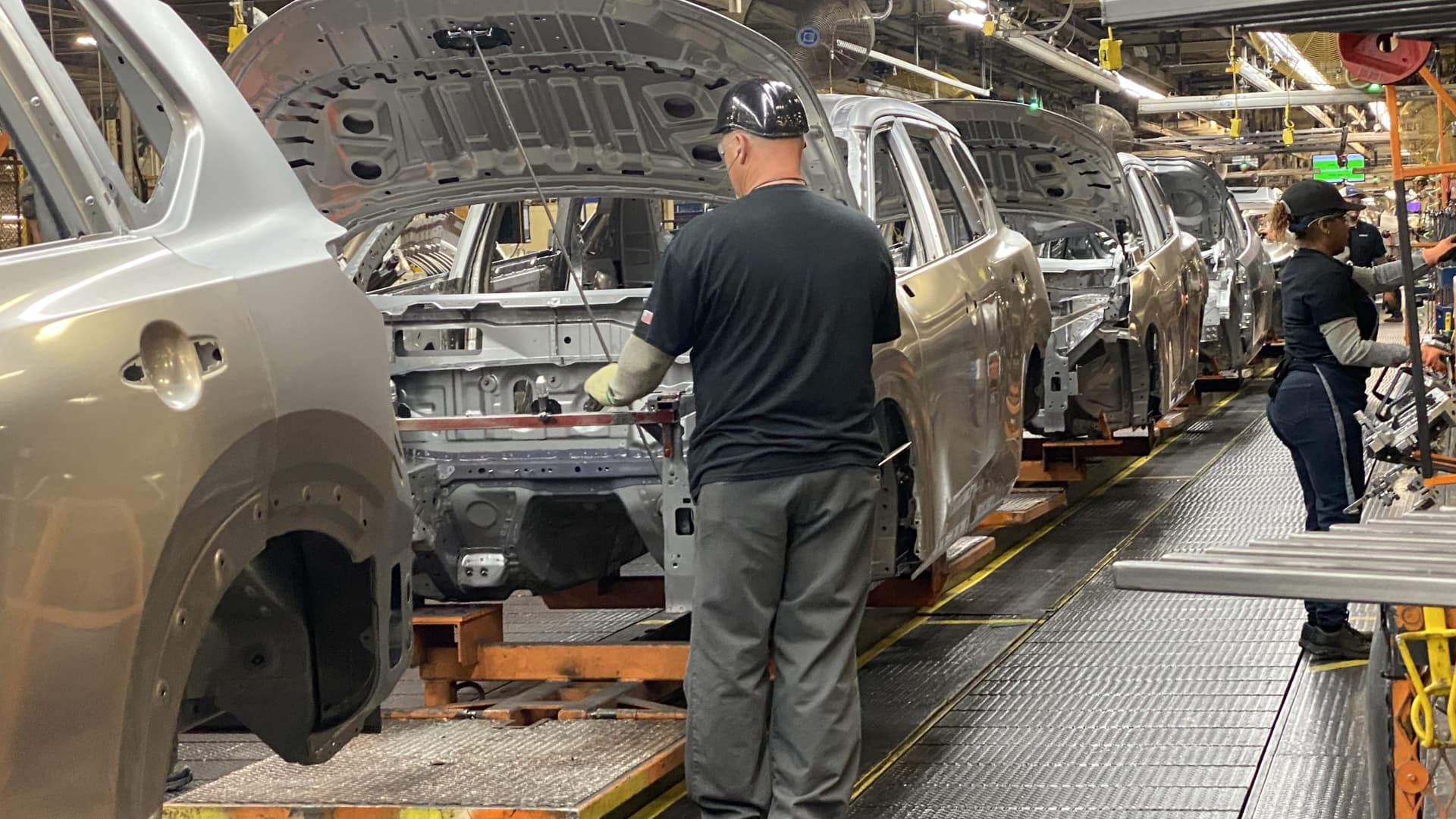
Autoworkers at Nissan’s Smyrna Vehicle Assembly Plant in Tennessee, June 6, 2022. The plant employs thousands of people and produces a variety of vehicles, including the Leaf EV and Rogue crossover.
Michael Wayland / CNBC
DETROIT — President Donald Trump on Tuesday signed an executive order softening some of the automotive tariffs his administration put into place earlier this month, as the car industry grapples with regulatory uncertainty and additional costs due to the levies.
Tariff Details
Tariffs of 25% on imported vehicles into the U.S. will continue, but the new measures aim to reduce the overall tariff level on vehicle imports that had resulted from separate levies — such as an additional 25% tariffs on steel and aluminum — "stacking" on top of one another.
Under the order, additional 25% tariffs on auto parts that were set to start by May 3 will also still take effect, but vehicles that go through final assembly in the U.S. will be able to qualify for partial reimbursements on those levies for two years.
Those parts-related reimbursements include potential offsets of an amount equal to 3.75% of the value of a U.S.-made car that’s assembled before May 1, 2026. After that, the reimbursement cap is lowered to 2.5% of the car’s value until April 30, 2027, according to the order.
Administration’s Calculation
The administration said it calculated those rates by applying a 25% duty to 15% of the value of a U.S.-assembled vehicle in the first year, and a 25% duty to 10% of that value in the second year.
Trump on Tuesday during his visit to Michigan said the administration will "slaughter them if they don’t" bring the parts back to the U.S. He didn’t expand on what that may entail other than citing the 15% and 10% calculations.
Reimbursement Process
It’s unclear how an automaker would get such a reimbursement, but the offer is retroactive to when the tariffs took effect on April 3.
"We just wanted to help them during this little transition," Trump said earlier in the day. "If they can’t get parts, we didn’t want to penalize them."
Industry Reaction
The easing on auto tariffs follows automakers and auto policy groups lobbying the Trump administration for some relief, particularly from the "stacking" effect of multiple duties.
Last week, six of the top policy groups representing the U.S. automotive industry, including the Alliance for Automotive Innovation that represents most major automakers, uncharacteristically joined forces to lobby the Trump administration against implementing the upcoming tariffs on auto parts.
"President Trump has indicated an openness to reconsidering the administration’s 25 percent tariffs on imported automotive parts – similar to the tariff relief recently approved for consumer electronics and semiconductors. That would be a positive development and welcome relief," the groups said in a letter to Trump officials.
Impact on Automakers
Ahead of the company reporting its first-quarter results Tuesday, General Motors CFO Paul Jacobson told reporters that "future impacts of tariffs could be significant."
In response to the regulatory uncertainty and expected cost increases, GM discontinued its 2025 guidance, which did not take tariffs into account; suspended stock buybacks; and delayed its quarterly investor call by two days until Thursday.
Jennifer Safavian, CEO of Autos Drive America, which represents major foreign automakers operating in the U.S., described the new actions as "some welcome relief for automakers but more must be done."
Safavian urged Trump to create "a pro-growth and regulatory climate for U.S. manufacturing to thrive."
Conclusion
The traditional Detroit automakers expressed appreciation for the expected changes, but continue to face significant cost increases.
"Ford welcomes and appreciates these decisions by President Trump, which will help mitigate the impact of tariffs on automakers, suppliers and consumers," Ford CEO Jim Farley said in an emailed statement Tuesday.
Stellantis Chair John Elkann echoed those remarks: "Stellantis appreciates the tariff relief measures decided by President Trump. While we further assess the impact of the tariff policies on our North American operations, we look forward to our continued collaboration with the U.S. Administration to strengthen a competitive American auto industry and stimulate exports."
GM CEO Mary Barra also thanked Trump, saying it was "helping level the playing field for companies like GM and allowing us to invest even more in the U.S. economy.
FAQs
Q: What is the current tariff rate on imported vehicles in the US?
A: The current tariff rate on imported vehicles in the US is 25%.
Q: What is the reimbursement rate for vehicles assembled in the US?
A: The reimbursement rate for vehicles assembled in the US is 3.75% of the value of the vehicle for the first two years, and 2.5% after that.
Q: How will the reimbursement process work?
A: The reimbursement process is unclear, but the offer is retroactive to when the tariffs took effect on April 3.
Q: How will the tariffs affect the automotive industry?
A: The tariffs are expected to have a significant impact on the automotive industry, with potential cost increases and regulatory uncertainty.
Q: What is the reaction of the automotive industry to the tariffs?
A: The automotive industry has been lobbying the Trump administration for relief from the tariffs, and has expressed appreciation for the expected changes, but continues to face significant cost increases.


Community Mentorship Programs Help Strengthen Local Workforce and Social Impact

Low-Code Platforms are Changing How Businesses Build Internal Technology

Microlearning in Employee Training: A Practical Approach to Workplace Skill Development

Decision-Making Frameworks Improve Strategic Leadership and Organizational Clarity

Career Ladder Programs Strengthen Workforce Development and Employee Retention

Workplace Recognition Programs Improve Organizational Culture and Employee Engagement

Why Mental Endurance is Essential for Workplace Resilience

What Informational Interviews are and Why they Matter

How Emotional Intelligence Can Help You Manage Stress and Build Resilience

Interview with Dr. Kristy K. Taylor, WORxK Global News Magazine Founder

Sarah Herrlinger Talks AirPods Pro Hearing Aid

NetWork Your Way to Success: Top Tips for Maximizing Your Professional Network

Unlocking Human Potential: Kim Groshek’s Journey to Transforming Leadership and Stress Resilience

The Power of Belonging: Why Feeling Accepted Matters in the Workplace

Health-care stocks fall after Warren PBM bill, Brian Thompson shooting

Glenda Benevides: Creating Global Impact Through Music
-
 Resiliency7 months ago
How Emotional Intelligence Can Help You Manage Stress and Build Resilience
-
 Career Advice1 year ago
Interview with Dr. Kristy K. Taylor, WORxK Global News Magazine Founder
-
 Diversity and Inclusion (DEIA)1 year ago
Sarah Herrlinger Talks AirPods Pro Hearing Aid
-
 Career Advice1 year ago
NetWork Your Way to Success: Top Tips for Maximizing Your Professional Network
-
 Changemaker Interviews1 year ago
Unlocking Human Potential: Kim Groshek’s Journey to Transforming Leadership and Stress Resilience
-
 Diversity and Inclusion (DEIA)1 year ago
The Power of Belonging: Why Feeling Accepted Matters in the Workplace
-
 Global Trends and Politics1 year ago
Health-care stocks fall after Warren PBM bill, Brian Thompson shooting
-
 Changemaker Interviews12 months ago
Glenda Benevides: Creating Global Impact Through Music