
Global Trends and Politics
Trump’s Tariffs Hit Canadian Small Businesses Hard

Introduction to Trade Tensions
Just across the U.S.-Canada border, some small businesses are taking tariffs personally. President Donald Trump has said his wide-sweeping tariffs, even on some of the country’s closest trade partners, will rebalance international trade and bring manufacturing back stateside. But for the U.S.’s northern neighbors, tariffs may mean an erosion of trust.
Historical Trade Relationship
The country’s trade relationship with Canada has historically been integral to both national economies. In 2024, the trade of goods between both nations totaled $762.1 billion. According to the Office of the United States Trade Representative, Canada exported over three-quarters of its goods to the U.S. last year, and U.S. imports accounted for almost half of all goods it brought in.
Tariffs and Retaliation
Starting in March, however, the Trump administration implemented a 10% tariff on Canadian energy and 25% tariffs on other imports from Canada and Mexico, a levy he’d promised on Inauguration Day. But he exempted many imports covered under the United States-Mexico-Canada agreement. Trump also put a 25% tariff on vehicles not assembled in the U.S. that took effect earlier this month, a move that affects both Mexico and Canada, two major auto production hubs. In addition, a 25% tariff on auto parts is set to take effect next month. Canada has responded with its own retaliatory tariffs, but national pride has sparked another kind of resistance.
Canadian Resistance
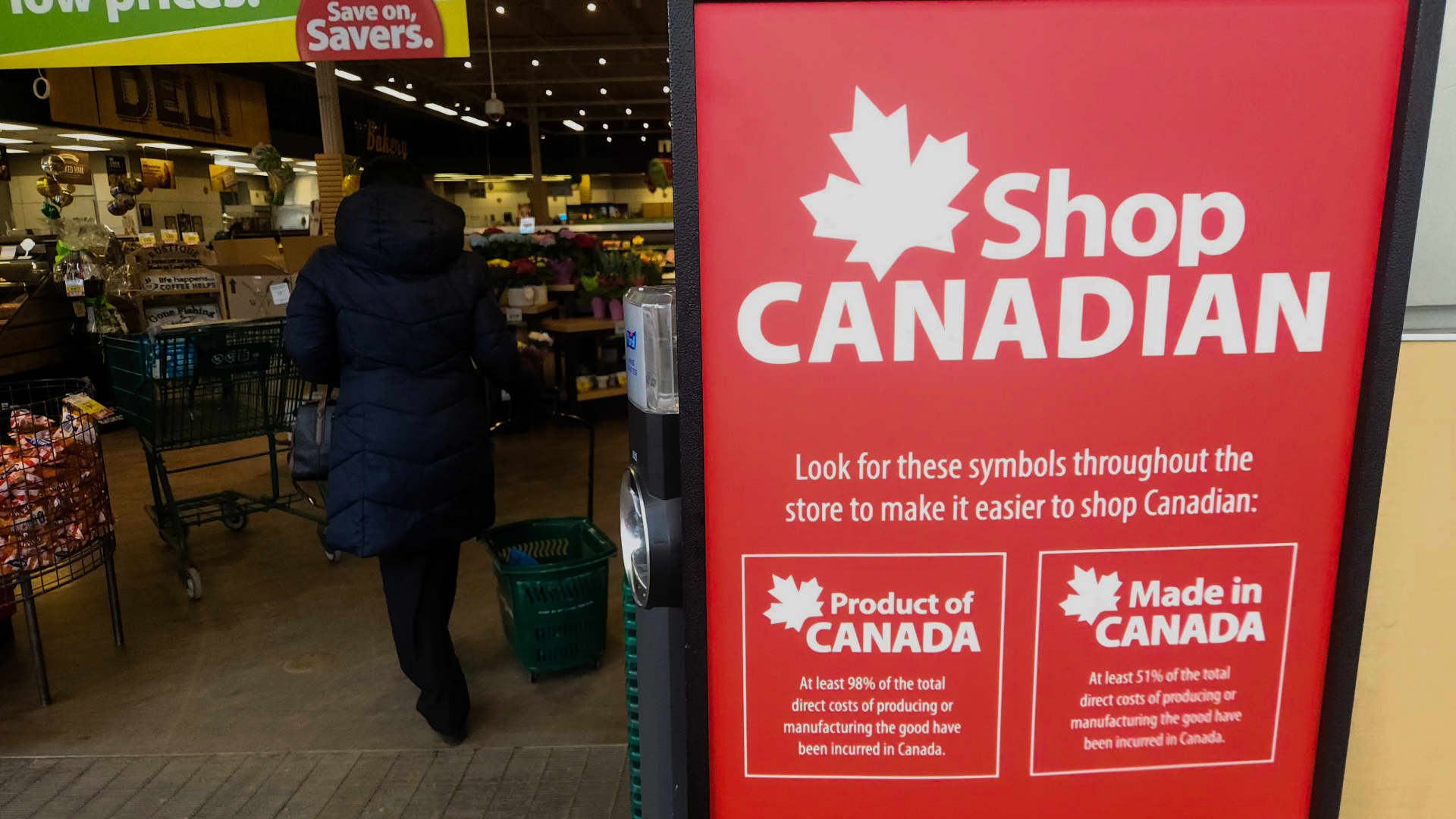
Balzac’s Coffee Roasters, a chain of cafes across Ontario and Toronto, has responded to trade tensions with a renamed menu item: the Americano — a commonplace espresso drink — is now a maple leaf-marked "Canadiano." Your Independent Grocers, a chain of independently owned supermarkets under the Canadian-traded Loblaw Companies, uses its own maple leaf badge to indicate products "prepared in Canada." The grocer also indicates tariff-impacted items with a "T" logo in stores and online.
Impact on Small Businesses
Corinne Pohlmann is the executive vice president of advocacy at the Canadian Federation of Independent Business, of CFIB, which represents over 100,000 small businesses across 12 of Canada’s 13 territories and provinces. About half of CFIB members are directly involved in either importing or exporting from the U.S., according to the organization’s December 2024 survey. That metric does not include reliance on suppliers and customers who are also trading with the U.S. More than a quarter of CFIB members surveyed in late March reported seeing stronger demand for Canadian-owned products. More than half of the surveyed businesses agreed that the U.S. is not a reliable trading partner.
Emotional Distress and Eroded Trust
The trade tensions have extended to some long-standing relationships between U.S. and Canadian small businesses, she said, as entrepreneurs decide which side of the border will absorb the costs of new tariffs. Pohlmann recalled some CFIB members asking for guidance on how to renegotiate contracts with partners to the south. Pohlmann said the tariffs are causing emotional distress, in addition to cost increases. "For a lot of Canadians, it felt like a betrayal," Pohlmann said.
Conclusion
The tariffs imposed by the U.S. on Canada have caused significant distress and eroded trust among Canadian businesses. Even if President Trump lessens tariffs, Canadian businesses may be hesitant to rebuild trading relationships with U.S. partners. CFIB’s Pohlmann pointed to lost contracts and eroded trust. "While we’d welcome a permanent reprieve from tariffs, the trading relationship between Canada and the United States has been fractured and may never be the same again," Pohlmann said.
FAQs
Q: What is the current trade relationship between the U.S. and Canada?
A: The trade relationship between the U.S. and Canada has historically been integral to both national economies, with Canada exporting over three-quarters of its goods to the U.S. and U.S. imports accounting for almost half of all goods it brought in.
Q: What tariffs has the U.S. imposed on Canada?
A: The U.S. has imposed a 10% tariff on Canadian energy and 25% tariffs on other imports from Canada and Mexico, as well as a 25% tariff on vehicles not assembled in the U.S.
Q: How have Canadian businesses responded to the tariffs?
A: Canadian businesses have responded with a mix of resistance and retaliation, including renaming menu items, using maple leaf badges to indicate products "prepared in Canada," and indicating tariff-impacted items with a "T" logo.
Q: What is the impact of the tariffs on small businesses in Canada?
A: The tariffs have caused significant distress and eroded trust among Canadian businesses, with many reporting lost contracts and increased costs.
Q: Will the trade relationship between the U.S. and Canada ever be the same again?
A: According to CFIB’s Pohlmann, the trading relationship between Canada and the United States has been fractured and may never be the same again, even if President Trump lessens tariffs.


Community Mentorship Programs Help Strengthen Local Workforce and Social Impact

Low-Code Platforms are Changing How Businesses Build Internal Technology

Microlearning in Employee Training: A Practical Approach to Workplace Skill Development

Decision-Making Frameworks Improve Strategic Leadership and Organizational Clarity

Career Ladder Programs Strengthen Workforce Development and Employee Retention

Workplace Recognition Programs Improve Organizational Culture and Employee Engagement

Why Mental Endurance is Essential for Workplace Resilience

What Informational Interviews are and Why they Matter

How Emotional Intelligence Can Help You Manage Stress and Build Resilience

Interview with Dr. Kristy K. Taylor, WORxK Global News Magazine Founder

Sarah Herrlinger Talks AirPods Pro Hearing Aid

NetWork Your Way to Success: Top Tips for Maximizing Your Professional Network

Unlocking Human Potential: Kim Groshek’s Journey to Transforming Leadership and Stress Resilience

The Power of Belonging: Why Feeling Accepted Matters in the Workplace

Health-care stocks fall after Warren PBM bill, Brian Thompson shooting

Glenda Benevides: Creating Global Impact Through Music
-
 Resiliency7 months ago
How Emotional Intelligence Can Help You Manage Stress and Build Resilience
-
 Career Advice1 year ago
Interview with Dr. Kristy K. Taylor, WORxK Global News Magazine Founder
-
 Diversity and Inclusion (DEIA)1 year ago
Sarah Herrlinger Talks AirPods Pro Hearing Aid
-
 Career Advice1 year ago
NetWork Your Way to Success: Top Tips for Maximizing Your Professional Network
-
 Changemaker Interviews1 year ago
Unlocking Human Potential: Kim Groshek’s Journey to Transforming Leadership and Stress Resilience
-
 Diversity and Inclusion (DEIA)1 year ago
The Power of Belonging: Why Feeling Accepted Matters in the Workplace
-
 Global Trends and Politics1 year ago
Health-care stocks fall after Warren PBM bill, Brian Thompson shooting
-
 Changemaker Interviews12 months ago
Glenda Benevides: Creating Global Impact Through Music