
Innovation and Technology
Vertex AI Models Drive Enterprise Adoption

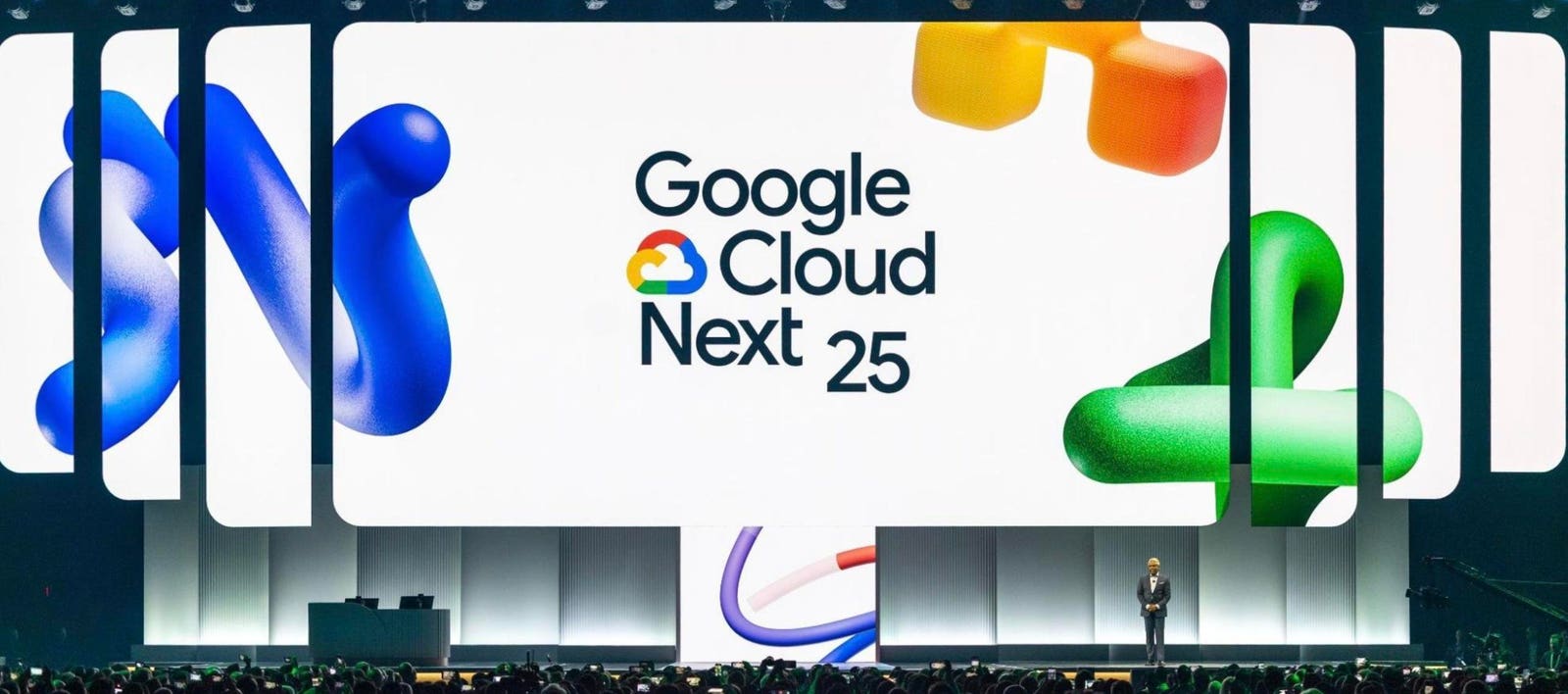
Introduction to Google Cloud Next 2025
Google Cloud announced significant AI advances at Google Cloud Next 2025, focusing on new reasoning models and agent capabilities that promise to transform business applications. In today’s rapidly evolving AI landscape, enterprises need reliable platforms that combine powerful models with practical deployment capabilities. Google Cloud’s latest enhancements to Vertex AI and the Gemini model family offer businesses a comprehensive solution for building, deploying, and managing AI applications with unprecedented speed and efficiency. Vertex AI is Google Cloud’s platform to orchestrate the three pillars of production AI: models, data, and AI agents.
Enhancements to Vertex AI
Google Cloud has significantly enhanced its Vertex AI platform with new capabilities centered around reasoning models and agent ecosystems, improving the ability for enterprises to build and deploy artificial intelligence applications. The Vertex AI platform now supports over 200 models besides Google’s. The cloud provider’s latest Gemini 2.5 models represent a fundamental shift from simple response generation to what Google calls "reasoning models" – AI systems that demonstrate transparent step-by-step thinking before producing outputs. Reasoning models can work through complex analyses across multiple information sources and make nuanced decisions based on enterprise data.
Google offers two complementary models targeting different business needs. Gemini 2.5 Pro, designed for complex problem-solving with a one-million token context window, enables sophisticated analysis of extensive documents and codebases. Meanwhile, Gemini 2.5 Flash offers optimized performance for high-volume, cost-sensitive applications where efficiency at scale is paramount.
The Need for Explainable AI
Organizations have faced insurmountable barriers to developing trust in AI outputs without understanding how AI arrives at conclusions. The first step in this process was listing the sources AI used in responses. Still, reasoning models enhance this by demonstrating their thought process, marking a critical advancement for enterprises requiring explainable AI for compliance and governance requirements.
Practical Applications and Results
The availability of a combination of solutions that offer cost, performance, and transparency is a step in the right direction for supporting the wide range of enterprise AI requirements. Early adopters report compelling results. Moody’s claims Google’s Solution provided over 95% accuracy and an 80% reduction in processing time for complex financial document analysis. Box has implemented AI extract agents for unstructured data processing across procurement and reporting workflows, demonstrating practical applications in information management.
Bolstering AI Agent Capabilities With New Tools
The number one agentic AI concern enterprise buyers have expressed is fear that agents will make and implement the wrong decision. Many organizations shared concern that AI orchestration solutions are half-baked, and there’s fear that agents won’t operate properly because the data and work streams required to complete a task span multiple applications and services. To solve this, companies are looking for robust AI orchestration to coordinate and manage various AI systems, models, or components to work together seamlessly in solving complex tasks.
New Solutions Aim to Overcome Enterprise AI Deployment Concerns
To address these concerns, Google announced a wave of new multiagent ecosystem capabilities in its Vertex AI that allow multiple AI systems to work together to accomplish complex tasks. The company introduced several components to enable this approach, including the Agent Development Kit (ADK), the Agent2Agent protocol, Agent Engine, and updates to Agentspace.
Minimizing the Data Collaboration Problem with the Agent2Agent Protocol
Most vendors claim they can provide fully autonomous AI agents. Still, most buyers prefer to deploy these agents semi-autonomously to reduce concerns about process failures or inaccuracies. To address the enterprise buyer issue of data access and execution across various applications, Google introduced the Agent2Agent protocol, an open standard for enabling communication between agents built on different frameworks and vendors.
Making it Easier for Developers of All Skill Levels to Build AI
Meanwhile, the Agent Development Kit (ADK), agent engine, and other advances in the Vertex AI platform help bootstrap the development of agents. Agent Development Kit, an open-source framework, allows developers to build sophisticated agents with approximately 100 lines of code – dramatically reducing development complexity.
Improving Access to AI Agents
Once a company can design, manage, and secure agents, the biggest obstacle to success is getting agents ubiquitously adopted within the enterprise. Agentspace aims to help employees find, publish, and consume agents. Enterprises can discover and adopt agents quickly and easily with Agent Gallery and create agents with Google’s no-code Agent Designer.
The Key Takeaway: AI Agents Will Happen
The strategy provides elements for sophisticated developers, novice designers, and employees who must find and use agents to improve their workflow. The availability of models, connectors, and out-of-the-box agents will help eliminate painful trade-offs between model capability, enterprise integration, and production readiness.
Conclusion
As reasoning models and multi-agent systems evolve from experimental concepts to production realities, organizations should evaluate not only the capabilities of individual models but also the broader infrastructure required for responsible enterprise deployment. The key consideration for executives evaluating AI investments isn’t individual technical capabilities but rather the breadth of the portfolio and ecosystem to accelerate time-to-value while maintaining governance requirements. Google’s latest enhancements to Vertex AI and AI agent tooling suggest a maturing approach focused on practical enterprise adoption rather than merely advancing technical benchmarks.
FAQs
- What is Vertex AI? Vertex AI is Google Cloud’s platform to orchestrate the three pillars of production AI: models, data, and AI agents.
- What are reasoning models? Reasoning models are AI systems that demonstrate transparent step-by-step thinking before producing outputs, allowing for complex analyses and nuanced decisions based on enterprise data.
- What is the Agent2Agent protocol? The Agent2Agent protocol is an open standard for enabling communication between agents built on different frameworks and vendors, addressing data access and execution challenges across various applications.
- How does Agentspace improve access to AI agents? Agentspace helps employees find, publish, and consume agents, allowing for easy discovery, adoption, and creation of agents within the enterprise.
- What is the significance of Google’s latest AI advancements? Google’s latest enhancements to Vertex AI and AI agent tooling mark a significant step towards practical enterprise adoption of AI, focusing on responsible deployment, explainability, and governance requirements.




Community Mentorship Programs Help Strengthen Local Workforce and Social Impact

Low-Code Platforms are Changing How Businesses Build Internal Technology

Microlearning in Employee Training: A Practical Approach to Workplace Skill Development

Decision-Making Frameworks Improve Strategic Leadership and Organizational Clarity

Career Ladder Programs Strengthen Workforce Development and Employee Retention

Workplace Recognition Programs Improve Organizational Culture and Employee Engagement

Why Mental Endurance is Essential for Workplace Resilience

What Informational Interviews are and Why they Matter

How Emotional Intelligence Can Help You Manage Stress and Build Resilience

Interview with Dr. Kristy K. Taylor, WORxK Global News Magazine Founder

Sarah Herrlinger Talks AirPods Pro Hearing Aid

NetWork Your Way to Success: Top Tips for Maximizing Your Professional Network

Unlocking Human Potential: Kim Groshek’s Journey to Transforming Leadership and Stress Resilience

The Power of Belonging: Why Feeling Accepted Matters in the Workplace

Health-care stocks fall after Warren PBM bill, Brian Thompson shooting

Glenda Benevides: Creating Global Impact Through Music
-
 Resiliency7 months ago
How Emotional Intelligence Can Help You Manage Stress and Build Resilience
-
 Career Advice1 year ago
Interview with Dr. Kristy K. Taylor, WORxK Global News Magazine Founder
-
 Diversity and Inclusion (DEIA)1 year ago
Sarah Herrlinger Talks AirPods Pro Hearing Aid
-
 Career Advice1 year ago
NetWork Your Way to Success: Top Tips for Maximizing Your Professional Network
-
 Changemaker Interviews1 year ago
Unlocking Human Potential: Kim Groshek’s Journey to Transforming Leadership and Stress Resilience
-
 Diversity and Inclusion (DEIA)1 year ago
The Power of Belonging: Why Feeling Accepted Matters in the Workplace
-
 Global Trends and Politics1 year ago
Health-care stocks fall after Warren PBM bill, Brian Thompson shooting
-
 Changemaker Interviews12 months ago
Glenda Benevides: Creating Global Impact Through Music