
Innovation and Technology
China AI Firms Feel Impact of H20 Chip Ban

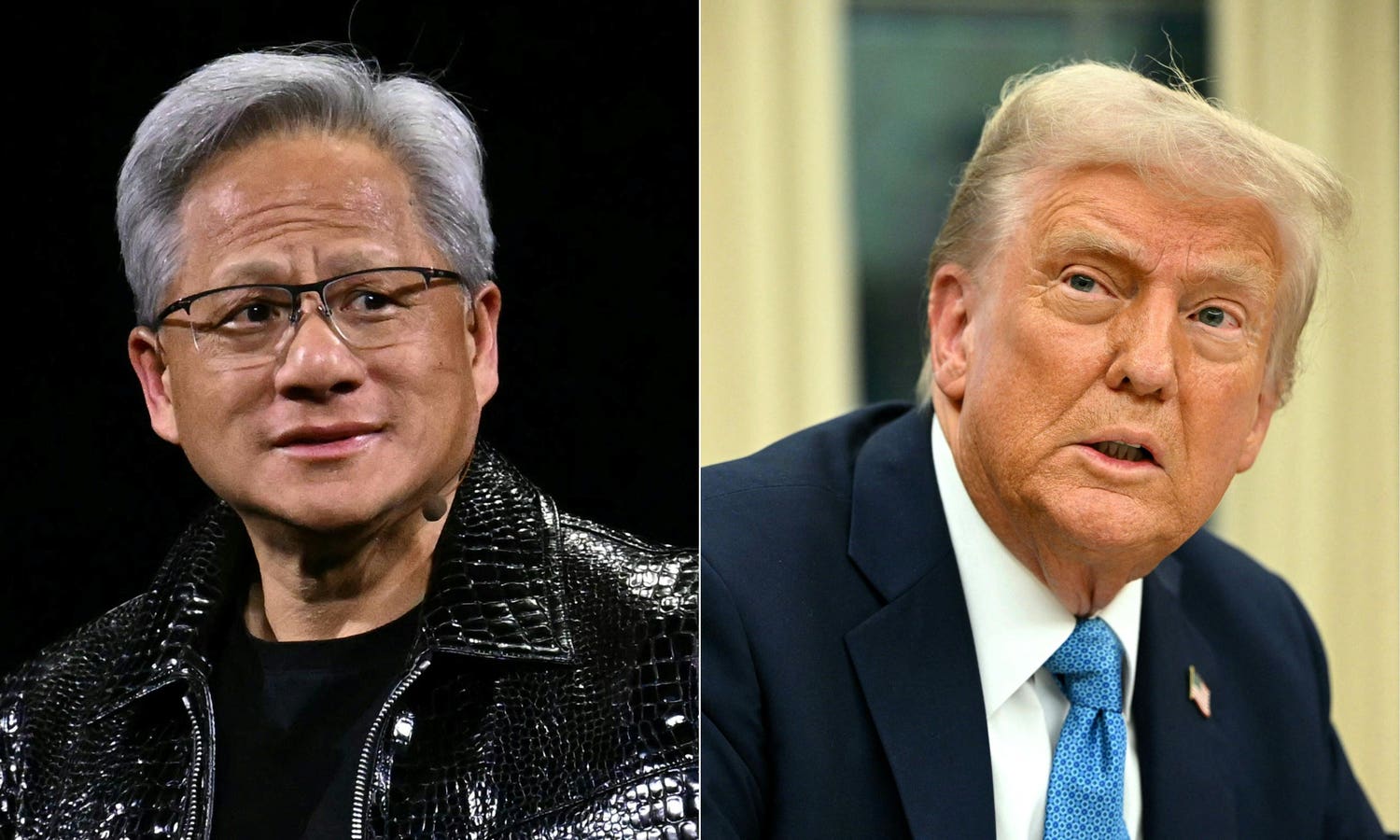
Introduction to the US-China Tech Dispute
The Trump administration’s decision to ban Nvidia’s high-performance H20 AI chips from export to China has significant implications for the global competition in AI technology. This move has not only disrupted China’s access to critical semiconductor technology but also accelerated the country’s push toward self-sufficiency in AI hardware and software ecosystems.
The Impact of the H20 Chip Ban
When the Trump administration abruptly banned Nvidia’s high-performance H20 AI chips from export to China on April 15, it confirmed fears long held by the Chinese AI industry — that further tightening of chip bans was imminent. While the industry had largely anticipated more stringent measures amid a rapidly escalating U.S.-China tariff war, the specific timing of the H20 ban caught many companies slightly off guard, accelerating their need to rapidly adapt. This latest measure highlights the intensifying geopolitical stakes in the global competition for AI dominance, exacerbating China’s existing vulnerability in securing advanced AI hardware.
China’s Reliance on Foreign Semiconductor Technology
In 2024 alone, China imported a staggering $385 billion worth of semiconductor chips, marking a 10.4% increase from 2023. With Nvidia’s H20 now off-limits, China’s heavy reliance on critical foreign semiconductor technology has never been more stark. However, beneath the immediate disruption lies a story of strategic foresight. Anticipating continuous geopolitical pressures, Chinese tech firms have spent recent years actively "trade war-proofing" their operations.
Strategic Foresight and Adaptation
This proactive approach has resulted in a bifurcation of the industry into two distinct camps: those focused on infrastructure and those prioritizing applications. Heavyweights such as Baidu, Alibaba, and Tencent exemplify the infrastructure-centric response, embarking on aggressive domestic AI hardware investments. Baidu CEO Robin Li, responding to previous U.S. sanctions, had already earmarked a significant portion of a $1.6 billion fund toward building robust AI and cloud infrastructure, including a substantial 10,000-GPU cluster powered by Baidu’s third-generation Kunlun chip.
Diversification and Partnerships
Yet infrastructure development alone won’t immediately resolve all challenges posed by chip shortages. Recognizing this, Chinese AI firms have increasingly turned to strategic diversification, looking toward partnerships beyond traditional American suppliers. European and Asian chipmakers have emerged as crucial alternatives, enabling Chinese companies to partially buffer themselves from escalating U.S. restrictions. This diversification underscores a calculated effort to spread risk and ensure steady access to necessary components.
The Open-Source vs. Closed-Source Debate
Beyond hardware, the industry is confronting a critical strategic divide between open-source and closed-source models for AI deployment. ByteDance, for example, has adopted a notably closed-source approach despite massive user engagement. Its CapCut app generates over 2 billion daily API calls through its embedded AI models. ByteDance’s approach mirrors OpenAI’s initial emphasis on internal optimization rather than broad-based developer ecosystem growth. Baidu initially echoed similar sentiments favoring closed systems for their superior performance and cost efficiency. However, the rising success of open-source competitors like DeepSeek has pressured Baidu into reconsidering.
Tencent’s Ecosystem-Centric Strategy
Tencent’s strategy, by contrast, is fundamentally ecosystem-centric. Recognizing early the advantages of an open-key approach, Tencent has deeply integrated AI across its diverse range of platforms, most prominently through WeChat, with its billion-plus users. Tencent’s early integration of DeepSeek’s large AI models significantly accelerated everyday AI interactions across China, making advanced technology familiar and intuitive to the average consumer. While costly, Tencent’s strategy has arguably created greater resilience against external supply shocks by embedding AI deeply into user behaviors and expectations.
Innovations and Workarounds
Innovations like Tencent’s Hunyuan 3D AI model also illustrate creative responses to geopolitical constraints. This model, allowing users to generate intricate 3D objects simply from text or images, cleverly addresses potential tariff issues by enabling domestic production. Such innovation has not only resonated domestically but also sparked interest abroad, including in the United States, where consumers face rising costs due to trade frictions.
The Emergence of Domestic Chip Manufacturing
One notable development in China’s semiconductor landscape is the emergence of SiCarrier, a Huawei-affiliated, Shenzhen-government-backed chip company. Established in 2021, SiCarrier gained attention in 2023 after securing a patent for producing 5-nanometer chips using deep ultraviolet lithography — a significant breakthrough given China’s restricted access to extreme ultraviolet lithography tools. This technology, involving self-aligned quadruple patterning, has been linked to Huawei’s 7nm chip found in the Mate 60 Pro. SiCarrier’s innovations aim to achieve advanced chip production capabilities without relying on EUV machines, potentially reducing manufacturing costs and circumventing export restrictions.
Conclusion
Ultimately, the Trump administration’s H20 chip ban, though initially disruptive, is likely to reinforce a trend already in motion: accelerating China’s push toward self-sufficiency in AI hardware and software ecosystems. Rather than stifling competition, such restrictive measures might paradoxically foster greater innovation, adaptability, and global competitiveness among Chinese tech firms. In the increasingly complex landscape of global AI geopolitics, success belongs not merely to those with the strongest hardware, but to those most adept at navigating, adapting, and thriving amid uncertainty.
FAQs
- Q: What is the significance of the H20 chip ban by the US?
- A: The ban on Nvidia’s H20 AI chips from export to China signifies a critical escalation in the US-China tech dispute, impacting China’s access to advanced AI hardware.
- Q: How are Chinese tech firms responding to the ban?
- A: Chinese firms are responding through strategic diversification, investing in domestic AI hardware, and exploring partnerships with non-US suppliers to reduce reliance on American technology.
- Q: What is the debate between open-source and closed-source models in AI deployment?
- A: The debate centers around whether AI models should be open-source, allowing community-driven development and innovation, or closed-source, emphasizing proprietary advantage and cost efficiency.
- Q: How is Tencent’s strategy different from others like ByteDance and Baidu?
- A: Tencent’s strategy is ecosystem-centric, focusing on integrating AI across its platforms, especially WeChat, to create a resilient ecosystem against external supply shocks.
- Q: What role does SiCarrier play in China’s semiconductor landscape?
- A: SiCarrier is a key player in developing domestic chip manufacturing capabilities, aiming to produce advanced chips without relying on restricted EUV machines, thus potentially reducing costs and circumventing export restrictions.




Portable Benefits Could Fix the Gig Economy’s Biggest Problem

Ethical Reasoning Has Become a Core Workplace Skill and Training Programs Are Missing It

Stakeholder Pressure on CEOs Has Reached a Breaking Point

Identity Resilience at Work and Why It Matters More Than Grit

The Revenge of Middle Management and Why Organizations Should Pay Attention

First-Generation Professionals Face a Different Workplace and Nobody Prepares Them for It

Small Business Survival in Underserved Communities Needs More Than Microloans

Aging Populations are Reshaping Labor Markets Faster Than Policy Can Respond

How Emotional Intelligence Can Help You Manage Stress and Build Resilience

Interview with Dr. Kristy K. Taylor, WORxK Global News Magazine Founder

Sarah Herrlinger Talks AirPods Pro Hearing Aid

Unlocking Human Potential: Kim Groshek’s Journey to Transforming Leadership and Stress Resilience

NetWork Your Way to Success: Top Tips for Maximizing Your Professional Network

The Power of Belonging: Why Feeling Accepted Matters in the Workplace

Health-care stocks fall after Warren PBM bill, Brian Thompson shooting

Glenda Benevides: Creating Global Impact Through Music
-
 Resiliency1 year ago
How Emotional Intelligence Can Help You Manage Stress and Build Resilience
-
 Career Advice2 years ago
Interview with Dr. Kristy K. Taylor, WORxK Global News Magazine Founder
-
 Diversity and Inclusion (DEIA)2 years ago
Sarah Herrlinger Talks AirPods Pro Hearing Aid
-
 Changemaker Interviews2 years ago
Unlocking Human Potential: Kim Groshek’s Journey to Transforming Leadership and Stress Resilience
-
 Career Advice2 years ago
NetWork Your Way to Success: Top Tips for Maximizing Your Professional Network
-
 Diversity and Inclusion (DEIA)2 years ago
The Power of Belonging: Why Feeling Accepted Matters in the Workplace
-
 Global Trends and Politics2 years ago
Health-care stocks fall after Warren PBM bill, Brian Thompson shooting
-
 Changemaker Interviews2 years ago
Glenda Benevides: Creating Global Impact Through Music