
Diversity and Inclusion (DEIA)
Why Women Who Become CEOs Are Exceptionally Qualified

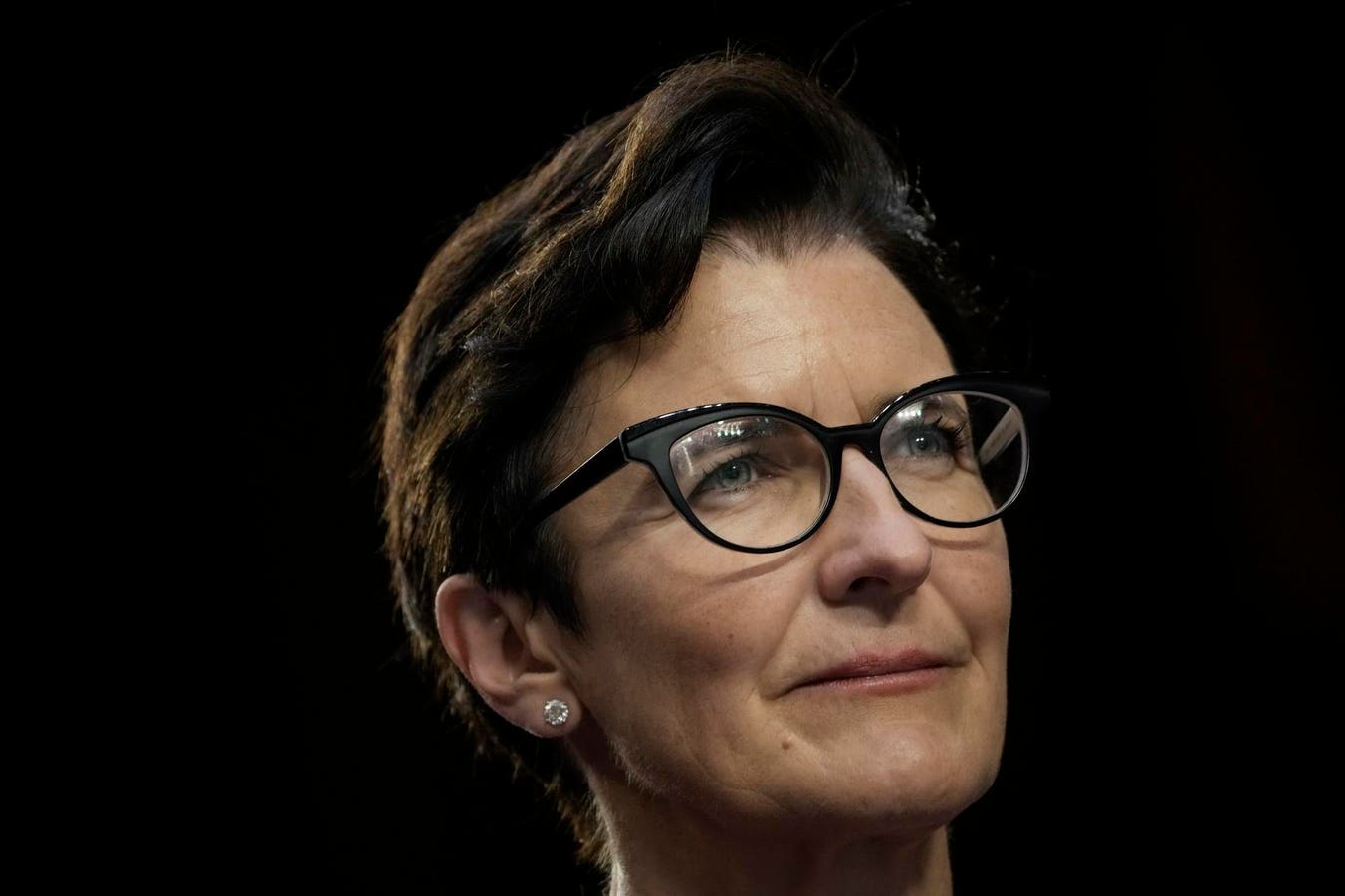
As diversity, equity, and inclusion initiatives come under increasing scrutiny, some suggest that women and minorities ascending to top roles are doing so based on preferential treatment rather than merit. However, a new analysis from Women’s Power Gap reveals that the women who become CEO are not only qualified but may also be more experienced than their male peers. Still, the gender gap remains wide, with men continuing to dominate the CEO role.
Critics of DEI Initiatives
Critics of DEI initiatives claim they result in the advancement of less qualified women and minorities. Among these critics is President Donald Trump, who told Congress, “We believe that whether you are a doctor, an accountant, a lawyer or an air traffic controller, you should be hired and promoted based on skill and competence, not race or gender.” At the World Economic Forum, he added, “My administration has taken action to abolish all discriminatory diversity, equity and inclusion nonsense,” and asserted, “America will once again become a merit-based country.” He has even linked a fatal plane crash to DEI hiring practices. His message is that DEI initiatives compromise standards.
The Career Paths of S&P 500 CEOs
WomensPowerGap.org, a nonprofit focused on advancing women from diverse backgrounds into executive leadership, set out to test whether women CEOs, potentially helped by DEI efforts, are indeed less qualified than their male counterparts. The researchers analyzed the career paths of all current CEOs in the S&P 500, the largest publicly traded companies in the U.S. If DEI initiatives helped less-qualified candidates advance, female CEOs should be less experienced than their male counterparts.
Findings of the Study
“The results show that women are just as qualified—if not more so—than their male counterparts,” the report authors summarize. Women were 32% more likely to have served as company president before becoming CEO, while men were more likely to advance from division head or COO. This suggests the women were more qualified and had more relevant leadership experience than their male counterparts. Women were also more likely to hold the chief financial officer position before becoming CEO, with 10% of female CEOs holding this role, compared to only 6% of men.
The Role of DEI Initiatives
“DEI is not about hiring unqualified candidates; it is about dismantling structural barriers that have historically limited access to opportunity,” says Andrea Silbert, report author and president of the Eos Foundation that oversees WomensPowerGap.org. We don’t know specifically which, if any, of the female CEOs benefited from DEI efforts. Nonetheless, Silbert explains, the growing number of women CEOs reflects an effort to move beyond traditional networks and to reduce bias in the selection processes. “These efforts don’t guarantee promotion, they ensure a fair opportunity for promotion,” she points out.
The Gender Gap
Currently, only 48 of the CEOs in the S&P 500 are women. Although that’s less than 10%, it’s a significant increase from 2000, when only nine women held the CEO role. The report found that one reason there are so few female CEOs is that women tend to get stuck one step below CEO, an effect they label “the final drop.” Even when women reach launch positions, roles that typically serve as a springboard to the CEO seat, they are far less likely than men to make that final leap to CEO.
Barriers to Women’s Advancement
One reason is that women may need to be more qualified than men to be considered for the same position. Another factor may be perceptions of who needs to be promoted more quickly. Exceptionally qualified men are often seen as flight risks who must be promoted swiftly to keep them from leaving an organization. In contrast, people assume that exceptional women will stay loyal to their companies because they value their relationships with their coworkers. As a result, there’s often less urgency to promote women.
Persistent Gaps in Leadership
Other critical gaps persist in company leadership. There are still no Black or Hispanic women leading S&P 500 companies. And another common path to the top, founding a company that later goes public, has also left women behind. Leaders like Mark Zuckerberg at Meta and Elon Musk at Tesla followed that route, but no woman founder currently serves as the CEO of an S&P 500 company. Women’s representation at the top also remains particularly low in male-dominated industries like finance and technology.
Steering Women Away from Key Roles
Another hurdle for women aiming for the top spot is that women are often steered away from roles linked to the company’s bottom line. For example, women are concentrated in human resources, sustainability, marketing and communications roles, which tend not to lead to the CEO position. Conversely, men often head a division linked to the company’s profits, which sets them up for consideration for CEO. It’s not that women don’t want these launch positions, but there’s evidence that men are three times more likely than women to be advised to take on a role tied to the company’s bottom line.
Conclusion
Significant barriers clearly remain for women who hope to reach the top. Assuming the few women who do make it to senior executive positions were hired for equity rather than merit dismisses their accomplishments and exacerbates the problem. “Our findings affirm that the progress women have made in leadership has been earned, not given. We do not support lowering standards in the name of diversity. Instead, we call on companies to evaluate their cultures and systems, remove barriers, and create environments where success is based solely on merit and accessible to all,” Silbert asserts.
FAQs
Q: What is the current percentage of female CEOs in the S&P 500?
A: Currently, only 48 of the CEOs in the S&P 500 are women, which is less than 10%.
Q: Do DEI initiatives compromise standards in hiring and promotion?
A: No, DEI initiatives are about dismantling structural barriers that have historically limited access to opportunity and ensuring a fair opportunity for promotion.
Q: What is the “final drop” effect?
A: The “final drop” effect refers to the phenomenon where women tend to get stuck one step below CEO and are far less likely than men to make the final leap to CEO.
Q: Why are women underrepresented in male-dominated industries like finance and technology?
A: Women are often steered away from roles linked to the company’s bottom line and are concentrated in roles that tend not to lead to the CEO position.




Portable Benefits Could Fix the Gig Economy’s Biggest Problem

Ethical Reasoning Has Become a Core Workplace Skill and Training Programs Are Missing It

Stakeholder Pressure on CEOs Has Reached a Breaking Point

Identity Resilience at Work and Why It Matters More Than Grit

The Revenge of Middle Management and Why Organizations Should Pay Attention

First-Generation Professionals Face a Different Workplace and Nobody Prepares Them for It

Small Business Survival in Underserved Communities Needs More Than Microloans

Aging Populations are Reshaping Labor Markets Faster Than Policy Can Respond

How Emotional Intelligence Can Help You Manage Stress and Build Resilience

Interview with Dr. Kristy K. Taylor, WORxK Global News Magazine Founder

Sarah Herrlinger Talks AirPods Pro Hearing Aid

Unlocking Human Potential: Kim Groshek’s Journey to Transforming Leadership and Stress Resilience

NetWork Your Way to Success: Top Tips for Maximizing Your Professional Network

The Power of Belonging: Why Feeling Accepted Matters in the Workplace

Health-care stocks fall after Warren PBM bill, Brian Thompson shooting

Glenda Benevides: Creating Global Impact Through Music
-
 Resiliency1 year ago
How Emotional Intelligence Can Help You Manage Stress and Build Resilience
-
 Career Advice2 years ago
Interview with Dr. Kristy K. Taylor, WORxK Global News Magazine Founder
-
 Diversity and Inclusion (DEIA)2 years ago
Sarah Herrlinger Talks AirPods Pro Hearing Aid
-
 Changemaker Interviews2 years ago
Unlocking Human Potential: Kim Groshek’s Journey to Transforming Leadership and Stress Resilience
-
 Career Advice2 years ago
NetWork Your Way to Success: Top Tips for Maximizing Your Professional Network
-
 Diversity and Inclusion (DEIA)2 years ago
The Power of Belonging: Why Feeling Accepted Matters in the Workplace
-
 Global Trends and Politics2 years ago
Health-care stocks fall after Warren PBM bill, Brian Thompson shooting
-
 Changemaker Interviews2 years ago
Glenda Benevides: Creating Global Impact Through Music