
Diversity and Inclusion (DEIA)
How RXBar’s Dyslexic Founder Outsmarted The Protein Bar Industry

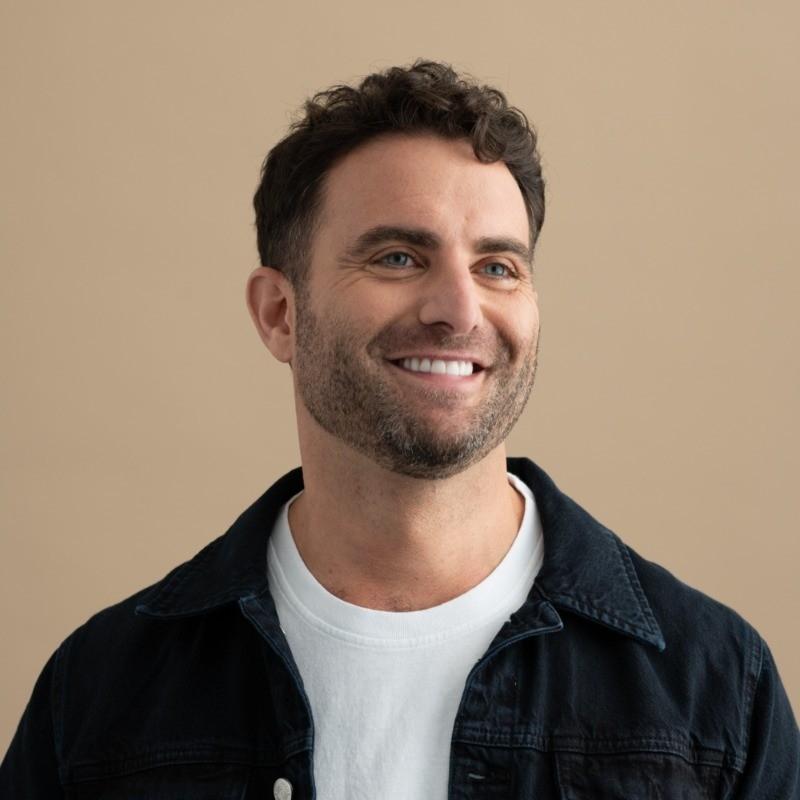
In school, Peter Rahal was given the message he wasn’t trying hard enough. Yet long before his success, Rahal spent his early school years in special education classes, struggling with dyslexia in a system that—back in the ‘90s—was often ill-equipped to support students with different learning needs. “It was sort of like, He’s not putting in effort,” Rahal shared of his teachers during our conversation on The Failure Factor podcast.
Early Life and Education
Rahal was placed in a class with students who had more significant disabilities than his, and he was labeled “disabled,” too. “The whole system wasn’t designed for the way my brain works,” he said. That mislabeling had deep emotional consequences, but instead of internalizing the limits placed on him, Rahal used it as fuel: “Forget the system. I’ll prove it wrong.”
The Rise of RxBar
In 2013, while food corporations were pouring millions into marketing campaigns, Peter Rahal was in his parents’ basement with just $10,000, three ingredients, and an insight that would disrupt a billion-dollar industry. Just four years later, he sold RxBar to Kellogg’s for $600 million. Rahal’s journey from misunderstood outcast to entrepreneur places him in the company of other notable dyslexic entrepreneurs such as Richard Branson, Steve Jobs, and Shark Tank’s Barbara Corcoran – all of whom have publicly discussed their dyslexia.
Rebel—With a Cause
That early educational experience formed the bedrock of what would later become Rahal’s entrepreneurial edge. Rather than conform to a structure that didn’t serve him, he developed a strong skepticism of conventional systems. “I think some of my contrarian nature is rooted in that I just question and am skeptical of things. That was the way to protect myself,” he explained. This psychological adaptation echoes why many people with dyslexia gravitate toward entrepreneurship. Traditional workplaces can be rigid and exclusionary. By starting their own ventures, many carve out environments that play to their strengths and avoid the constraints of one-size-fits-all systems.
Pattern Recognition: Seeing What Others Miss
Rahal’s new venture ‘David’ is–yet again–disrupting the protein bar industry. The RxBar origin story shows how Rahal’s heightened pattern recognition capabilities — a skill often associated with dyslexia — helped him see an untapped market. “I remember a very specific moment. I’d go to my CrossFit gym, and there was a box of Clif Bars. Some sales rep had dropped them off, and it just sat there. Like it was almost like it was poison,” he recalled. “Everyone had this aversion towards it, and no one touched it.”
Honesty On The Front Panel
Perhaps Rahal’s most recognizable strategic move came through RxBar’s minimalist packaging redesign. Whereas competitors relied on flashy packaging and brand positioning, RxBar stripped everything away to list their clean ingredients on the front in bold type, followed by “No B.S.” Rahal’s transparency-focused strategy wasn’t without precedent. Companies like Patagonia had pioneered radical transparency in the apparel industry while Tony’s Chocolonely built their chocolate brand around exposing and addressing slave labor in cocoa production.
Perfectionism As a Weapon—Or A Shield?
Rahal’s pursuit of perfection became legendary in the protein bar industry. He insisted on exhaustive testing and refinement until every detail met his exacting standards. This uncompromising commitment extended to every aspect of the business. Early in RxBar’s history, Rahal famously fired his own mother when she couldn’t align label stickers properly on the packaging. “Bless her heart, she’s an amazing woman, but our customers don’t want to buy a product with a label that’s not centered,” he told CNBC Make It in 2018.
From Exit To Evolution: David Protein Takes On The Industry
Thus, after selling RxBar to Kellogg’s for $600 million, Rahal didn’t cash out and retire. Today, with David Protein, he’s taking on the entire category again — this time with a scientific approach designed to create the most efficient protein bar possible. “The market’s at 30 grams of protein. We’re at twenty-eight. The market’s at 200 calories. We’re at 150 calories. Those are meaningful differentiations,” he explained with characteristic directness.
Inspiring Others To Find Power In Pain
“I think my work ethic is more from just trying to prove that I’m not disabled, really,” Rahal explains with rare and refreshing candor. This determination to show what he was capable of—despite being labeled and underestimated—became the engine behind his success. What started as a misjudged label in a classroom evolved into a drive that propelled him into the ranks of elite entrepreneurs. His unique way of seeing the world—the very trait that once made him feel out of place—became the key to his success.
Conclusion
Sometimes the very traits that initially make success seem unlikely become the precursors to the advantages that make it inevitable. Peter Rahal’s story is a testament to the power of resilience, determination, and embracing one’s unique strengths. By finding power in pain and leveraging his dyslexia as a catalyst for innovation, Rahal has inspired countless others to redefine their limitations and strive for excellence.
FAQs
- What was Peter Rahal’s experience with dyslexia in school?
Peter Rahal was placed in special education classes and labeled as “disabled” due to his dyslexia, which had deep emotional consequences but ultimately fueled his determination to prove himself. - How did Rahal’s dyslexia influence his entrepreneurial approach?
Rahal’s dyslexia contributed to his contrarian nature, skepticism of conventional systems, and heightened pattern recognition capabilities, which enabled him to identify untapped markets and innovate in the protein bar industry. - What is David Protein, and how does it differ from RxBar?
David Protein is Rahal’s new venture, which aims to create the most efficient protein bar possible using a scientific approach. It differs from RxBar in its focus on objective metrics and minimal marketing, instead emphasizing product quality and transparency. - What is the key takeaway from Peter Rahal’s story?
The key takeaway is that embracing one’s unique strengths and finding power in pain can lead to unexpected advantages and success, even in the face of initial limitations and setbacks.




Portable Benefits Could Fix the Gig Economy’s Biggest Problem

Ethical Reasoning Has Become a Core Workplace Skill and Training Programs Are Missing It

Stakeholder Pressure on CEOs Has Reached a Breaking Point

Identity Resilience at Work and Why It Matters More Than Grit

The Revenge of Middle Management and Why Organizations Should Pay Attention

First-Generation Professionals Face a Different Workplace and Nobody Prepares Them for It

Small Business Survival in Underserved Communities Needs More Than Microloans

Aging Populations are Reshaping Labor Markets Faster Than Policy Can Respond

How Emotional Intelligence Can Help You Manage Stress and Build Resilience

Interview with Dr. Kristy K. Taylor, WORxK Global News Magazine Founder

Sarah Herrlinger Talks AirPods Pro Hearing Aid

Unlocking Human Potential: Kim Groshek’s Journey to Transforming Leadership and Stress Resilience

NetWork Your Way to Success: Top Tips for Maximizing Your Professional Network

The Power of Belonging: Why Feeling Accepted Matters in the Workplace

Health-care stocks fall after Warren PBM bill, Brian Thompson shooting

Glenda Benevides: Creating Global Impact Through Music
-
 Resiliency1 year ago
How Emotional Intelligence Can Help You Manage Stress and Build Resilience
-
 Career Advice2 years ago
Interview with Dr. Kristy K. Taylor, WORxK Global News Magazine Founder
-
 Diversity and Inclusion (DEIA)2 years ago
Sarah Herrlinger Talks AirPods Pro Hearing Aid
-
 Changemaker Interviews2 years ago
Unlocking Human Potential: Kim Groshek’s Journey to Transforming Leadership and Stress Resilience
-
 Career Advice2 years ago
NetWork Your Way to Success: Top Tips for Maximizing Your Professional Network
-
 Diversity and Inclusion (DEIA)2 years ago
The Power of Belonging: Why Feeling Accepted Matters in the Workplace
-
 Global Trends and Politics2 years ago
Health-care stocks fall after Warren PBM bill, Brian Thompson shooting
-
 Changemaker Interviews2 years ago
Glenda Benevides: Creating Global Impact Through Music