
Innovation and Technology
Sally Ride’s Enduring STEM Legacy

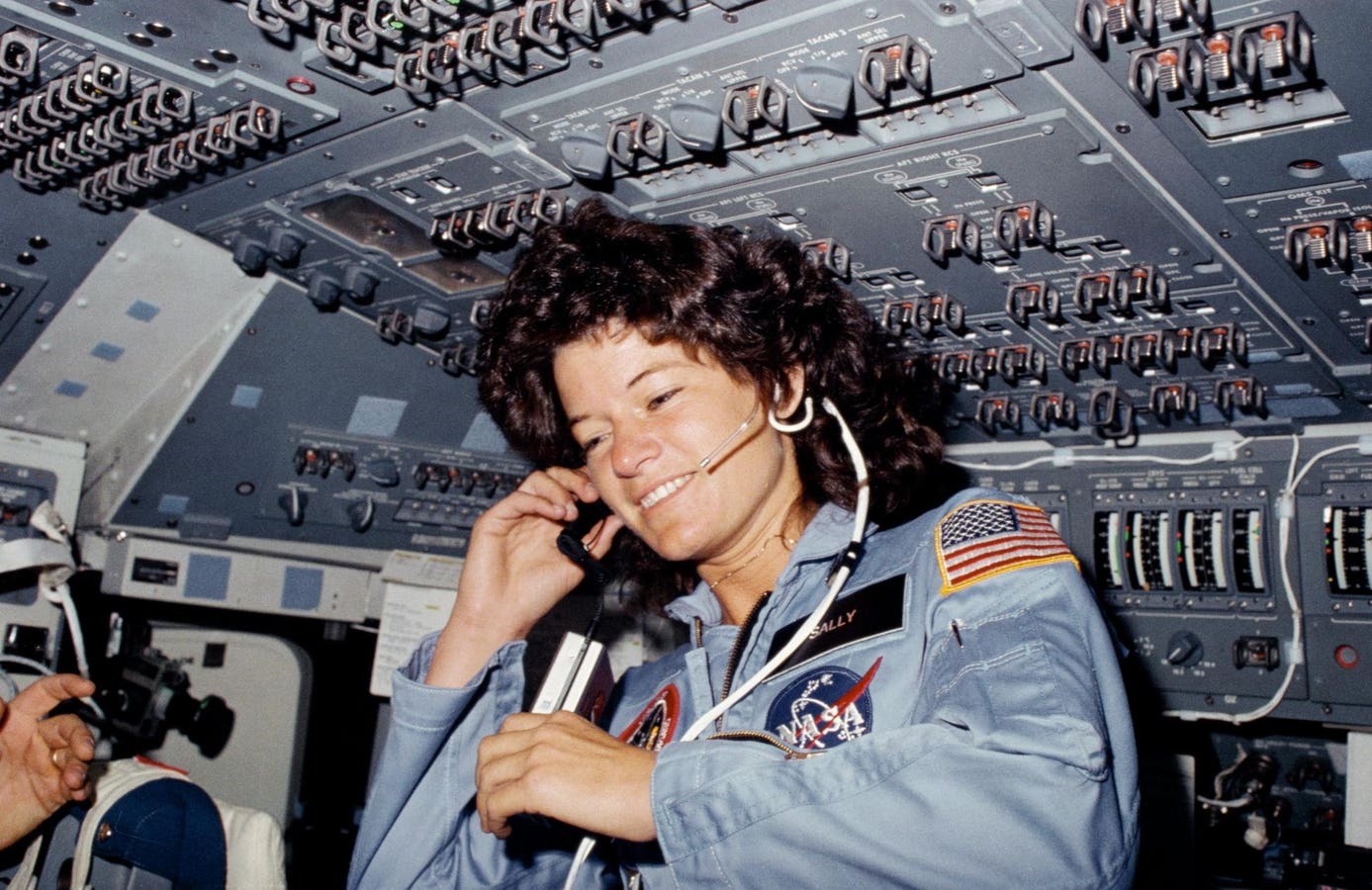
Introduction to Sally Ride
Sally Ride made history on June 18, 1983, when she became the first American woman to launch into space. Her calm precision and unflinching focus made her an icon in STEM—a face of possibility for girls across the country and around the world. But a new documentary from National Geographic, Sally, reveals another dimension of her legacy—one that remained private throughout her lifetime.
The Documentary
Premiering June 16 on National Geographic and streaming on Disney+ and Hulu the next day, Sally tells the story not only of Ride’s groundbreaking achievements as a physicist and astronaut, but of her 27-year partnership with fellow scientist and educator Tam O’Shaughnessy—a relationship Ride never publicly acknowledged while she was alive. Directed by Emmy-winner Cristina Costantini, the film reframes Ride’s legacy, offering a deeper, more personal portrait of a woman who inspired millions while carefully guarding her own truth.
Behind the Documentary
I recently had the privilege of sitting down with O’Shaughnessy and Costantini to better understand the motivation behind the documentary and what they hope audiences will take away from it. What emerged from our conversation was a sense that this film isn’t just about legacy—it’s about visibility, resilience and the complicated cost of breaking barriers in science.
When Representation Requires Erasure
Being first often means carrying the weight of symbolic representation. Ride wasn’t just an astronaut—she was proof that women could thrive in space and science. But with that role came expectations: be competent, but never emotional. Be visible, but only selectively. The unwritten contract Ride operated under demanded technical excellence and personal silence.
The Decision to Share
As Tam told me, the decision to finally share their relationship publicly didn’t begin with a film pitch. It began with grief. “Since about a week before Sally died, I told her I wanted to hold a celebration of her life,” she said. “And then I wondered who I was going to be to the people coming to the celebration who didn’t know we were a couple.” Sally told her, “You decide. Whatever you decide will be the right thing to do.” That moment of quiet affirmation—Ride’s way of granting permission without demanding visibility—was the start of a longer process.
STEM’s Culture of Conformity
Costantini, known for documentaries like Science Fair and Mucho Mucho Amor, wanted Sally to be about more than just history. “We made this film for anyone who’s ever had to hide part of themselves to get where they want to be,” she told me. “In 2025, that experience feels more relevant than ever.” That sense of coded identity—the need to suppress aspects of self to be taken seriously—remains a reality in many corners of science and technology. Despite progress, LGBTQ+ scientists are still underrepresented in leadership roles. Women in STEM continue to navigate environments that value output over authenticity.
Sally’s Enduring Influence in STEM
Even after leaving NASA, Ride continued to shape the STEM world. In 2001, she and O’Shaughnessy founded Sally Ride Science, a nonprofit aimed at promoting STEM education for girls and underrepresented youth. That mission continues today at UC San Diego, where O’Shaughnessy and a dedicated team run programs that connect students with scientists and researchers. It’s not just the curriculum that draws kids in—it’s the name. “Sally’s name is magic,” O’Shaughnessy said. “It’s why the boys and girls sign up, and it’s why parents want their kids to be exposed to these programs.”
A Legacy No Longer Coded
What Sally reveals is a fuller picture of a scientist, a leader and a partner. Someone who not only pushed the boundaries of what women could do in science, but who also made space—quietly, privately—for the people she loved. Ride’s story still resonates because it’s unfinished. It now invites a broader range of people to see themselves in her legacy—not just young girls interested in STEM, but anyone who’s ever felt that they had to choose between their passion and their identity.
Conclusion
For the STEM community, that’s the crux of the problem. The human race has a lot of challenges to address and there are plenty of undiscovered frontiers to tackle. We can’t afford to exclude entire populations of people based on nothing more than fragile egos and narrow-minded bigotry. It’s not enough to recruit diverse talent. We have to build systems where people can bring their full selves to the work. Because progress isn’t just about putting the first woman in space. It’s about making sure she wouldn’t have to hide once she landed.
FAQs
Q: When did Sally Ride become the first American woman to launch into space?
A: Sally Ride made history on June 18, 1983, when she became the first American woman to launch into space.
Q: What is the documentary Sally about?
A: The documentary Sally tells the story of Sally Ride’s groundbreaking achievements as a physicist and astronaut, as well as her 27-year partnership with fellow scientist and educator Tam O’Shaughnessy.
Q: What is the mission of Sally Ride Science?
A: Sally Ride Science is a nonprofit aimed at promoting STEM education for girls and underrepresented youth.
Q: Why is Sally Ride’s legacy still relevant today?
A: Sally Ride’s legacy is still relevant today because it invites a broader range of people to see themselves in her story and because it highlights the importance of creating systems where people can bring their full selves to their work.




Portable Benefits Could Fix the Gig Economy’s Biggest Problem

Ethical Reasoning Has Become a Core Workplace Skill and Training Programs Are Missing It

Stakeholder Pressure on CEOs Has Reached a Breaking Point

Identity Resilience at Work and Why It Matters More Than Grit

The Revenge of Middle Management and Why Organizations Should Pay Attention

First-Generation Professionals Face a Different Workplace and Nobody Prepares Them for It

Small Business Survival in Underserved Communities Needs More Than Microloans

Aging Populations are Reshaping Labor Markets Faster Than Policy Can Respond

How Emotional Intelligence Can Help You Manage Stress and Build Resilience

Interview with Dr. Kristy K. Taylor, WORxK Global News Magazine Founder

Sarah Herrlinger Talks AirPods Pro Hearing Aid

Unlocking Human Potential: Kim Groshek’s Journey to Transforming Leadership and Stress Resilience

NetWork Your Way to Success: Top Tips for Maximizing Your Professional Network

The Power of Belonging: Why Feeling Accepted Matters in the Workplace

Health-care stocks fall after Warren PBM bill, Brian Thompson shooting

Glenda Benevides: Creating Global Impact Through Music
-
 Resiliency1 year ago
How Emotional Intelligence Can Help You Manage Stress and Build Resilience
-
 Career Advice2 years ago
Interview with Dr. Kristy K. Taylor, WORxK Global News Magazine Founder
-
 Diversity and Inclusion (DEIA)2 years ago
Sarah Herrlinger Talks AirPods Pro Hearing Aid
-
 Changemaker Interviews2 years ago
Unlocking Human Potential: Kim Groshek’s Journey to Transforming Leadership and Stress Resilience
-
 Career Advice2 years ago
NetWork Your Way to Success: Top Tips for Maximizing Your Professional Network
-
 Diversity and Inclusion (DEIA)2 years ago
The Power of Belonging: Why Feeling Accepted Matters in the Workplace
-
 Global Trends and Politics2 years ago
Health-care stocks fall after Warren PBM bill, Brian Thompson shooting
-
 Changemaker Interviews2 years ago
Glenda Benevides: Creating Global Impact Through Music