
Global Trends and Politics
Levi Strauss (LEVI) earnings Q2 2025

Introduction to Levi Strauss’s Financial Performance
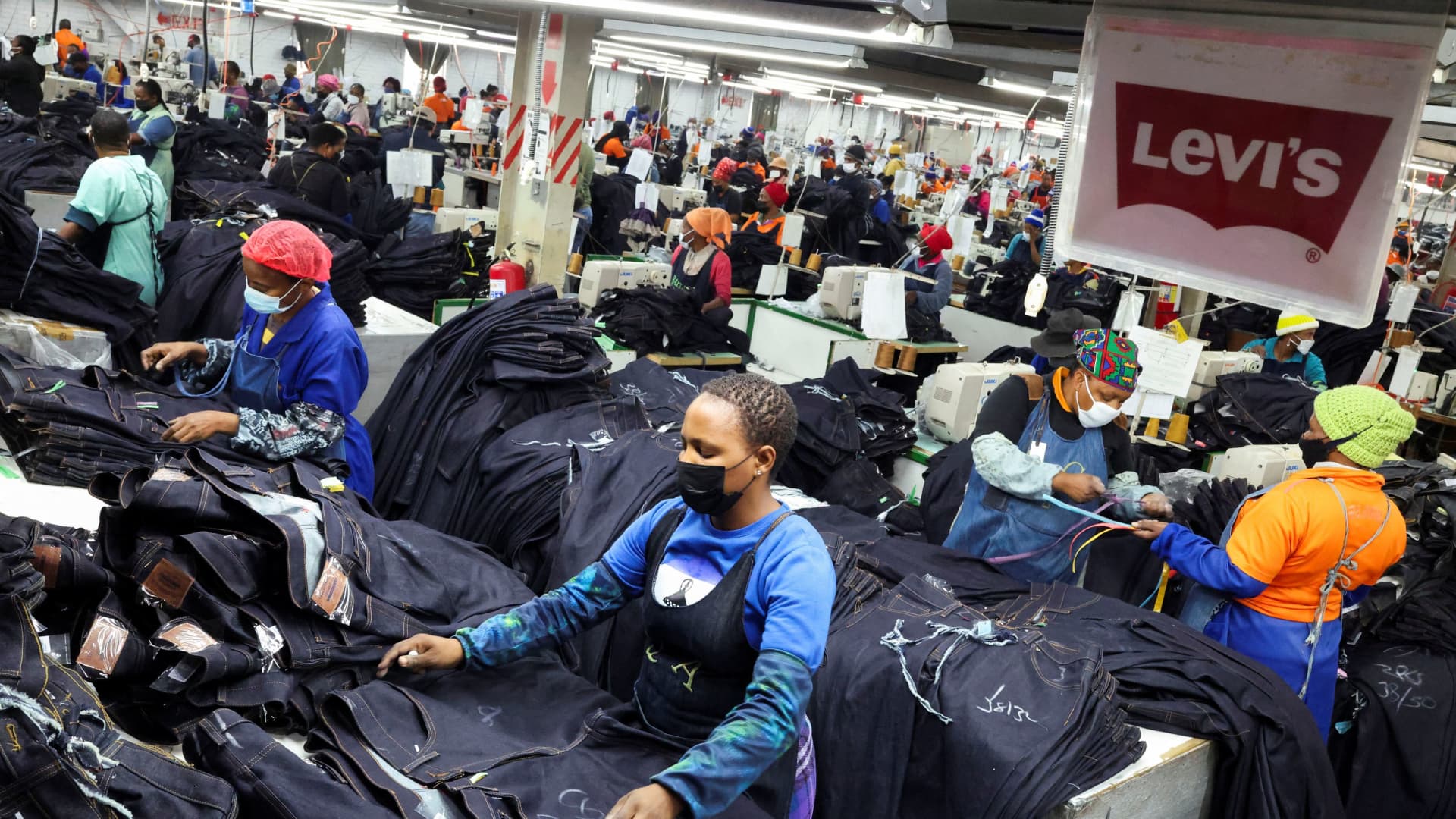
Levi Strauss raised its full-year guidance on Thursday and said it’s working to absorb some of the costs it’s facing from higher tariffs, but that could change as President Donald Trump’s trade policy evolves. The denim maker doesn’t disclose its key manufacturing hubs, but much of its supply comes from Southeast Asia. Many countries in the region have been targeted by Trump’s so-called reciprocal tariff plan.
Impact of Tariffs on Levi Strauss
Levi’s is currently expecting its full-year adjusted earnings to be between $1.25 and $1.30 per share, up from a prior forecast of between $1.20 and $1.25 and better than the $1.23 analysts had expected. However, that forecast only assumes a 30% tariff on China, where Levi’s manufactures about 1% of its products, and a 10% tariff on the rest of the world, which could change as Trump negotiates trade deals with key manufacturing regions.
Manufacturing and Sourcing
In an interview, Levi’s finance chief, Harmit Singh, said most of Levi’s sourcing is from countries like Pakistan, Bangladesh, and Indonesia. Trump in recent days threatened Bangladesh and Indonesia with duties of more than 30%. It’s unclear how much of Levi’s products are sourced from those regions, and 60% of Levi’s business is outside of the U.S.
Absorbing Tariff Costs
For now, Levi’s said it’s planning to absorb what it can. As policy currently stands, it anticipates tariffs will only impact the business by $25 million to $30 million for the rest of the year, or 2 to 3 cents on earnings per share. "We are doing our part. We are absorbing some of the costs. What helps is that our business is so strong," said CEO Michelle Gass.
Consumer Spending and Business Performance
When asked by an analyst if Levi’s should have raised its guidance during such an uncertain time for the economy, Singh said the company expects its consumer to keep spending. "Given that we’ve had three quarters of high single-digit growth, we see the momentum continuing, because the consumer … is generally resilient and a continued fan of the brand," he said.
Financial Results
Beyond tariffs, Levi’s delivered fiscal second-quarter earnings that beat expectations on the top and bottom lines. Here’s how the jeans company did compared with what Wall Street was anticipating:
- Earnings per share: 22 cents adjusted vs. 13 cents expected
- Revenue: $1.45 billion vs. $1.37 billion expected
Levi’s shares rose about 8% in extended trading.
Sales and Revenue Guidance
The company’s reported net income for the three-month period that ended June 1 was $67 million, or 17 cents per share, compared with $18 million, or 4 cents per share, a year earlier. Excluding one-time charges related to restructuring and impairment expenses, among other costs, Levi posted earnings per share of 22 cents. Sales rose to $1.45 billion, up about 6% from $1.36 billion a year earlier.
Business Strategy
Given strong demand, Levi’s hiked its full-year revenue guidance and now expects sales to rise between 1% and 2%, up from previous guidance of down 1% to 2%. That range is well ahead of expectations. Analysts had anticipated revenue to decline by 5.2%. Levi’s did cut its gross margin guidance by 0.2 percentage point, and now expects gross margin to grow by 0.8 percentage point because of the impact tariffs are having on profits.
Direct-to-Consumer Sales
Since Gass took over as the retailer’s CEO, she’s worked to cut off underperforming parts of the business. In May, the company announced it would sell its Dockers brand. She’s also worked to drive direct sales to consumers, focused on e-commerce and stores rather than wholesale partners, because it comes with higher margins and gives the company better insights into its customers.
Expansion and Partnerships
Levi’s, which has long catered to a male shopper, is also trying to win over female consumers and expand from a denim company to one known for a wide range of apparel. During the quarter, it saw wins from those efforts, with revenue for women’s apparel up 14% and sales of tops up 16%. Levi’s women’s category is the retailer’s "highest gross margin business," said Singh. The company has also partnered with notable figures like Beyonce and launched a limited-edition drop of Beyonce x Levi’s T-shirts.
Conclusion
In conclusion, Levi Strauss has shown resilience in the face of tariff uncertainties, with a strong business performance and a strategy focused on direct-to-consumer sales, expansion into new apparel categories, and partnerships with influential figures. Despite the challenges posed by tariffs, the company remains confident in its ability to navigate these headwinds and continue to grow.
FAQs
Q: How is Levi Strauss affected by tariffs?
A: Levi Strauss faces potential costs from higher tariffs, particularly from its manufacturing hubs in Southeast Asia, but the company is working to absorb these costs.
Q: What is Levi Strauss’s financial outlook?
A: Levi Strauss has raised its full-year guidance, expecting adjusted earnings to be between $1.25 and $1.30 per share, and anticipates sales to rise between 1% and 2%.
Q: How is Levi Strauss expanding its business?
A: Levi Strauss is focusing on direct-to-consumer sales, expanding into new apparel categories such as women’s apparel, and forming partnerships with influential figures like Beyonce.
Q: What is the impact of tariffs on Levi Strauss’s profits?
A: Tariffs are expected to impact Levi Strauss’s business by $25 million to $30 million for the rest of the year, or 2 to 3 cents on earnings per share.
Q: How is Levi Strauss performing in terms of sales and revenue?
A: Levi Strauss reported sales of $1.45 billion, up about 6% from the previous year, and expects sales to rise between 1% and 2% for the full year.


Portable Benefits Could Fix the Gig Economy’s Biggest Problem

Ethical Reasoning Has Become a Core Workplace Skill and Training Programs Are Missing It

Stakeholder Pressure on CEOs Has Reached a Breaking Point

Identity Resilience at Work and Why It Matters More Than Grit

The Revenge of Middle Management and Why Organizations Should Pay Attention

First-Generation Professionals Face a Different Workplace and Nobody Prepares Them for It

Small Business Survival in Underserved Communities Needs More Than Microloans

Aging Populations are Reshaping Labor Markets Faster Than Policy Can Respond

How Emotional Intelligence Can Help You Manage Stress and Build Resilience

Interview with Dr. Kristy K. Taylor, WORxK Global News Magazine Founder

Sarah Herrlinger Talks AirPods Pro Hearing Aid

Unlocking Human Potential: Kim Groshek’s Journey to Transforming Leadership and Stress Resilience

NetWork Your Way to Success: Top Tips for Maximizing Your Professional Network

The Power of Belonging: Why Feeling Accepted Matters in the Workplace

Health-care stocks fall after Warren PBM bill, Brian Thompson shooting

Glenda Benevides: Creating Global Impact Through Music
-
 Resiliency1 year ago
How Emotional Intelligence Can Help You Manage Stress and Build Resilience
-
 Career Advice2 years ago
Interview with Dr. Kristy K. Taylor, WORxK Global News Magazine Founder
-
 Diversity and Inclusion (DEIA)2 years ago
Sarah Herrlinger Talks AirPods Pro Hearing Aid
-
 Changemaker Interviews2 years ago
Unlocking Human Potential: Kim Groshek’s Journey to Transforming Leadership and Stress Resilience
-
 Career Advice2 years ago
NetWork Your Way to Success: Top Tips for Maximizing Your Professional Network
-
 Diversity and Inclusion (DEIA)2 years ago
The Power of Belonging: Why Feeling Accepted Matters in the Workplace
-
 Global Trends and Politics2 years ago
Health-care stocks fall after Warren PBM bill, Brian Thompson shooting
-
 Changemaker Interviews2 years ago
Glenda Benevides: Creating Global Impact Through Music