
Global Trends and Politics
Hyundai raid could leave businesses reassessing their workforces

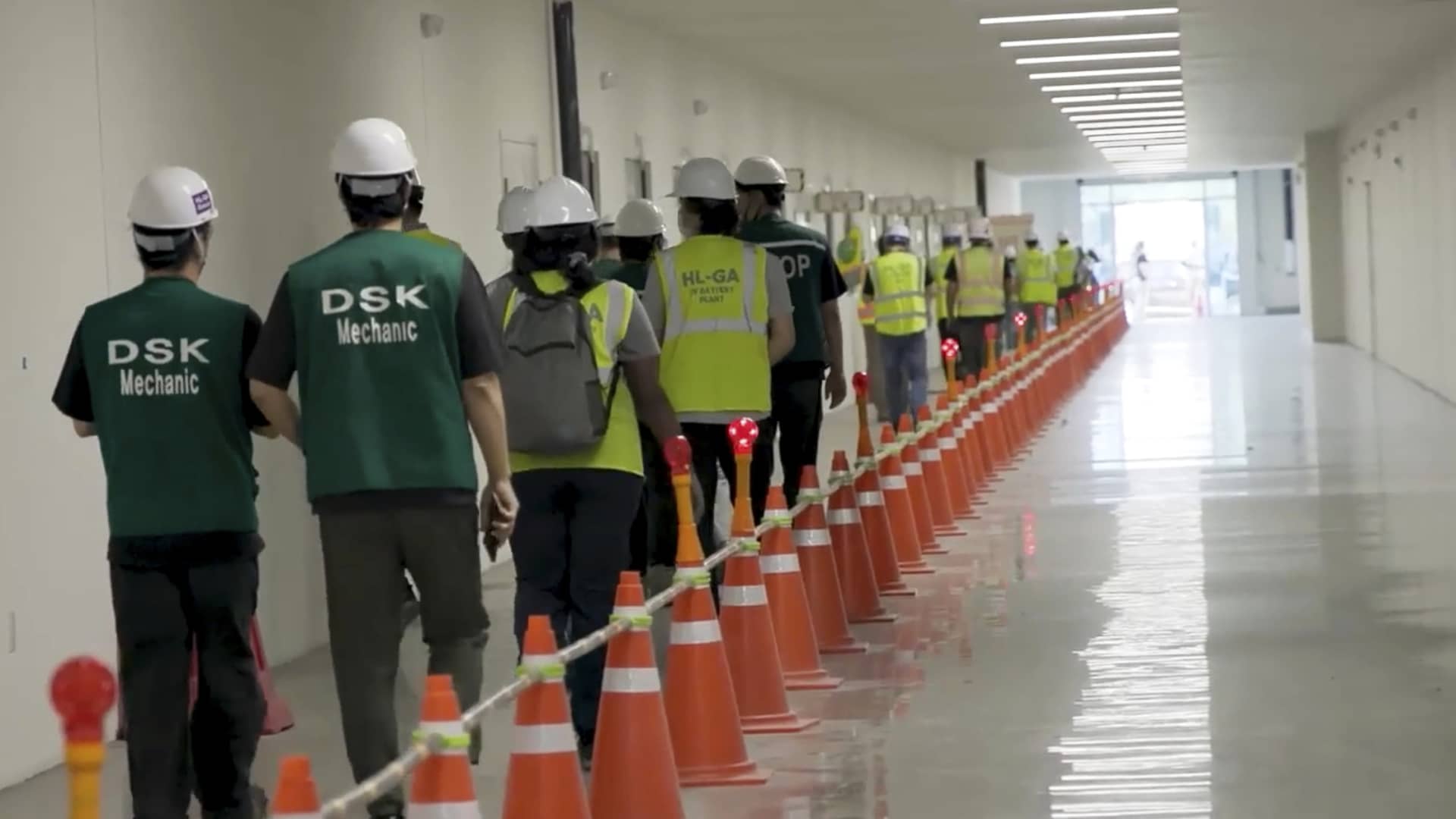
A recent immigration raid at a Hyundai facility in Georgia has sparked concerns among foreign companies with operations in the United States. The raid, which resulted in the detention of nearly 500 workers, mostly South Korean nationals, is seen as a significant shift in the Trump administration’s approach to immigration enforcement. According to special agent Steven Schrank, this was the largest single-site enforcement operation in the Department of Homeland Security’s history.
The raid was conducted at a site owned by South Korean companies Hyundai and LG Energy Solution, which are jointly building a battery manufacturing plant. The detained workers were employed by contractors or subcontractors, and Hyundai stated that none of the detainees were direct employees of the auto company. U.S. authorities, who had a search warrant, said the arrested workers were working or living in the country illegally.
Implications for Foreign Companies
White House border czar Tom Homan stated that the raid was just the beginning of what’s to come from the administration, with plans to conduct more worksite enforcement operations. This has led to concerns among foreign companies that they may be next, with some already reassessing their U.S. investments. Dean Baker, a senior economist at the Center for Economic and Policy Research, believes that the raid sends a message to foreign investors that their investments in the U.S. are insecure.
Foreign companies may now try to replace as much of their workforce as possible with U.S. citizens, although this could be a challenging task due to labor shortages and the need for specialized skills. The raid may also lead to a decrease in foreign investment in the U.S., as companies may be deterred by the uncertainty and risk associated with hiring foreign workers.
Response from the Automotive Industry
AlixPartners Partner and Managing Director Arun Kumar, who focuses on the automotive and industrial practice, believes that the raid is a “wakeup call” for the automotive industry. Many automotive companies set up U.S. facilities to mimic those in their home countries, often relying on workers from their own countries who are already specially trained. However, this approach may need to change in light of the raid, with companies focusing on embedding more U.S. workers in their workforces.
Susan Helper, a professor of economics at Case Western University, believes that the raid will have a “chilling effect” on foreign investment and highlights the Trump administration’s approach to problem-solving. The administration’s actions send a clear message to foreign companies to hire and train more American workers, although this may be a challenging task due to the need for specialized skills and labor shortages.
Impact on U.S.-South Korea Relations
The Hyundai raid came days after Trump and South Korean President Lee Jae Myung held a summit, where South Korean firms pledged to make $150 billion in U.S. investments. The South Korean government expressed “concern and regret” over the raid, although Trump later stated that it did not strain relations between the two countries. The South Korean government is working to return its nationals on flights back to the country.
The raid highlights the complexities of U.S. immigration policy and its impact on foreign investment. While there is a bipartisan desire to rebuild manufacturing in the U.S., there is also a recognition that foreign investment is needed to bring in state-of-the-art knowledge and expertise. However, this investment must obey U.S. rules and regulations, including those related to immigration.


Portable Benefits Could Fix the Gig Economy’s Biggest Problem

Ethical Reasoning Has Become a Core Workplace Skill and Training Programs Are Missing It

Stakeholder Pressure on CEOs Has Reached a Breaking Point

Identity Resilience at Work and Why It Matters More Than Grit

The Revenge of Middle Management and Why Organizations Should Pay Attention

First-Generation Professionals Face a Different Workplace and Nobody Prepares Them for It

Small Business Survival in Underserved Communities Needs More Than Microloans

Aging Populations are Reshaping Labor Markets Faster Than Policy Can Respond

How Emotional Intelligence Can Help You Manage Stress and Build Resilience

Interview with Dr. Kristy K. Taylor, WORxK Global News Magazine Founder

Sarah Herrlinger Talks AirPods Pro Hearing Aid

Unlocking Human Potential: Kim Groshek’s Journey to Transforming Leadership and Stress Resilience

NetWork Your Way to Success: Top Tips for Maximizing Your Professional Network

The Power of Belonging: Why Feeling Accepted Matters in the Workplace

Health-care stocks fall after Warren PBM bill, Brian Thompson shooting

Glenda Benevides: Creating Global Impact Through Music
-
 Resiliency1 year ago
How Emotional Intelligence Can Help You Manage Stress and Build Resilience
-
 Career Advice2 years ago
Interview with Dr. Kristy K. Taylor, WORxK Global News Magazine Founder
-
 Diversity and Inclusion (DEIA)2 years ago
Sarah Herrlinger Talks AirPods Pro Hearing Aid
-
 Changemaker Interviews2 years ago
Unlocking Human Potential: Kim Groshek’s Journey to Transforming Leadership and Stress Resilience
-
 Career Advice2 years ago
NetWork Your Way to Success: Top Tips for Maximizing Your Professional Network
-
 Diversity and Inclusion (DEIA)2 years ago
The Power of Belonging: Why Feeling Accepted Matters in the Workplace
-
 Global Trends and Politics2 years ago
Health-care stocks fall after Warren PBM bill, Brian Thompson shooting
-
 Changemaker Interviews2 years ago
Glenda Benevides: Creating Global Impact Through Music