
Global Trends and Politics
GM’s Cruise Robotaxi Business Falters

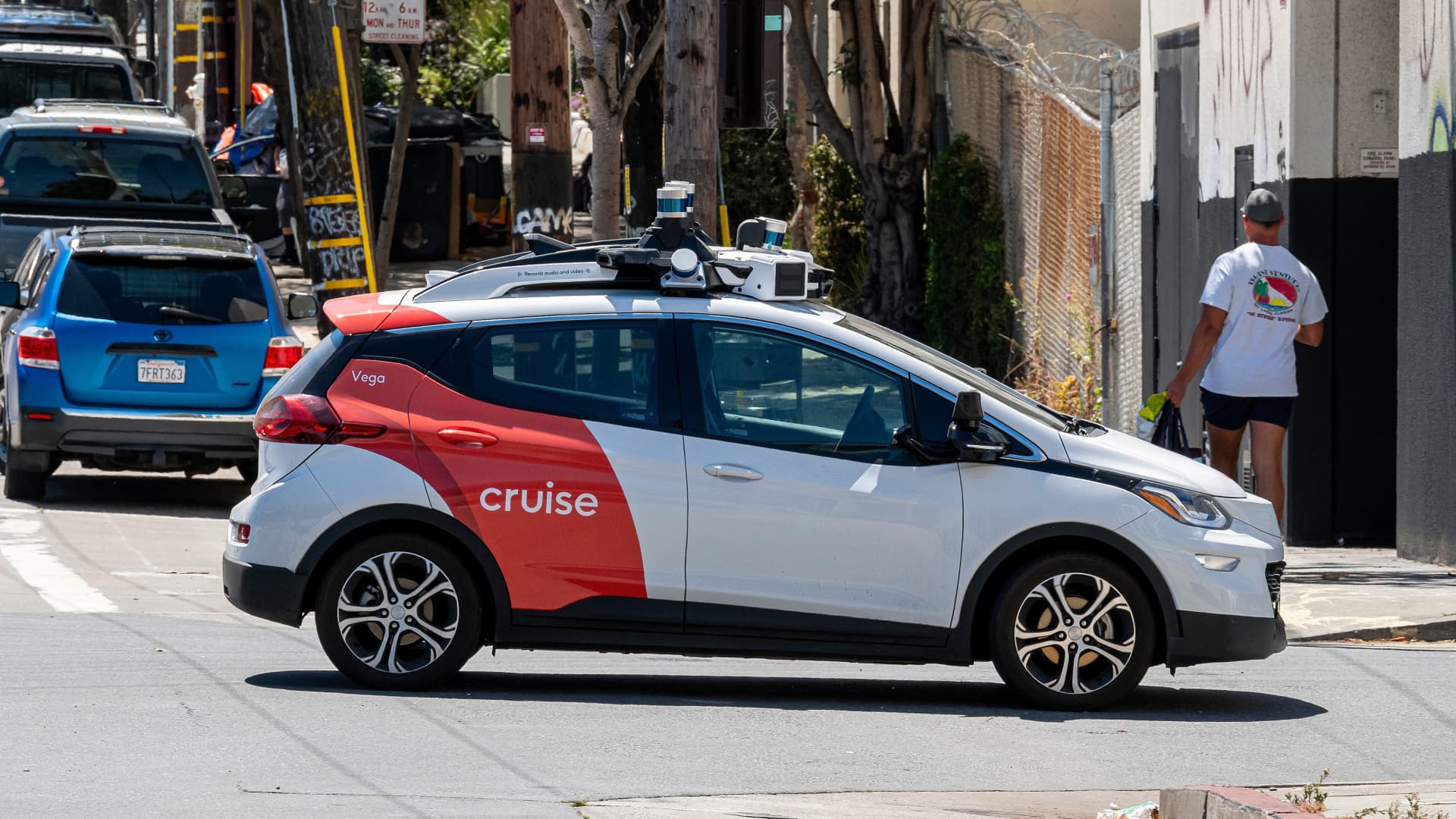
A Cruise autonomous taxi in San Francisco, California, US, on Thursday Aug. 10, 2023.
GM Ends Robotaxi Operations, Shifts Focus to Core Business
DETROIT — For years, General Motors CEO and Chair Mary Barra has promised a new future for the company, away from a stodgy metal-bending automaker into a tech-driven, forward-thinking company poised for growth.
Part of the plan was for GM’s innovation division to identify trillions of dollars in new market opportunities such as electric commercial vehicles, auto insurance, military defense, autonomous vehicles, and even, eventually, the potential for "flying cars," also known as urban air mobility.
"We are creating world-class technology solutions and services that will change the way people move, along with new fleet solutions and entirely new business models," Barra said during a virtual CES keynote in January 2022.
While GM has declined to disclose how much revenue such businesses have produced, Barra, with the ending of its Cruise robotaxi operations on Tuesday, made it clear that the automaker’s growth priorities have shifted amid a broader, industry-wide retrench to preserve capital. Companies, including GM, are now focused on more "core" operations and adjacent business opportunities, including software, EVs, and "personal autonomous vehicles."
"You’ve got to really understand the cost of running a robotaxi fleet, which is fairly significant, and, again, not our core business," Barra said during a Tuesday call with Wall Street analysts.
The driverless ride-hailing service was supposed to be the shining star of GM’s growth opportunities, with executives just a few years ago referring to it as an $8 trillion market opportunity that the automaker would lead. That included former executives touting $50 billion in revenue by the end of this decade, and Cruise being valued at more than $30 billion.
Instead, after spending more than $10 billion on Cruise since acquiring it in 2016, GM is ending the robotaxi business and folding Cruise’s operations and an undetermined number of its nearly 2,300 employees into the automaker.
Saving Capital
As part of the wind down, GM is expected to disclose additional expenses from employee separation packages and repurchasing equity investments from outside investors, among other costs, in the next year.
GM cited the increasingly competitive robotaxi market, capital allocation priorities, and the considerable time and resources necessary to grow the business as reasons for its decision.
The automaker’s main competitor was Alphabet-backed Waymo, which is now the last entity with any notable public operations. Others, most notably Tesla, have ambitions for robotaxi businesses, but have failed to commercialize those operations thus far.
To GM’s credit, Wall Street, which previously pushed for such growth businesses, applauded the decision to end Cruise’s robotaxi ambitions. Shares of the company were initially higher, before ending the week level with when the announcement was made.
Cruising No More
General Motors CEO Mary Barra speaks during a visit of the US president to the General Motors Factory ZERO electric vehicle assembly plant in Detroit, Michigan on November 17, 2021.
GM will combine the majority-owned Cruise LLC with GM technical teams. Barra repeatedly said last week that the automaker is not giving up on vehicle autonomy; it will focus on personal autonomous vehicles instead of robotaxis.
But it’s hard to ignore that Cruise is GM’s latest mobility venture or growth business to fold or not live up to expectations.
GM’s plans to diversify its business through fashionable industries such as ridesharing and other "mobility" ventures — a trendy term used previously by the industry for growth initiatives — or startups have largely fallen flat since the automaker started investing in such growth areas in 2016.
Conclusion
GM’s decision to end its robotaxi business marks a significant shift in its growth strategy, as the company refocuses on its core business to generate profits amid economic and recessionary concerns. While the move may be seen as a setback for the company’s ambitions in the autonomous vehicle space, it also offers an opportunity for GM to redirect resources toward other growth areas, such as electric vehicles and personal autonomous vehicles.
FAQs
Q: Why is GM ending its robotaxi business?
A: The company cited the increasingly competitive robotaxi market, capital allocation priorities, and the considerable time and resources necessary to grow the business as reasons for its decision.
Q: What will happen to the employees of Cruise?
A: The company will fold Cruise’s operations and an undetermined number of its nearly 2,300 employees into the automaker.
Q: What is GM’s new focus area?
A: The company will focus on personal autonomous vehicles, software, EVs, and adjacent business opportunities.
Q: What is the impact of this decision on the autonomous vehicle market?
A: The move marks a significant shift in GM’s growth strategy, as the company refocuses on its core business to generate profits amid economic and recessionary concerns.


Portable Benefits Could Fix the Gig Economy’s Biggest Problem

Ethical Reasoning Has Become a Core Workplace Skill and Training Programs Are Missing It

Stakeholder Pressure on CEOs Has Reached a Breaking Point

Identity Resilience at Work and Why It Matters More Than Grit

The Revenge of Middle Management and Why Organizations Should Pay Attention

First-Generation Professionals Face a Different Workplace and Nobody Prepares Them for It

Small Business Survival in Underserved Communities Needs More Than Microloans

Aging Populations are Reshaping Labor Markets Faster Than Policy Can Respond

How Emotional Intelligence Can Help You Manage Stress and Build Resilience

Interview with Dr. Kristy K. Taylor, WORxK Global News Magazine Founder

Sarah Herrlinger Talks AirPods Pro Hearing Aid

Unlocking Human Potential: Kim Groshek’s Journey to Transforming Leadership and Stress Resilience

NetWork Your Way to Success: Top Tips for Maximizing Your Professional Network

The Power of Belonging: Why Feeling Accepted Matters in the Workplace

Health-care stocks fall after Warren PBM bill, Brian Thompson shooting

Glenda Benevides: Creating Global Impact Through Music
-
 Resiliency1 year ago
How Emotional Intelligence Can Help You Manage Stress and Build Resilience
-
 Career Advice2 years ago
Interview with Dr. Kristy K. Taylor, WORxK Global News Magazine Founder
-
 Diversity and Inclusion (DEIA)2 years ago
Sarah Herrlinger Talks AirPods Pro Hearing Aid
-
 Changemaker Interviews2 years ago
Unlocking Human Potential: Kim Groshek’s Journey to Transforming Leadership and Stress Resilience
-
 Career Advice2 years ago
NetWork Your Way to Success: Top Tips for Maximizing Your Professional Network
-
 Diversity and Inclusion (DEIA)2 years ago
The Power of Belonging: Why Feeling Accepted Matters in the Workplace
-
 Global Trends and Politics2 years ago
Health-care stocks fall after Warren PBM bill, Brian Thompson shooting
-
 Changemaker Interviews2 years ago
Glenda Benevides: Creating Global Impact Through Music