
Global Trends and Politics
RFK Jr.’s vaccine panel postpones vote on hepatitis B shot for babies

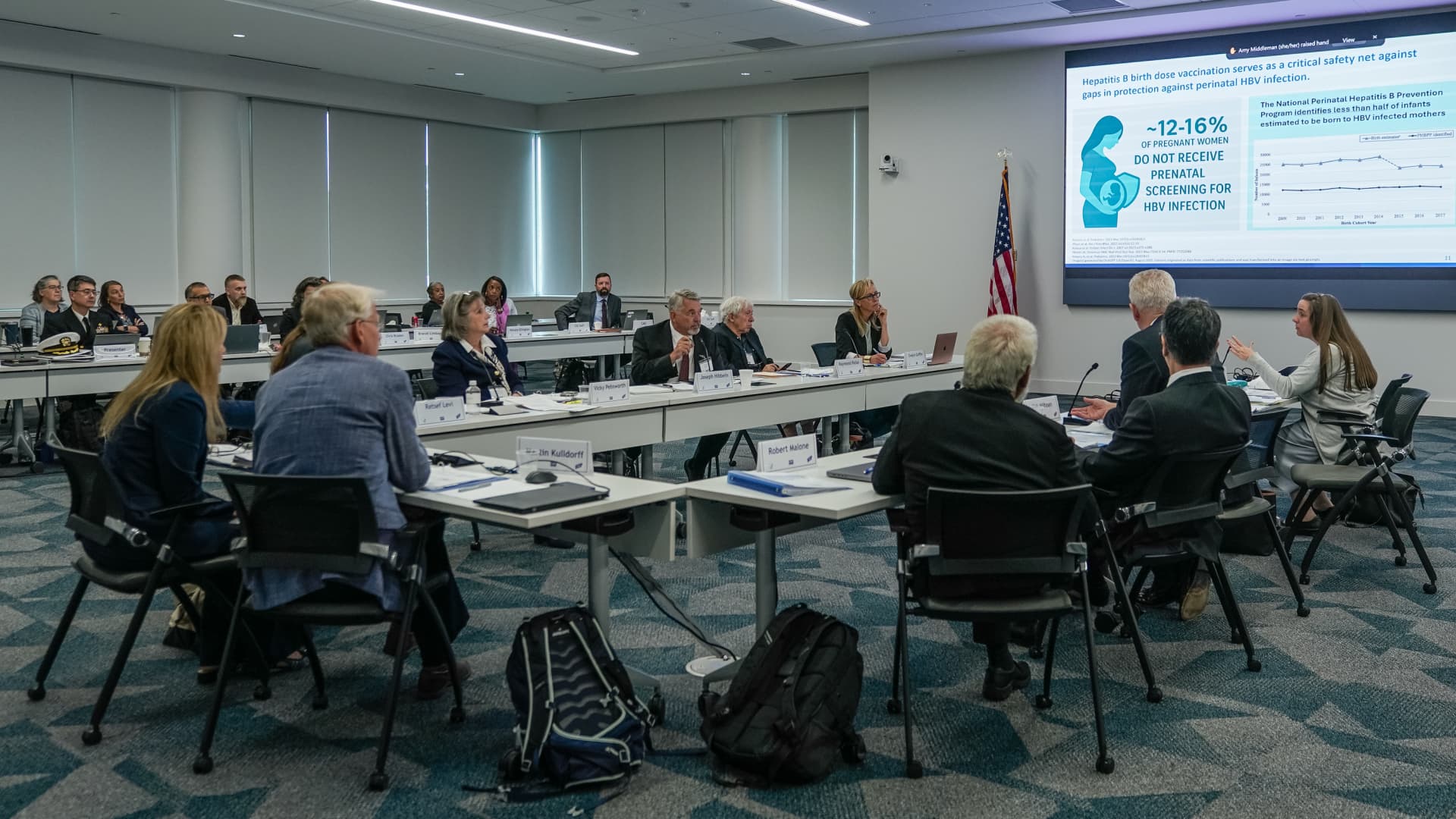
Health and Human Services Secretary’s Vaccine Panel Delays Vote on Hepatitis B Shot
The Advisory Committee on Immunization Practices (ACIP), a panel hand-picked by Health and Human Services Secretary Robert F. Kennedy Jr., has postponed a vote on whether to delay the first dose of the hepatitis B vaccine from birth to at least one month for most babies born in the U.S. This decision means that the panel’s current recommendation, which suggests that all infants receive a hepatitis B vaccine within 24 hours of birth, will remain in place until the group meets again at a later date.
Background and Context
The hepatitis B vaccine has been a crucial public health intervention, credited with virtually eliminating the disease in young children. The vaccine is typically administered in a series of three doses, with the first dose given at birth, followed by a second dose one to two months later, and a third dose between six and 18 months of age. The Centers for Disease Control and Prevention (CDC) has recommended the birth dose since 1991, and it has been highly effective in preventing the spread of the disease.
Concerns and Debate
Some members of the ACIP, including Dr. Robert Malone, a known vaccine critic, have raised concerns about the safety of administering the vaccine to babies so soon after birth. Malone brought the motion to postpone the vote, citing ambiguity and ongoing discussions about safety, effectiveness, and timing. However, other experts, such as Dr. Cody Meissner, a professor of pediatrics at the Dartmouth Geisel School of Medicine, argue that the benefits of the birth dose far outweigh any potential risks.
Dr. Meissner emphasized that changing the recommendation could increase the risk of harm to babies, as it may lead to fewer children receiving the full vaccine series. He also noted that administering the vaccine at birth in the hospital ensures that babies receive at least their first dose. Other experts, including Dr. Adam Langer, a CDC epidemiologist, have expressed concerns that delaying the vaccine could lead to a resurgence of preventable infectious diseases.
Implications and Next Steps
The postponed vote only affects the timing of the first dose of the hepatitis B vaccine series, and the CDC will need to sign off on any new recommendations. The ACIP’s decision has significant implications for public health, as the hepatitis B vaccine has been highly effective in preventing the spread of the disease. The American Medical Association and other experts have urged the panel to maintain the current recommendation, citing the lack of evidence to support delaying the vaccine.
The ACIP’s meeting comes after Kennedy reshaped the panel, appointing 12 new members, including some well-known vaccine critics. This has raised concerns among health experts that the panel’s recommendations could curb access to safe and effective immunizations. As the panel continues to discuss and debate the hepatitis B vaccine recommendation, it is essential to consider the potential consequences of any changes to the current guidance.


Portable Benefits Could Fix the Gig Economy’s Biggest Problem

Ethical Reasoning Has Become a Core Workplace Skill and Training Programs Are Missing It

Stakeholder Pressure on CEOs Has Reached a Breaking Point

Identity Resilience at Work and Why It Matters More Than Grit

The Revenge of Middle Management and Why Organizations Should Pay Attention

First-Generation Professionals Face a Different Workplace and Nobody Prepares Them for It

Small Business Survival in Underserved Communities Needs More Than Microloans

Aging Populations are Reshaping Labor Markets Faster Than Policy Can Respond

How Emotional Intelligence Can Help You Manage Stress and Build Resilience

Interview with Dr. Kristy K. Taylor, WORxK Global News Magazine Founder

Sarah Herrlinger Talks AirPods Pro Hearing Aid

Unlocking Human Potential: Kim Groshek’s Journey to Transforming Leadership and Stress Resilience

NetWork Your Way to Success: Top Tips for Maximizing Your Professional Network

The Power of Belonging: Why Feeling Accepted Matters in the Workplace

Health-care stocks fall after Warren PBM bill, Brian Thompson shooting

Glenda Benevides: Creating Global Impact Through Music
-
 Resiliency1 year ago
How Emotional Intelligence Can Help You Manage Stress and Build Resilience
-
 Career Advice2 years ago
Interview with Dr. Kristy K. Taylor, WORxK Global News Magazine Founder
-
 Diversity and Inclusion (DEIA)2 years ago
Sarah Herrlinger Talks AirPods Pro Hearing Aid
-
 Changemaker Interviews2 years ago
Unlocking Human Potential: Kim Groshek’s Journey to Transforming Leadership and Stress Resilience
-
 Career Advice2 years ago
NetWork Your Way to Success: Top Tips for Maximizing Your Professional Network
-
 Diversity and Inclusion (DEIA)2 years ago
The Power of Belonging: Why Feeling Accepted Matters in the Workplace
-
 Global Trends and Politics2 years ago
Health-care stocks fall after Warren PBM bill, Brian Thompson shooting
-
 Changemaker Interviews2 years ago
Glenda Benevides: Creating Global Impact Through Music