
Global Trends and Politics
Rivian’s AI, autonomy impresses but not enough to offset EV concerns

Rivian’s Ambitious Plans for Artificial Intelligence and Autonomy
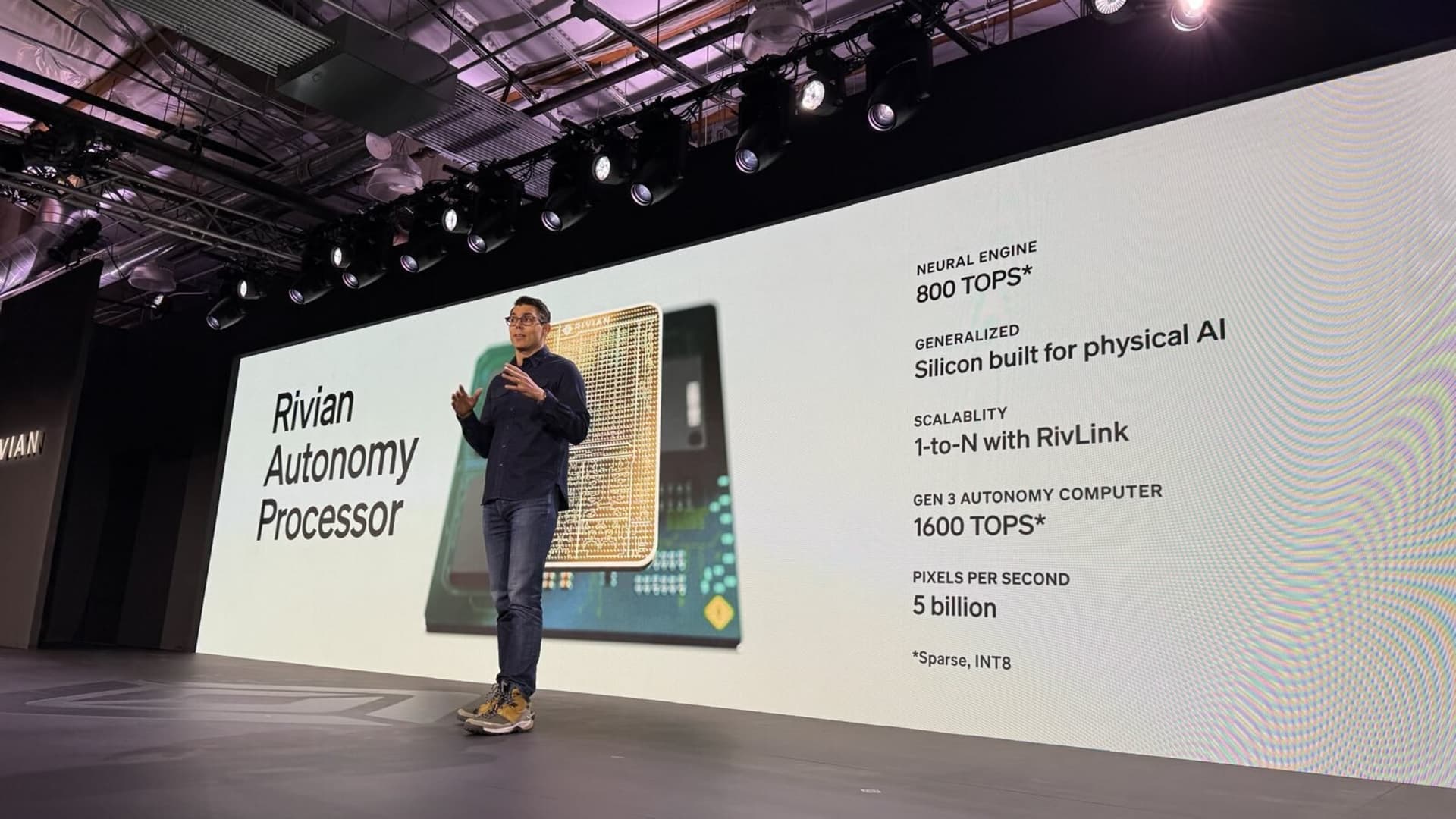
Rivian, the electric vehicle manufacturer, recently hosted its first “Autonomy and AI Day” in Palo Alto, California, where CEO RJ Scaringe unveiled the company’s plans for artificial intelligence, automation, and a proprietary silicon chip. Despite the impressive announcements, the company’s stock fell 6.1% to close at $16.43 per share on the day of the event. However, shares recovered the following day, closing at $18.42, up 12.1%.
The event showcased Rivian’s strategic direction, including the development of a proprietary chip, RAP1, designed for “physical AI,” namely autonomous driving. The company also introduced an evolved software architecture, a new AI assistant, and a roadmap for achieving “personal L4,” or fully self-driving personally owned vehicles. While the announcements were well-received by analysts, many noted that the company still faces significant challenges, including slumping EV demand and internal struggles with products and capital.
Analysts’ Reactions and Concerns
Needham analyst Chris Pierce raised his price target on Rivian by 64% to $23 per share, citing the company’s tech announcements and potential for future licensing deals. However, other analysts, such as Deutsche Bank’s Edison Yu, noted that the stock’s weakness was warranted given the run-up since earnings and lack of a major AI partnership or deal announcement. Barclays analyst Dan Levy expressed concerns about Rivian’s ability to achieve profitability, stating that the company remains a “show me” story amid more challenging market conditions.
Morgan Stanley analyst Andrew Percoco also raised concerns about autonomy adoption rates, lackluster EV demand, and a prolonged path to profitability. RBC Capital Markets analyst Tom Narayan agreed, stating that the advancements enhance Rivian’s product offering but do not address ongoing concerns around liquidity and R2/R3 profitability. Despite these concerns, Rivian’s founder and CEO RJ Scaringe argued that the company’s vertical integration of in-house capabilities will enable it to be more efficient, quicker, and better than others.
Rivian’s Roadmap to Success
Rivian’s roadmap to achieving fully autonomous vehicles begins with an update to its hands-free driving system later this month, followed by plans to continue expanding capabilities until vehicles reach full autonomy in the years ahead. The company’s R2 midsize SUV, expected to launch next year with a starting price of $45,000, is crucial for Rivian’s success, as it is anticipated to broaden the company’s customer base and be a proof-point for its efforts regarding profitability and cost savings.
With a market cap of $22.5 billion, Rivian’s shares are rated hold with a $15.43 per share price target, according to average ratings and estimates compiled by FactSet. As the company continues to navigate the challenges of the EV market, its ability to execute on its ambitious plans for artificial intelligence and autonomy will be closely watched by investors and analysts alike.


Portable Benefits Could Fix the Gig Economy’s Biggest Problem

Ethical Reasoning Has Become a Core Workplace Skill and Training Programs Are Missing It

Stakeholder Pressure on CEOs Has Reached a Breaking Point

Identity Resilience at Work and Why It Matters More Than Grit

The Revenge of Middle Management and Why Organizations Should Pay Attention

First-Generation Professionals Face a Different Workplace and Nobody Prepares Them for It

Small Business Survival in Underserved Communities Needs More Than Microloans

Aging Populations are Reshaping Labor Markets Faster Than Policy Can Respond

How Emotional Intelligence Can Help You Manage Stress and Build Resilience

Interview with Dr. Kristy K. Taylor, WORxK Global News Magazine Founder

Sarah Herrlinger Talks AirPods Pro Hearing Aid

Unlocking Human Potential: Kim Groshek’s Journey to Transforming Leadership and Stress Resilience

NetWork Your Way to Success: Top Tips for Maximizing Your Professional Network

The Power of Belonging: Why Feeling Accepted Matters in the Workplace

Health-care stocks fall after Warren PBM bill, Brian Thompson shooting

Glenda Benevides: Creating Global Impact Through Music
-
 Resiliency1 year ago
How Emotional Intelligence Can Help You Manage Stress and Build Resilience
-
 Career Advice2 years ago
Interview with Dr. Kristy K. Taylor, WORxK Global News Magazine Founder
-
 Diversity and Inclusion (DEIA)2 years ago
Sarah Herrlinger Talks AirPods Pro Hearing Aid
-
 Changemaker Interviews2 years ago
Unlocking Human Potential: Kim Groshek’s Journey to Transforming Leadership and Stress Resilience
-
 Career Advice2 years ago
NetWork Your Way to Success: Top Tips for Maximizing Your Professional Network
-
 Diversity and Inclusion (DEIA)2 years ago
The Power of Belonging: Why Feeling Accepted Matters in the Workplace
-
 Global Trends and Politics2 years ago
Health-care stocks fall after Warren PBM bill, Brian Thompson shooting
-
 Changemaker Interviews2 years ago
Glenda Benevides: Creating Global Impact Through Music