
Innovation and Technology
The AI That Flows: Liquid Neural Networks and the End of Frozen Intelligence

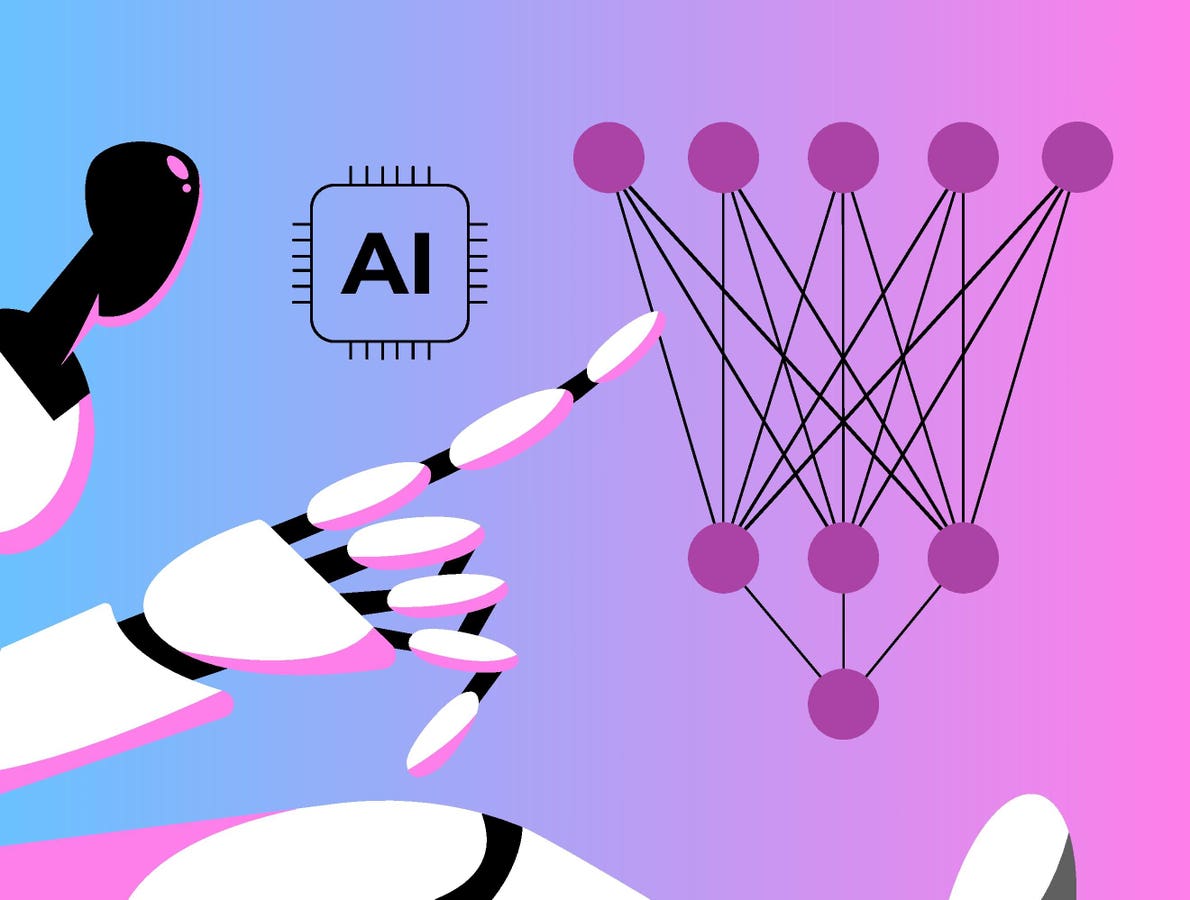
For the past several years, the AI industry has operated on a “more is better” philosophy. To make a model smarter, companies simply add more parameters, more GPUs, and more data. But this has created a fundamental flaw: modern AI is “static.” Once a model is trained, its internal weights are frozen. It cannot learn from new data in real-time, and it struggles to adapt to chaotic environments like a sudden rainstorm during an autonomous drive or a shifting trend in a high-frequency trading floor.
Enter Liquid Neural Networks (LNNs). Developed by researchers at the MIT Computer Science and Artificial Intelligence Laboratory (CSAIL) and now being commercialized by the startup Liquid AI, this new architecture is inspired by the microscopic nematode C. elegans. This tiny worm exhibits complex behaviors with just 302 neurons because its neural pathways are not fixed; they are dynamic, adjusting their parameters based on the flow of time and sensory input.
The Math of Adaptability
The technical breakthrough of LNNs lies in Ordinary Differential Equations (ODEs). Traditional neural networks process information in discrete “steps,” like a series of still photographs. An LNN, however, processes information as a continuous flow.
Instead of fixed weights, LNNs use “time constants” that allow the model’s internal equations to stretch or shrink based on the rhythm of the incoming data. This allows the AI to “learn on the job.” If a drone equipped with an LNN encounters a forest it has never seen before, it doesn’t just rely on its training data; it adapts its navigational logic in real-time to account for the specific density and lighting of that environment.
Efficiency: Doing More with Less
The most striking feature of liquid models is their compact size. In a recent navigation test, MIT researchers found that a standard deep learning model required hundreds of thousands of neurons to keep a vehicle in its lane. A Liquid Neural Network achieved the same result with only 19 neurons.
This “Parameter Efficiency” has massive implications for hardware:
-
On-Device AI: Because they are so small, LNNs can run on simple microcontrollers or mobile CPUs, eliminating the need for expensive NVIDIA H100 GPU clusters and cloud connectivity.
-
Energy Reduction: In January 2026, Liquid AI demonstrated its LFM-3B model, which demonstrated the ability to outperform much larger competitors on CPU-only hardware while using only a fraction of the electricity.
-
Sovereign AI: This efficiency allows small nations and medium-sized enterprises to run powerful, private AI systems on local hardware without the multi-billion dollar infrastructure costs of the “hyperscalers.”
The Post-Transformer Era
Since 2017, the Transformer architecture (the “T” in ChatGPT) has been the undisputed king of AI. However, Transformers suffer from “Quadratic Complexity,” meaning the memory required to process a document grows exponentially with the document’s length.
Liquid models, along with other “post-Transformer” architectures like State Space Models (SSMs), operate with Linear Complexity. This means they can process a 500-page book or a 2-hour video using near-constant memory. In early 2026, the launch of Liquid Foundation Models (LFMs) proved that these systems can match or beat Transformers in language reasoning while being significantly faster at “decoding” (generating text).
Real-World Applications: From Robotics to Bio-Monitoring
While Large Language Models (LLMs) excel at chat, Liquid AI is designed for the “Physical World.”
-
Autonomous Flight: Drones using LNNs have successfully navigated vision-based “fly-to-target” tasks in unfamiliar, noisy, and occluded environments where standard AI typically crashes.
-
Medical Diagnostics: Because LNNs are built for time-series data, they are being piloted for real-time heart monitoring (ECG) and EEG analysis, adapting to a specific patient’s baseline heart rhythm rather than relying on a generic average.
-
Industrial Automation: In warehouse robotics, LNNs allow machines to ignore “noise”—like changing shadows or moving workers—and focus solely on the causal variables of their task.
Summary: AI With a Pulse
The transition from “frozen” models to “liquid” systems marks a paradigm shift in the industry. We are moving away from black-box giants that require the power of a small city and toward elegant, brain-inspired systems that can fit in a pocket and learn from the world as it happens.
Success in the next era of AI won’t belong to those with the most data, but to those who can build the most adaptable systems. By embracing the “liquidity” of biological intelligence, we are finally creating AI that doesn’t just predict the next word, but understands the flow of reality.


Portable Benefits Could Fix the Gig Economy’s Biggest Problem

Ethical Reasoning Has Become a Core Workplace Skill and Training Programs Are Missing It

Stakeholder Pressure on CEOs Has Reached a Breaking Point

Identity Resilience at Work and Why It Matters More Than Grit

The Revenge of Middle Management and Why Organizations Should Pay Attention

First-Generation Professionals Face a Different Workplace and Nobody Prepares Them for It

Small Business Survival in Underserved Communities Needs More Than Microloans

Aging Populations are Reshaping Labor Markets Faster Than Policy Can Respond

How Emotional Intelligence Can Help You Manage Stress and Build Resilience

Interview with Dr. Kristy K. Taylor, WORxK Global News Magazine Founder

Sarah Herrlinger Talks AirPods Pro Hearing Aid

Unlocking Human Potential: Kim Groshek’s Journey to Transforming Leadership and Stress Resilience

NetWork Your Way to Success: Top Tips for Maximizing Your Professional Network

The Power of Belonging: Why Feeling Accepted Matters in the Workplace

Health-care stocks fall after Warren PBM bill, Brian Thompson shooting

Glenda Benevides: Creating Global Impact Through Music
-
 Resiliency1 year ago
How Emotional Intelligence Can Help You Manage Stress and Build Resilience
-
 Career Advice2 years ago
Interview with Dr. Kristy K. Taylor, WORxK Global News Magazine Founder
-
 Diversity and Inclusion (DEIA)2 years ago
Sarah Herrlinger Talks AirPods Pro Hearing Aid
-
 Changemaker Interviews2 years ago
Unlocking Human Potential: Kim Groshek’s Journey to Transforming Leadership and Stress Resilience
-
 Career Advice2 years ago
NetWork Your Way to Success: Top Tips for Maximizing Your Professional Network
-
 Diversity and Inclusion (DEIA)2 years ago
The Power of Belonging: Why Feeling Accepted Matters in the Workplace
-
 Global Trends and Politics2 years ago
Health-care stocks fall after Warren PBM bill, Brian Thompson shooting
-
 Changemaker Interviews2 years ago
Glenda Benevides: Creating Global Impact Through Music