
Organizational Culture
Beyond the Pyramid: The Rise of Sociocratic Workplace Culture

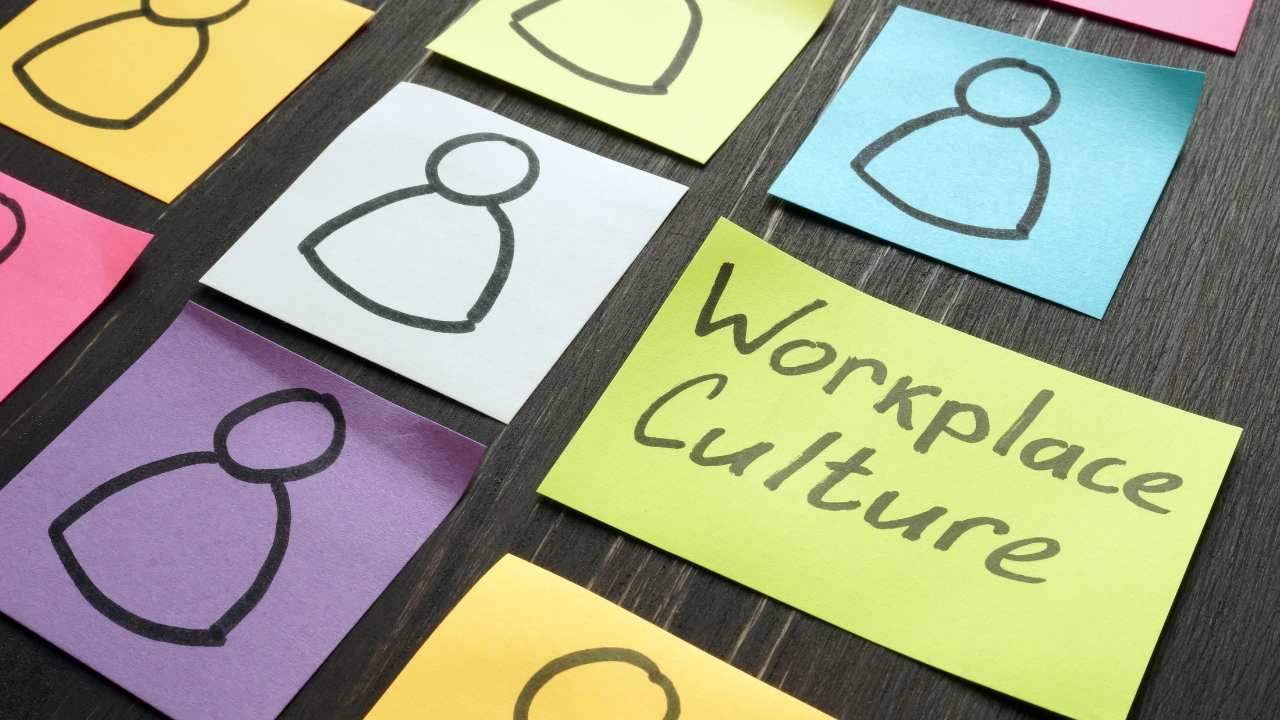
In an environment where market conditions shift overnight, the traditional “command and control” hierarchy is increasingly seen as a bottleneck. When every significant decision must travel up a chain of command and back down again, speed is sacrificed for the sake of oversight. In response, forward-thinking organizations—from tech firms like Nagarro to specialized manufacturers like Hertzler Systems—are adopting Sociocracy (also known as Dynamic Governance).
Sociocracy is a system of self-governance that treats an organization as a living organism. It replaces the rigid pyramid with a series of semi-autonomous Circles, each with its own specific area of responsibility. Unlike traditional management, where power is vested in a title, power in a sociocratic culture is distributed among those doing the work.
The Circle Structure: Self-Similarity and Autonomy
In a sociocratic workplace, the organization is broken down into small, functional units called circles. Each circle—whether it’s the “Product Circle,” the “Customer Support Circle,” or the “Hiring Circle”—has the full authority to make decisions within its own domain.
What prevents these circles from becoming isolated silos is the Double-Link mechanism. Each circle is connected to its “parent” circle by two distinct roles:
-
The Operational Leader: Appointed by the parent circle to bring goals and resources down to the functional team.
-
The Delegate: Elected by the functional team to bring their feedback, concerns, and ideas up to the parent circle.
This two-way flow ensures that the “head” of the company always knows what the “hands” are experiencing, and vice-versa, without the need for endless, soul-crushing status meetings.
Consent vs. Consensus: The Power of ‘Good Enough for Now’
One of the most transformative aspects of a sociocratic culture is the shift from Consensus (where everyone must agree) to Consent (where no one has a reasoned objection).
Consensus often leads to “Superficial Harmony,” where decisions are watered down to satisfy everyone, or “Analysis Paralysis,” where one person can block a project indefinitely. Consent-based decision-making operates on a different principle: “Is this safe enough to try, and good enough for now?”
In a consent round, a proposal is approved if no member can demonstrate that it would interfere with the circle’s ability to meet its goals. This creates a high-velocity culture of Empiricism—where the team prefers to launch a “80% perfect” solution and iterate based on real-world data rather than debating a “100% perfect” solution in a vacuum.
The ‘Unbossed’ Career: Moving from Roles to Tasks
Sociocracy also redefines individual identity within the workplace. Instead of being defined by a fixed job title, employees hold multiple Roles that can shift as the needs of the circle change.
This leads to what is being called “Conscious Unbossing.” In these cultures, leadership is fluid. An individual might lead a high-stakes “Innovation Sprint” in one circle while serving as a supporting “Quality Auditor” in another. This role fluidity allows people to lean into their strengths rather than being trapped by a static job description.
Building Cognitive Safety
The true engine of a sociocratic culture is Psychological and Cognitive Safety. Because the rules of engagement are explicit and the decision-making process is transparent, employees feel a sense of Sovereignty. They aren’t just “task executors”; they are architects of the system they work within.
This level of agency is a powerful antidote to burnout. When employees have a seat at the table and a clear voice in how their work is done, their “Emotional Salary”—the non-monetary value they derive from their jobs—skyrockets. They are more likely to stay, more likely to innovate, and far more likely to take accountability for the organization’s success.
Summary: The Agile Collective
Sociocracy is not about “getting rid of managers.” It is about Decentralizing Management. It recognizes that in a complex world, no single person can have all the answers. The most successful cultures of the future will be those that function like a distributed nervous system—one where every part is empowered to sense, respond, and adapt in real-time. By moving power to the “Edge,” companies aren’t just becoming more efficient; they are becoming more human.


Portable Benefits Could Fix the Gig Economy’s Biggest Problem

Ethical Reasoning Has Become a Core Workplace Skill and Training Programs Are Missing It

Stakeholder Pressure on CEOs Has Reached a Breaking Point

Identity Resilience at Work and Why It Matters More Than Grit

The Revenge of Middle Management and Why Organizations Should Pay Attention

First-Generation Professionals Face a Different Workplace and Nobody Prepares Them for It

Small Business Survival in Underserved Communities Needs More Than Microloans

Aging Populations are Reshaping Labor Markets Faster Than Policy Can Respond

How Emotional Intelligence Can Help You Manage Stress and Build Resilience

Interview with Dr. Kristy K. Taylor, WORxK Global News Magazine Founder

Sarah Herrlinger Talks AirPods Pro Hearing Aid

Unlocking Human Potential: Kim Groshek’s Journey to Transforming Leadership and Stress Resilience

NetWork Your Way to Success: Top Tips for Maximizing Your Professional Network

The Power of Belonging: Why Feeling Accepted Matters in the Workplace

Health-care stocks fall after Warren PBM bill, Brian Thompson shooting

Glenda Benevides: Creating Global Impact Through Music
-
 Resiliency1 year ago
How Emotional Intelligence Can Help You Manage Stress and Build Resilience
-
 Career Advice2 years ago
Interview with Dr. Kristy K. Taylor, WORxK Global News Magazine Founder
-
 Diversity and Inclusion (DEIA)2 years ago
Sarah Herrlinger Talks AirPods Pro Hearing Aid
-
 Changemaker Interviews2 years ago
Unlocking Human Potential: Kim Groshek’s Journey to Transforming Leadership and Stress Resilience
-
 Career Advice2 years ago
NetWork Your Way to Success: Top Tips for Maximizing Your Professional Network
-
 Diversity and Inclusion (DEIA)2 years ago
The Power of Belonging: Why Feeling Accepted Matters in the Workplace
-
 Global Trends and Politics2 years ago
Health-care stocks fall after Warren PBM bill, Brian Thompson shooting
-
 Changemaker Interviews2 years ago
Glenda Benevides: Creating Global Impact Through Music