
Training and Development
The Power of Safe Failure: Why Modern Training Programs are Prioritizing Simulations Over Lectures

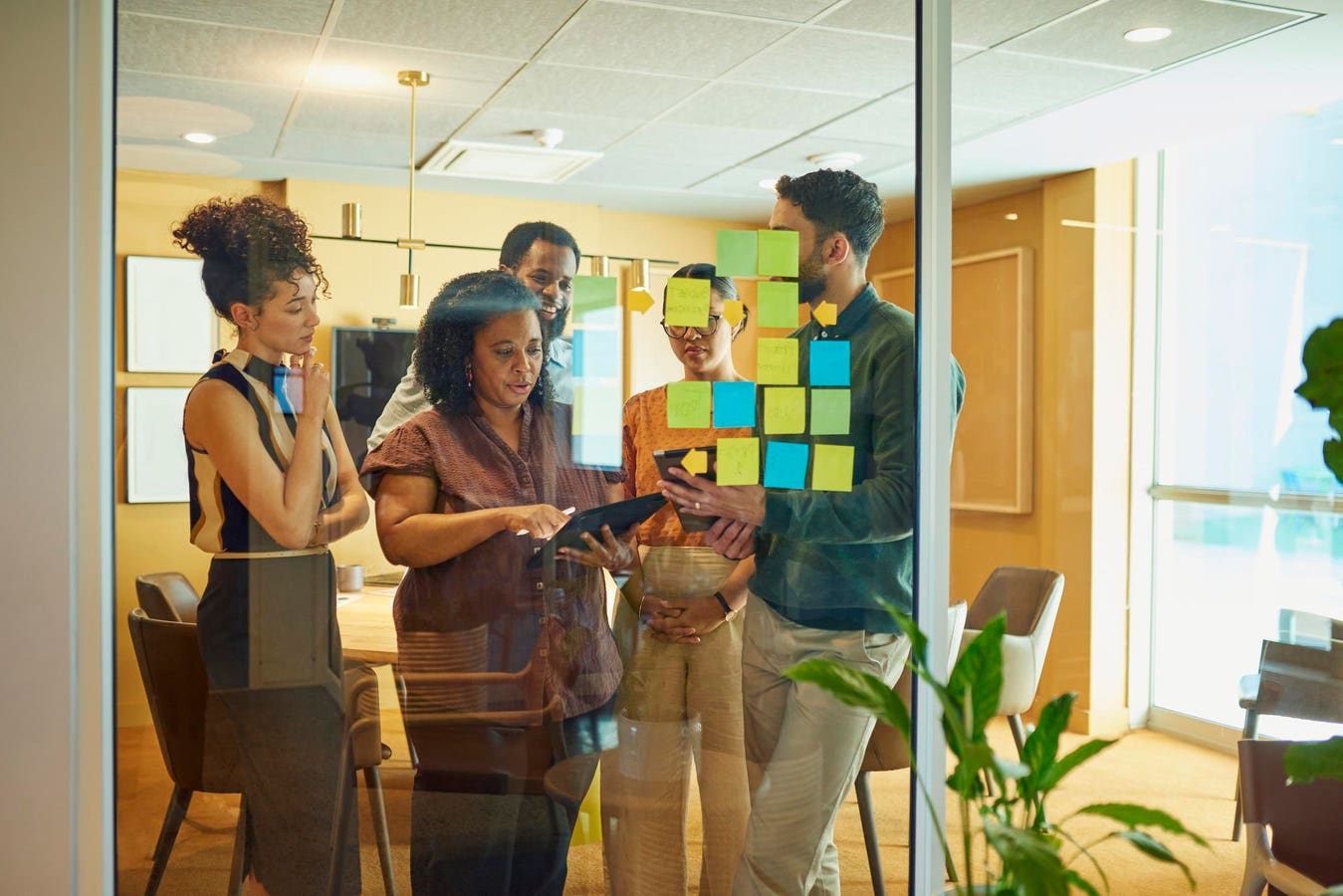
Operational risk is often at its highest during the transition from theoretical training to live execution. In traditional development models, the gap between “knowing” and “doing” is bridged on the job, often in front of customers or while handling expensive equipment. Today, a fundamental shift is occurring as organizations move toward “Safe Failure” environments. By utilizing immersive simulations and controlled sandboxes, workforce leaders are allowing employees to make critical mistakes where the consequences are purely educational rather than financial or reputational.
The Psychology of Performance Pressure
The presence of high stakes is frequently the greatest barrier to effective learning. When an employee is placed in a live environment prematurely, their cognitive resources shift from learning to self-preservation. This “threat state” narrows their focus, making it difficult to absorb the nuance of a complex task. Under these conditions, the brain prioritizes avoiding a mistake over understanding the underlying logic of the system.
Organizations are countering this by building “Low-Stakes Sandboxes”—isolated versions of real-world systems where new hires can explore, experiment, and inevitably fail without triggering a system-wide alert. Whether it is a replica of a customer service database or a physical mock-up of a manufacturing assembly line, these environments allow for the “stumbling phase” of learning to occur in a vacuum.
Developing Instinct Through Iteration
Simulation-based development is not about memorizing a checklist; it is about developing professional instinct. In a lecture setting, an employee learns the “happy path”—the ideal scenario where everything goes according to plan. In a simulation, trainers can introduce “black swan” events or common errors that force the learner to pivot.
By repeatedly navigating these controlled crises, employees build “muscle memory” for problem-solving. When they eventually transition to the live environment, they are not seeing challenges for the first time. They have already failed at these specific tasks five or six times in the simulator, which has allowed them to debug their own thought processes. This iterative approach ensures that the first time an employee handles a high-stakes problem, it is actually their tenth time solving it.
The Role of the “Post-Mortem” in Training
A critical component of the safe-failure model is the structured debrief, or “Post-Mortem.” In this phase, the simulation is paused or reviewed, and the trainer works with the learner to deconstruct their decision-making. Unlike traditional feedback, which often focuses on the outcome, the post-mortem focuses on the “decision tree.”
Questions shift from “What did you do wrong?” to “At what point did the information you were seeing lead you to this specific choice?” This level of analysis helps employees identify their own cognitive biases and blind spots. By legitimizing failure as a data point rather than a deficiency, organizations foster a culture of transparency where employees are more likely to report errors early in the live environment rather than hiding them.
Cross-Functional Crisis Simulations
While technical simulations are common in engineering and IT, the concept is expanding into “Soft Skill” development through cross-functional crisis simulations. These involve putting leaders from different departments—such as legal, PR, and operations—into a room and presenting them with a simulated organizational crisis, such as a localized supply chain collapse or a sudden data integrity issue.
These exercises reveal the friction points in organizational communication and decision-making that no policy manual can address. They force leaders to practice the “human” side of workforce development: managing ego, communicating clearly under pressure, and prioritizing collective goals over departmental silos. The development happens in the friction between the roles, providing a level of growth that a standard leadership seminar cannot replicate.
Designing the Path to Live Production
The move toward safe failure environments signals a broader understanding that proficiency is a graduated process. Modern workforce builders are increasingly using “Graduated Release” models, where an employee moves from a total simulation to a “supervised live” environment, and finally to independent operation.
This design recognizes that the most expensive way to train an employee is to have them learn from a mistake that impacts a real client or a physical asset. By investing in the architecture of simulation, companies are effectively buying insurance against the inevitable learning curve. The goal is no longer to prevent failure, but to ensure that when failure happens, it happens in a place where the only thing that breaks is a misunderstanding.


Portable Benefits Could Fix the Gig Economy’s Biggest Problem

Ethical Reasoning Has Become a Core Workplace Skill and Training Programs Are Missing It

Stakeholder Pressure on CEOs Has Reached a Breaking Point

Identity Resilience at Work and Why It Matters More Than Grit

The Revenge of Middle Management and Why Organizations Should Pay Attention

First-Generation Professionals Face a Different Workplace and Nobody Prepares Them for It

Small Business Survival in Underserved Communities Needs More Than Microloans

Aging Populations are Reshaping Labor Markets Faster Than Policy Can Respond

How Emotional Intelligence Can Help You Manage Stress and Build Resilience

Interview with Dr. Kristy K. Taylor, WORxK Global News Magazine Founder

Sarah Herrlinger Talks AirPods Pro Hearing Aid

Unlocking Human Potential: Kim Groshek’s Journey to Transforming Leadership and Stress Resilience

NetWork Your Way to Success: Top Tips for Maximizing Your Professional Network

The Power of Belonging: Why Feeling Accepted Matters in the Workplace

Health-care stocks fall after Warren PBM bill, Brian Thompson shooting

Glenda Benevides: Creating Global Impact Through Music
-
 Resiliency1 year ago
How Emotional Intelligence Can Help You Manage Stress and Build Resilience
-
 Career Advice2 years ago
Interview with Dr. Kristy K. Taylor, WORxK Global News Magazine Founder
-
 Diversity and Inclusion (DEIA)2 years ago
Sarah Herrlinger Talks AirPods Pro Hearing Aid
-
 Changemaker Interviews2 years ago
Unlocking Human Potential: Kim Groshek’s Journey to Transforming Leadership and Stress Resilience
-
 Career Advice2 years ago
NetWork Your Way to Success: Top Tips for Maximizing Your Professional Network
-
 Diversity and Inclusion (DEIA)2 years ago
The Power of Belonging: Why Feeling Accepted Matters in the Workplace
-
 Global Trends and Politics2 years ago
Health-care stocks fall after Warren PBM bill, Brian Thompson shooting
-
 Changemaker Interviews2 years ago
Glenda Benevides: Creating Global Impact Through Music