
Global Trends and Politics
College students, teens could be fueling the boom

Uncovering the Unexpected Force Behind the Surge in Prediction Market Trading Volume
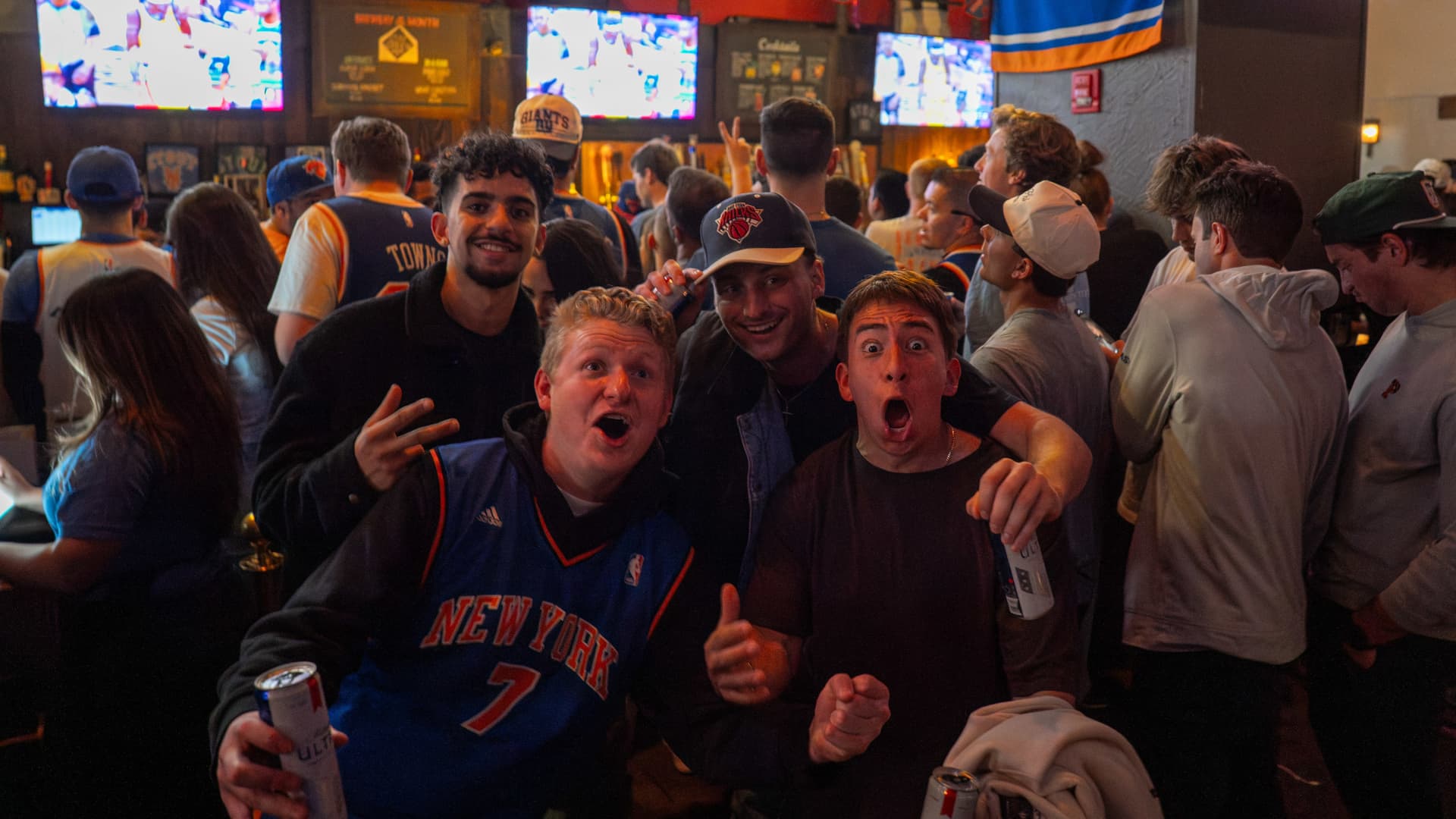
Prediction market trading has experienced a significant boom, and analysts at Truist believe that an unlikely demographic may be contributing to this growth. According to Barry Jonas, 18- to 20-year-olds, who are too young to gamble legally in most states, could be playing a substantial role in the expansion of prediction markets. This age group is finding alternative ways to engage with sports and events, despite being restricted from traditional sports betting platforms.
Data from HoldCrunch, a company founded by a former FanDuel executive, reveals that the prediction platform Kalshi is processing more trades on college football than on NFL and NBA games. While it’s possible that non-college students are also wagering on college results, this trend may provide insight into the demographics of prediction platform users. HoldCrunch analyzes data based on an “OSB-equivalent handle,” which offers a more comprehensive understanding of the market than volume alone.
Shifting Trends in Prediction Market Trading
During the week ending January 4, Kalshi’s college football handle reached its highest percentage of total trades at 32%. In contrast, the NFL accounted for 24% of total wagers, and the NBA represented 22%. This shift towards college football has been ongoing since October, according to Kalshi. The rise of prediction markets, which allow users to bet on the outcomes of various events, including politics, world news, pop culture, and sports, has been fueled by platforms like Kalshi and Polymarket.
Prediction markets are filling a gap in the market, particularly in states where online sports betting is not legal. Even in states where online sports betting is permitted, it’s often limited to those 21 years or older. In contrast, Kalshi and Polymarket are open to users 18 years or older, with some state-specific exceptions for sports and other trades. This accessibility has led to a significant increase in prediction market trading, with some users seeking alternative ways to engage with sports and events.
Regulatory Concerns and Demographic Insights
NCAA President Charlie Baker has written to the Commodities and Futures Trading Commission, requesting that college sports be removed from prediction market options until additional safeguards are implemented. Meanwhile, an analysis by Juice Reel, an app that tracks wagers and provides analysis of wagering activity, found higher adoption of prediction markets in states where sports betting is not legal. For instance, 9% of Juice Reel’s California customers have connected prediction accounts, followed by 6.8% in New York, which has legal online sports betting.
Truist’s analysts hypothesize that 18- to 20-year-olds may be driving the growth of prediction markets in states like New York. Residents of both New York and California demonstrate a notable propensity for gambling outside regulated sportsbooks, with 40% of the overall handle coming from alternate platforms. This may be due in part to the limitations imposed on experienced gamblers by traditional sportsbooks, leading them to seek out prediction markets where they can place larger bets.
Implications and Future Outlook
According to Ricky Gold, founder of Juice Reel, “some of the biggest and best bettors are going to prediction markets because they’re limited to smaller bets by the sportsbooks.” This shift towards prediction markets has significant implications for the sports betting industry, with 70% of bets tracked by Juice Reel occurring on regulated sportsbooks, but accounting for only 38% of the handle. In contrast, predictions account for only 1% of the number of bets but 13% of the handle.
As the prediction market continues to evolve, it’s essential to understand the demographics and trends driving its growth. With the potential for substantial upside for high-wallet users and significant downside for low-wallet users, prediction markets are likely to remain a critical component of the sports betting landscape. As regulators and industry stakeholders navigate this emerging market, it’s crucial to prioritize transparency, fairness, and responsible gaming practices to ensure a positive experience for all users.


Portable Benefits Could Fix the Gig Economy’s Biggest Problem

Ethical Reasoning Has Become a Core Workplace Skill and Training Programs Are Missing It

Stakeholder Pressure on CEOs Has Reached a Breaking Point

Identity Resilience at Work and Why It Matters More Than Grit

The Revenge of Middle Management and Why Organizations Should Pay Attention

First-Generation Professionals Face a Different Workplace and Nobody Prepares Them for It

Small Business Survival in Underserved Communities Needs More Than Microloans

Aging Populations are Reshaping Labor Markets Faster Than Policy Can Respond

How Emotional Intelligence Can Help You Manage Stress and Build Resilience

Interview with Dr. Kristy K. Taylor, WORxK Global News Magazine Founder

Sarah Herrlinger Talks AirPods Pro Hearing Aid

Unlocking Human Potential: Kim Groshek’s Journey to Transforming Leadership and Stress Resilience

NetWork Your Way to Success: Top Tips for Maximizing Your Professional Network

The Power of Belonging: Why Feeling Accepted Matters in the Workplace

Health-care stocks fall after Warren PBM bill, Brian Thompson shooting

Glenda Benevides: Creating Global Impact Through Music
-
 Resiliency1 year ago
How Emotional Intelligence Can Help You Manage Stress and Build Resilience
-
 Career Advice2 years ago
Interview with Dr. Kristy K. Taylor, WORxK Global News Magazine Founder
-
 Diversity and Inclusion (DEIA)2 years ago
Sarah Herrlinger Talks AirPods Pro Hearing Aid
-
 Changemaker Interviews2 years ago
Unlocking Human Potential: Kim Groshek’s Journey to Transforming Leadership and Stress Resilience
-
 Career Advice2 years ago
NetWork Your Way to Success: Top Tips for Maximizing Your Professional Network
-
 Diversity and Inclusion (DEIA)2 years ago
The Power of Belonging: Why Feeling Accepted Matters in the Workplace
-
 Global Trends and Politics2 years ago
Health-care stocks fall after Warren PBM bill, Brian Thompson shooting
-
 Changemaker Interviews2 years ago
Glenda Benevides: Creating Global Impact Through Music