
Global Trends and Politics
Trump Ups Tariffs, GM and Hyundai Increase South Korean Imports

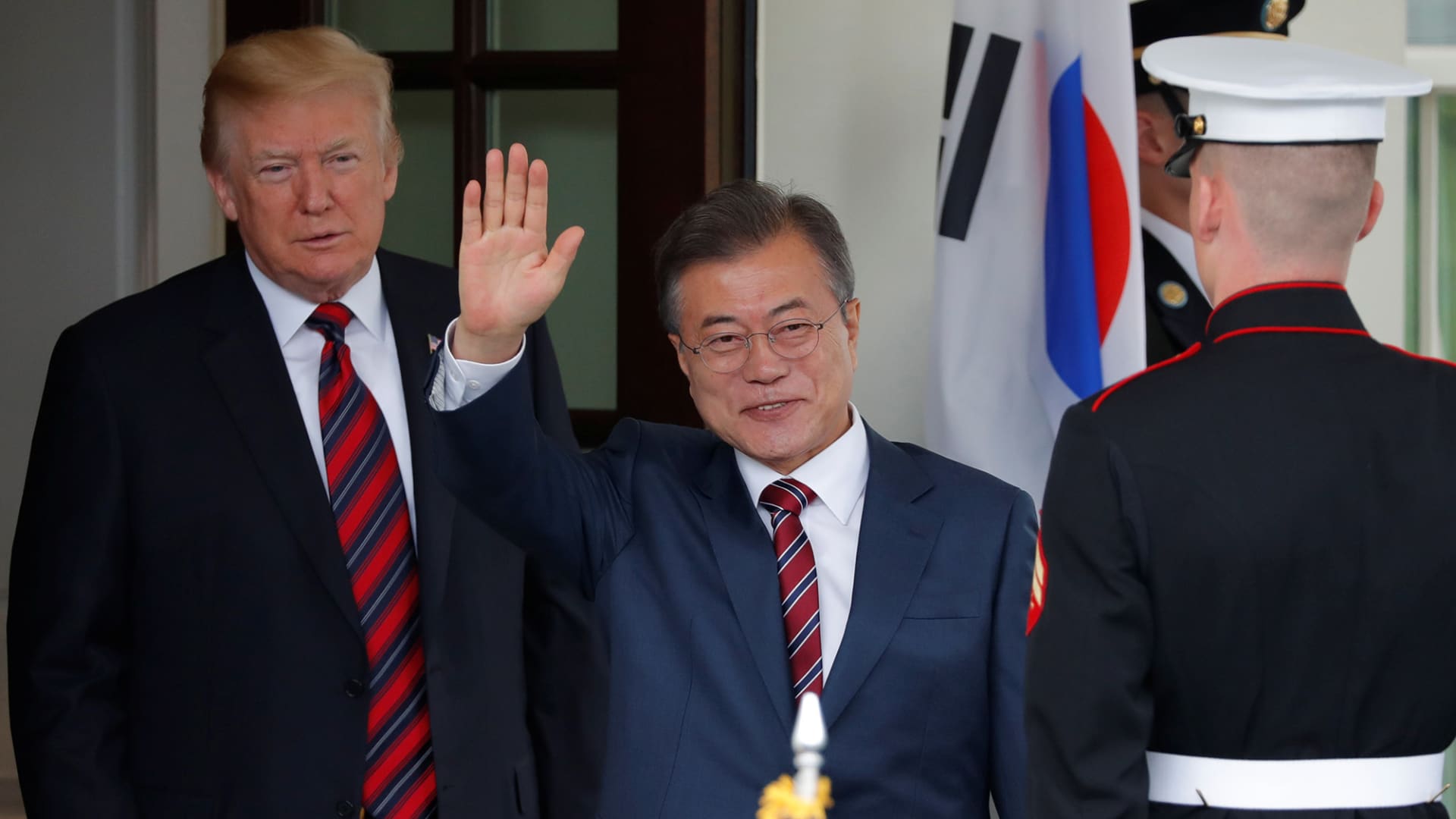
President Trump’s Tariff Threats: A Blow to South Korea and Japan’s Auto Industry
As President Donald Trump threatens to further increase tariffs on U.S. trading partners, the impact on the auto industry outside of North America would be significant, particularly on South Korea and Japan. These two countries are the largest vehicle importers to the U.S., accounting for a combined 16.8% of vehicles sold in the U.S. last year.
South Korea’s Dominance
South Korea-based Hyundai Motor and Kia Corp. are the largest exporters of vehicles to the U.S., with a combined market share of 8.6% and 2.3%, respectively. GM, the largest foreign direct investor in Korea’s manufacturing industry, has significantly increased its imports from South Korea, with U.S. sales of South Korean-produced vehicles rising from 173,000 in 2019 to over 407,000 last year.
Japan’s Declining Share
Japan, on the other hand, has seen its vehicle exports to the U.S. decline in recent years. Although Japan’s automakers, such as Toyota, Nissan, and Honda, are still significant players in the U.S. market, their combined market share has decreased. Vehicles from Japan represented about 1.31 million autos sold in the U.S. last year.
Tariff Risks
If the 25% tariff on South Korean and Japanese vehicles is imposed, it could lead to higher costs for consumers and potentially reduce demand. Automakers like Hyundai and GM, which have significant exposure to these countries, could be impacted. Jeff Schuster, global vice president of automotive research at GlobalData, noted, "There’s a lot of risk potentially here, but it’s limited, really limited, to those two players."
Ford’s Concerns
Ford Motor CEO Jim Farley has also expressed concerns over the potential impact of tariffs on the industry. He argued that if Trump is going to implement tariffs, it should be done comprehensively, applying to all countries, not just cherry-picking one or two. "There are millions of vehicles coming into our country that are not being applied to these [incremental tariffs]," Farley said.
Conclusion
The auto industry is built on free trade, and tariffs can be a significant hurdle. If implemented, these tariffs could lead to higher costs for consumers and potentially reduce demand. While automakers like Hyundai and GM have significant exposure to South Korea and Japan, the industry can adjust, but it takes time. The question remains whether the U.S. administration will follow through with its tariff threats and how the industry will respond to the potential changes.
FAQs
Q: What are the potential implications of tariffs on the auto industry?
A: Tariffs could lead to higher costs for consumers and potentially reduce demand, impacting automakers like Hyundai and GM.
Q: Which countries are the largest vehicle importers to the U.S.?
A: South Korea and Japan are the largest vehicle importers to the U.S., accounting for a combined 16.8% of vehicles sold in the U.S. last year.
Q: How have South Korea’s and Japan’s vehicle exports to the U.S. changed in recent years?
A: South Korea’s exports to the U.S. have increased, while Japan’s have declined.
Q: What is the current tariff on vehicles from South Korea and Japan to the U.S.?
A: South Korea has 0% tariffs, while Japan’s tariff is 2.5%. The U.S. is considering imposing a 25% tariff on vehicles from South Korea and Japan.


Portable Benefits Could Fix the Gig Economy’s Biggest Problem

Ethical Reasoning Has Become a Core Workplace Skill and Training Programs Are Missing It

Stakeholder Pressure on CEOs Has Reached a Breaking Point

Identity Resilience at Work and Why It Matters More Than Grit

The Revenge of Middle Management and Why Organizations Should Pay Attention

First-Generation Professionals Face a Different Workplace and Nobody Prepares Them for It

Small Business Survival in Underserved Communities Needs More Than Microloans

Aging Populations are Reshaping Labor Markets Faster Than Policy Can Respond

How Emotional Intelligence Can Help You Manage Stress and Build Resilience

Interview with Dr. Kristy K. Taylor, WORxK Global News Magazine Founder

Sarah Herrlinger Talks AirPods Pro Hearing Aid

Unlocking Human Potential: Kim Groshek’s Journey to Transforming Leadership and Stress Resilience

NetWork Your Way to Success: Top Tips for Maximizing Your Professional Network

The Power of Belonging: Why Feeling Accepted Matters in the Workplace

Health-care stocks fall after Warren PBM bill, Brian Thompson shooting

Glenda Benevides: Creating Global Impact Through Music
-
 Resiliency1 year ago
How Emotional Intelligence Can Help You Manage Stress and Build Resilience
-
 Career Advice2 years ago
Interview with Dr. Kristy K. Taylor, WORxK Global News Magazine Founder
-
 Diversity and Inclusion (DEIA)2 years ago
Sarah Herrlinger Talks AirPods Pro Hearing Aid
-
 Changemaker Interviews2 years ago
Unlocking Human Potential: Kim Groshek’s Journey to Transforming Leadership and Stress Resilience
-
 Career Advice2 years ago
NetWork Your Way to Success: Top Tips for Maximizing Your Professional Network
-
 Diversity and Inclusion (DEIA)2 years ago
The Power of Belonging: Why Feeling Accepted Matters in the Workplace
-
 Global Trends and Politics2 years ago
Health-care stocks fall after Warren PBM bill, Brian Thompson shooting
-
 Changemaker Interviews2 years ago
Glenda Benevides: Creating Global Impact Through Music